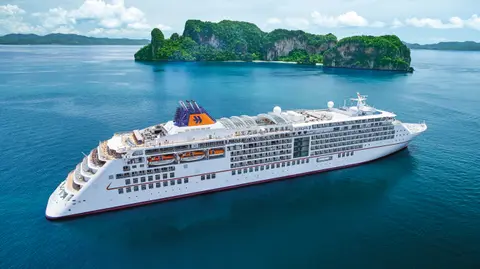
Hapag-Lloyd CruisesEUX2762
Between island splendor and coastal charm - Tenerife to Civitavecchia
Date
2027-07-21
Duration
13 nights
Departure Port
Santa Cruz de Tenerife
Spain
Arrival Port
Civitavecchia
Italy
Rating
Luxury
Theme
—
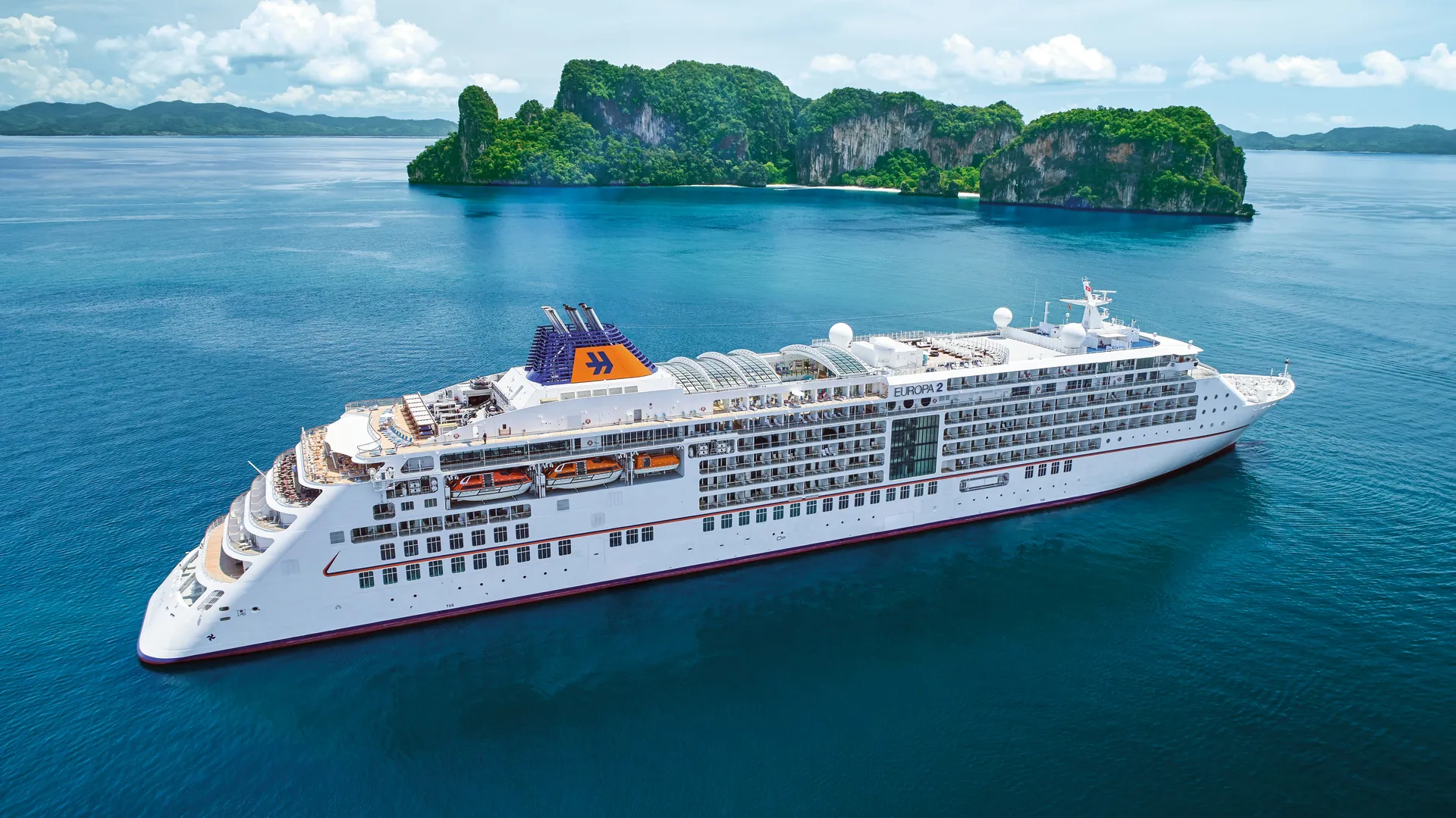
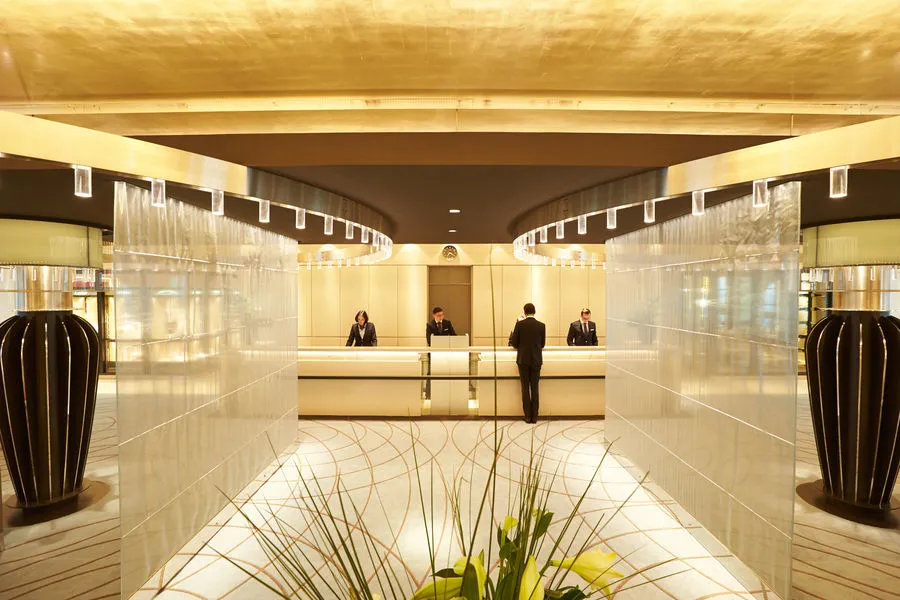
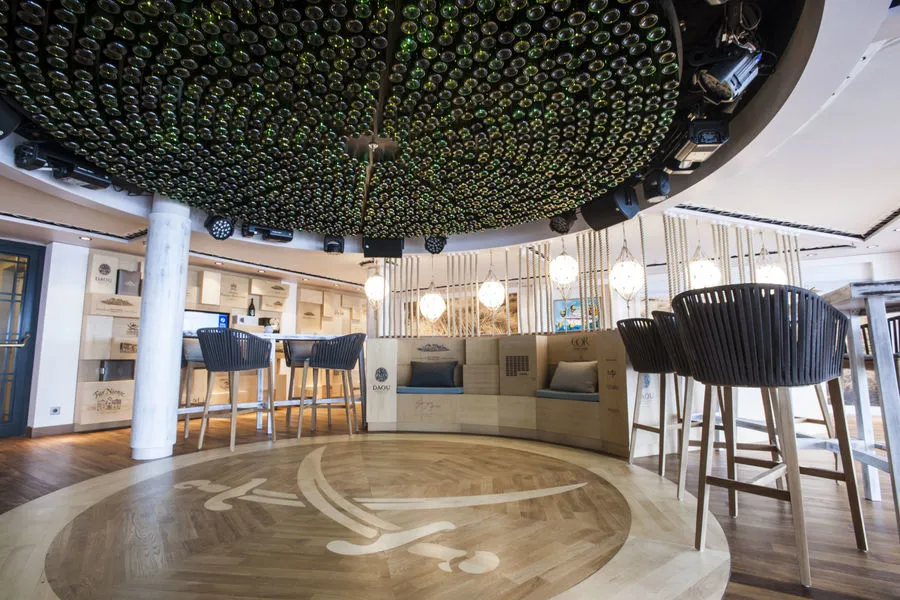
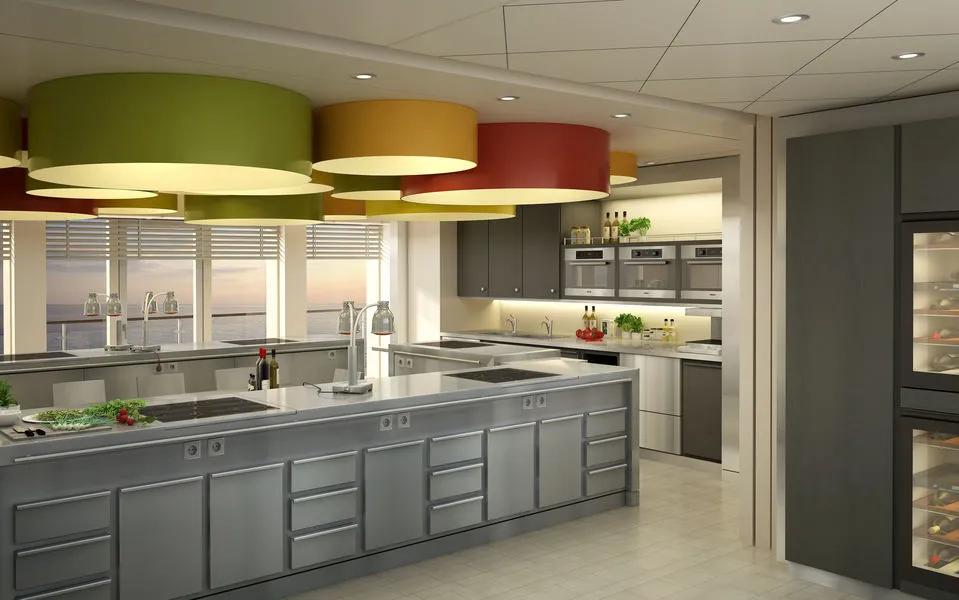
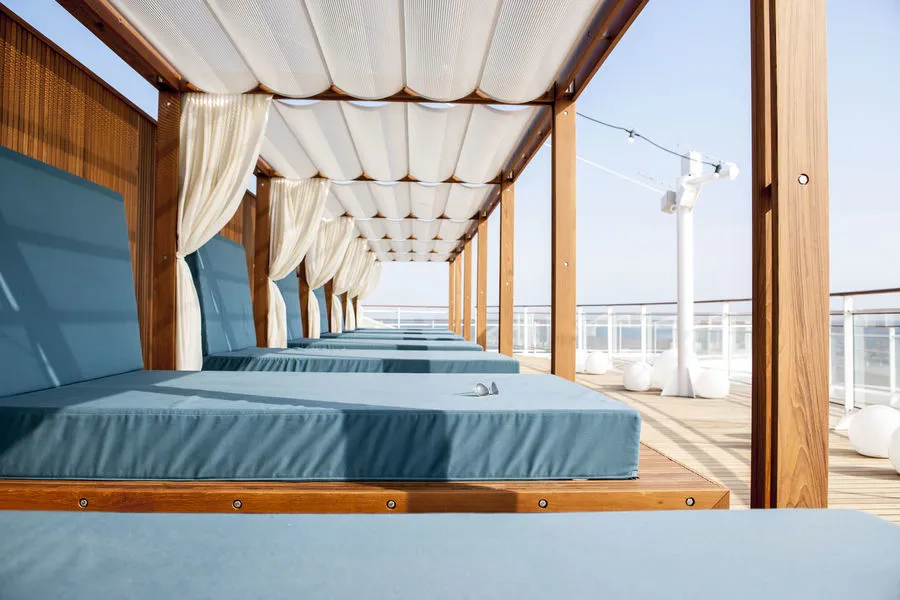
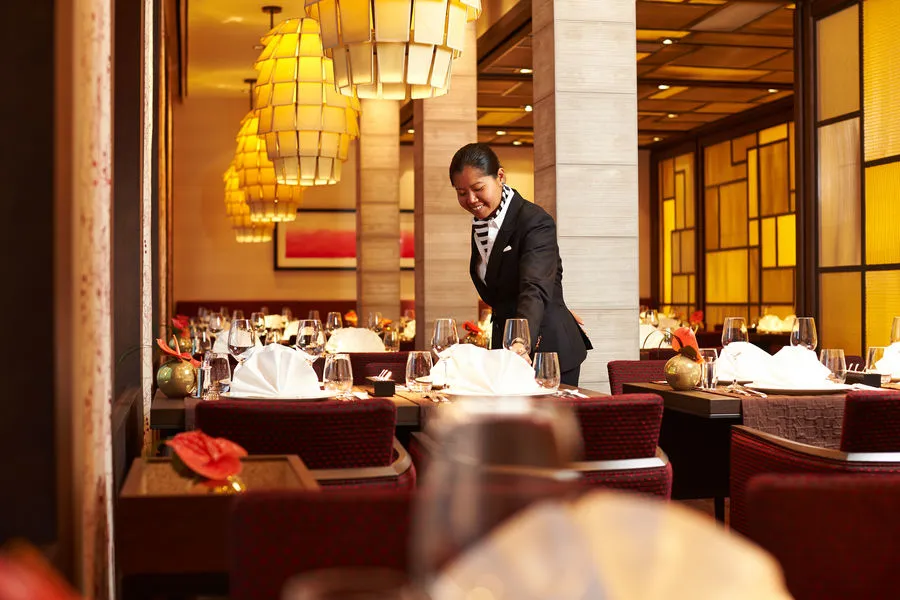
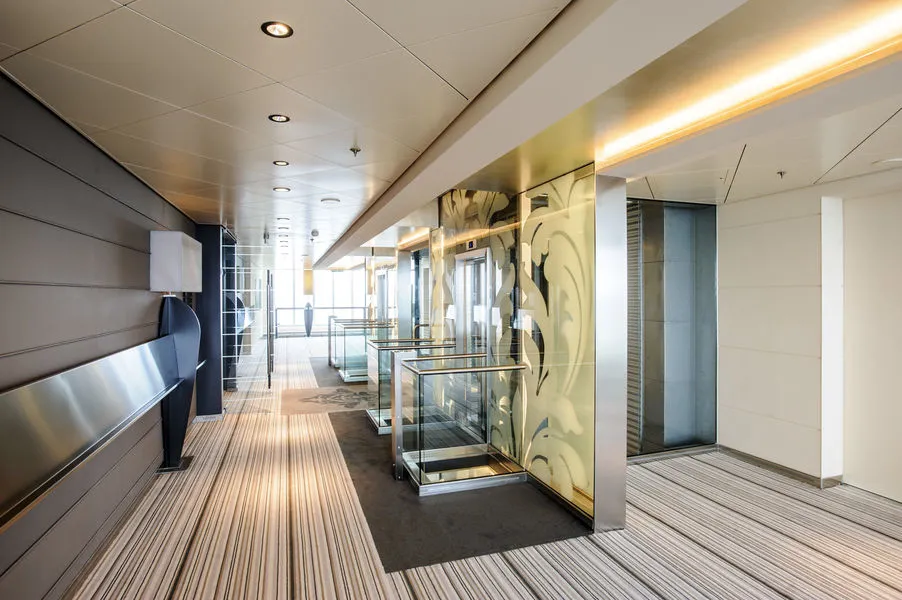
Hapag-Lloyd Cruises
MS EUROPA 2
Launched
2013
Refitted
2017
Tonnage
42,830 GT
Passengers
516
Cabins
251
Crew
370
Length
739 m
Width
27 m
Speed
21 knots
Adults Only
No
Itinerary
Day 1
Day 1
Santa Cruz de Tenerife
Depart 22:00
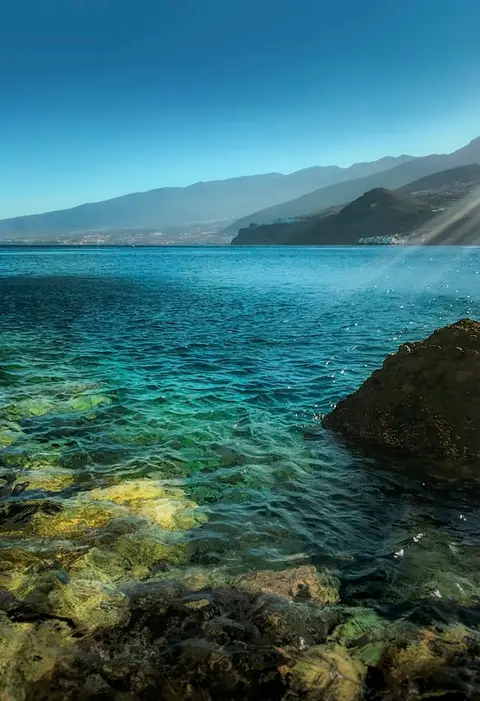
Santa Cruz de Tenerife, the cosmopolitan capital of the Canary Islands, balances volcanic grandeur with refined urban pleasures — from the Santiago Calatrava–designed Auditorio rising beside the Atlantic to the ancient dragon tree at Icod de los Vinos and the World Heritage Teide volcano looming above the island. The city's Carnival, second in scale only to Rio de Janeiro's, erupts each February in spectacular costumes and street revelry. Local wines from the volcanic slopes, wrinkled potatoes with mojo verde, and fresh Atlantic fish define the island's culinary character. November through April offers reliably warm, sun-drenched conditions.
Day 2
Day 2
San Sebastian de la Gomera
Arrive 08:00Depart 19:30
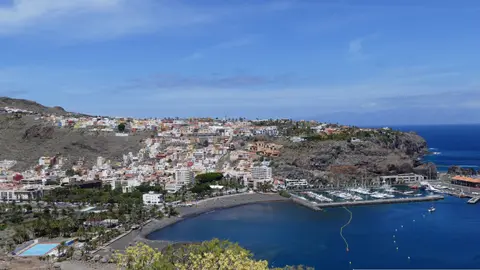
San Sebastian de la Gomera is the Canarian port from which Columbus sailed to the New World in 1492, gateway to the UNESCO-listed Garajonay laurel cloud forest and the whistled language of Silbo Gomero. Must-dos include hiking through the primeval Garajonay forest, hearing a Silbo Gomero demonstration, and tasting almogrote cheese spread with palm honey. Visit March through May for ideal hiking conditions and wildflowers.
Day 3
Day 3
Santa Cruz de la Palma
Arrive 06:00Depart 19:00
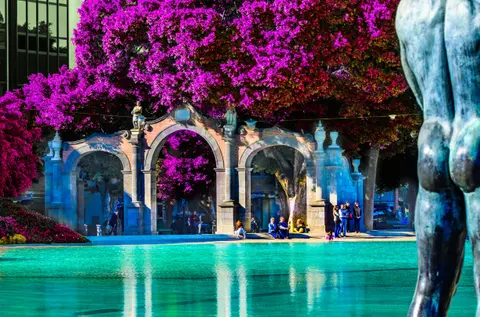
Santa Cruz de la Palma is the charming capital of La Palma, known for its colonial architecture and rich maritime history. Must-do experiences include savoring local dishes like "papas arrugadas" and exploring the stunning landscapes of Taburiente National Park. The best time to visit is during the spring and fall months when the weather is mild and perfect for outdoor adventures.
Day 4
Day 4
At Sea
Day 5
Day 5
Portimao
Arrive 13:00Depart 22:00
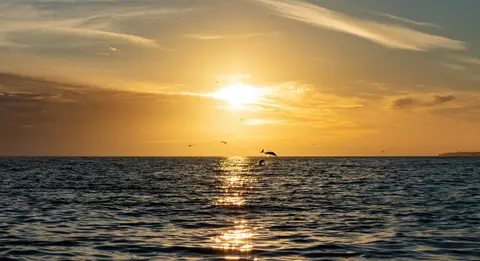
Portimão is the Algarve's most storied port city, where Phoenician trading heritage meets golden-cliff beaches and Portugal's finest grilled sardine tradition along the Arade River. Visitors should not miss the charcoal-grilled sardines at the riverside churrasqueiras and the dramatic sandstone formations of Praia da Rocha. The port is at its luminous best from May through October, when long Atlantic days bathe the coastline in honeyed light and the August Sardine Festival electrifies the waterfront.
Day 6
Day 6
Cadiz
Arrive 08:00Depart 19:30
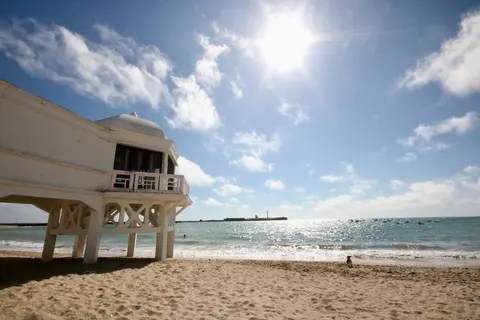
Cádiz, founded by Phoenician traders around 1100 BC and a strong contender for the oldest continuously inhabited city in Western Europe, juts into the Atlantic on a narrow peninsula where honey-colored ramparts frame improbable views of open ocean and the sun sets directly into the sea. The old quarter is an intoxicating labyrinth of baroque churches, hidden plazas, and carnival spirit — Cádiz's annual February carnival is the wildest and most satirically sharp in Spain — while the tapas culture here, centered on fresh Atlantic seafood cooked with Andalusian simplicity, represents Spanish cuisine at its most elemental and joyful. Visit February for carnival or spring for gentle Atlantic breezes. Seville is ninety minutes inland by bus or rail.
Day 7
Day 7
Malaga
Arrive 08:00
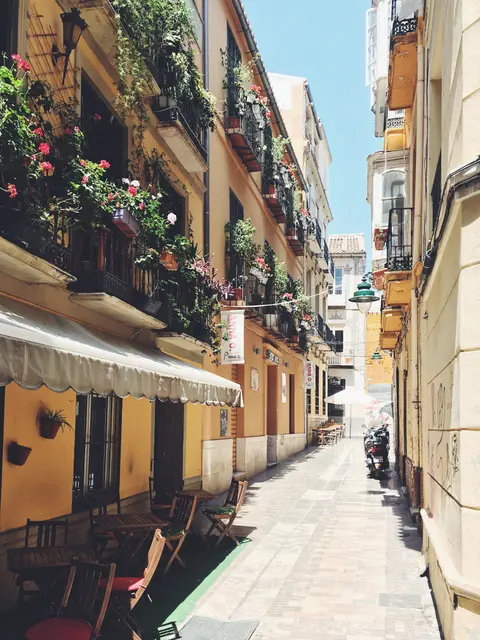
Málaga distils three thousand years of Mediterranean civilisation into one of Andalusia's most compelling port cities, where the Moorish Alcazaba fortress surveys a modern waterfront of elegant promenades and sun-drenched café terraces. Do not leave without visiting the Museo Picasso — the artist was born here in 1881 — and ascending to the ruined Castillo de Gibralfaro for panoramic views stretching to the Rif Mountains of Morocco on clear days. Malagueta anchovies fried in olive oil and the sweet Pedro Ximénez-laced dessert wine are the city's defining pleasures. The shoulder seasons of April, May, and October offer perfect Mediterranean warmth.
Day 9
Day 9
Ibiza
Arrive 14:00Depart 23:59
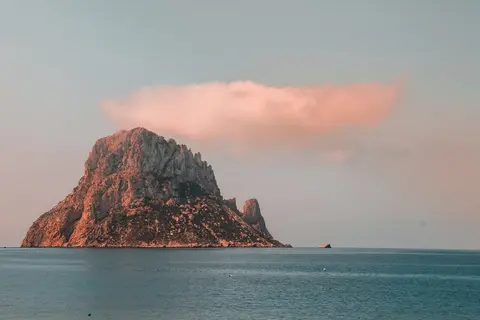
Beneath Ibiza's sun-drenched reputation as the world's clubbing capital lies a layered history stretching back to Phoenician traders who settled this Balearic island in 654 BC. The UNESCO-listed Dalt Vila — the walled hilltop citadel above Eivissa town — rewards exploration with Carthaginian burial grounds, Renaissance ramparts, and sweeping Mediterranean panoramas. For quieter pleasures, the crystalline coves of the island's north, such as Cala d'en Serra and Es Portitxol, rival any beach in Europe. The Phoenician necropolis of Puig des Molins is unmissable for history devotees. The season runs May through October, with June and September offering ideal weather without peak-summer crowds.
Day 10
Day 10
Palma de Mallorca
Arrive 08:00Depart 18:00
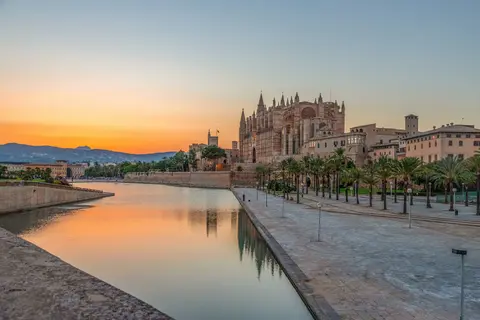
Palma de Mallorca announces itself with one of the most spectacular Gothic cathedrals in the world — La Seu, its honey-coloured sandstone buttresses rising directly from the bay, its interior modified by Antoni Gaudí and illuminated by the world's largest Gothic rose window. The old town behind it is a quarter of Arab baths, Renaissance palaces converted into boutique hotels, and the Passeig del Born — a plane-tree-shaded promenade where Balearic life conducts itself with unhurried grace. The local ensaïmada pastry and fresh sobrasada sausage from the island's black pigs are essential breakfast rituals. Visit May, June, or September: warm, brilliant, and measurably calmer than the July–August peak.
Day 11
Day 11
Alghero
Arrive 13:00Depart 22:00
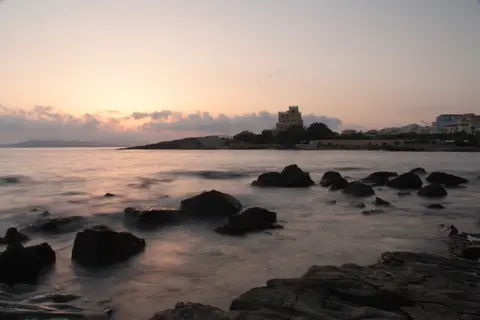
Alghero is Sardinia's Catalan jewel, a medieval walled town where bilingual street signs, fourteenth-century Aragonese fortifications, and the spectacular Neptune's Grotto sea cave create the island's most culturally distinctive coastal experience. Visit May through October via Silversea or Explora Journeys for sunset wall walks, the 656-step cliff descent to Neptune's Grotto, and lobster alla catalana served within the honey-colored ramparts of a city that bridges Barcelona and Sardinia.
Day 12
Day 12
Sardinia
Arrive 08:00
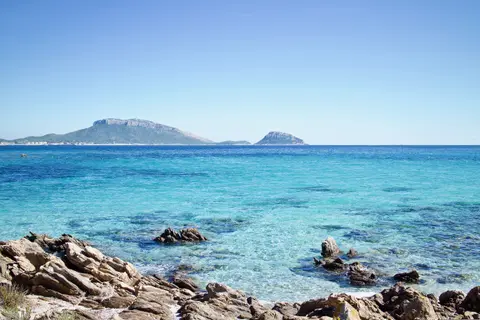
Sardinia is a rugged, history-rich island in the western Mediterranean renowned for its luminous turquoise waters, bronze-age nuraghi towers, and a fiercely independent culinary tradition anchored by porceddu roast suckling pig and hand-pinched culurgiones pasta. Visitors should explore the Costa Smeralda's granite coves by boat and venture inland to taste Cannonau wines in centuries-old vineyards. The ideal season stretches from May through October, with late September offering warm seas, golden light, and blissful absence of peak-summer crowds.
Day 13
Day 13
Bonifacio
Depart 05:00
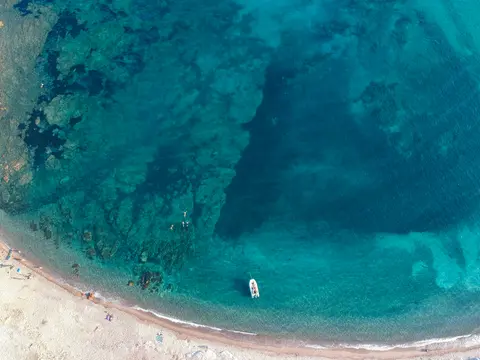
Bonifacio is a dramatically cliff-perched medieval citadel at Corsica's southern tip, where Genoese ramparts tower above a fjord-like natural harbour in the turquoise Strait of Bonifacio. Visitors should descend the vertiginous Escalier du Roi d'Aragon carved into the limestone cliffs and take a boat excursion to the pristine Lavezzi archipelago nature reserve for world-class snorkelling among sculpted granite formations. The ideal window is June or September, when the Mediterranean light is at its most luminous and the narrow streets of the haute ville remain blissfully uncrowded.
Day 14
Day 14
Civitavecchia
Arrive 05:00
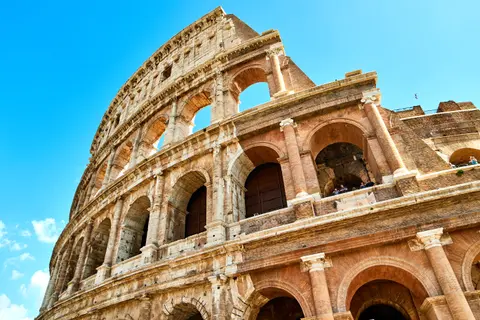
Rome's ancient maritime gateway since the Emperor Trajan commissioned its harbour in 106 AD, Civitavecchia is the natural prologue to the Eternal City — just seventy minutes southeast by express rail. The port's Renaissance fortress, designed in part by Michelangelo, anchors a working waterfront that has welcomed travellers for millennia. Beyond Rome's unmissable monuments, consider an afternoon in the Civitavecchia thermal baths, drawing on mineral waters prized since antiquity. Spring and autumn offer the ideal balance of mild weather and manageable crowds for exploring the capital's layered history.
Day 1
Santa Cruz de Tenerife
Depart 22:00
Santa Cruz de Tenerife, the cosmopolitan capital of the Canary Islands, balances volcanic grandeur with refined urban pleasures — from the Santiago Calatrava–designed Auditorio rising beside the Atlantic to the ancient dragon tree at Icod de los Vinos and the World Heritage Teide volcano looming above the island. The city's Carnival, second in scale only to Rio de Janeiro's, erupts each February in spectacular costumes and street revelry. Local wines from the volcanic slopes, wrinkled potatoes with mojo verde, and fresh Atlantic fish define the island's culinary character. November through April offers reliably warm, sun-drenched conditions.
Day 2
San Sebastian de la Gomera
Arrive 08:00Depart 19:30
San Sebastian de la Gomera is the Canarian port from which Columbus sailed to the New World in 1492, gateway to the UNESCO-listed Garajonay laurel cloud forest and the whistled language of Silbo Gomero. Must-dos include hiking through the primeval Garajonay forest, hearing a Silbo Gomero demonstration, and tasting almogrote cheese spread with palm honey. Visit March through May for ideal hiking conditions and wildflowers.
Day 3
Santa Cruz de la Palma
Arrive 06:00Depart 19:00
Santa Cruz de la Palma is the charming capital of La Palma, known for its colonial architecture and rich maritime history. Must-do experiences include savoring local dishes like "papas arrugadas" and exploring the stunning landscapes of Taburiente National Park. The best time to visit is during the spring and fall months when the weather is mild and perfect for outdoor adventures.
Day 4
At Sea
Day 5
Portimao
Arrive 13:00Depart 22:00
Portimão is the Algarve's most storied port city, where Phoenician trading heritage meets golden-cliff beaches and Portugal's finest grilled sardine tradition along the Arade River. Visitors should not miss the charcoal-grilled sardines at the riverside churrasqueiras and the dramatic sandstone formations of Praia da Rocha. The port is at its luminous best from May through October, when long Atlantic days bathe the coastline in honeyed light and the August Sardine Festival electrifies the waterfront.
Day 6
Cadiz
Arrive 08:00Depart 19:30
Cádiz, founded by Phoenician traders around 1100 BC and a strong contender for the oldest continuously inhabited city in Western Europe, juts into the Atlantic on a narrow peninsula where honey-colored ramparts frame improbable views of open ocean and the sun sets directly into the sea. The old quarter is an intoxicating labyrinth of baroque churches, hidden plazas, and carnival spirit — Cádiz's annual February carnival is the wildest and most satirically sharp in Spain — while the tapas culture here, centered on fresh Atlantic seafood cooked with Andalusian simplicity, represents Spanish cuisine at its most elemental and joyful. Visit February for carnival or spring for gentle Atlantic breezes. Seville is ninety minutes inland by bus or rail.
Day 7
Malaga
Arrive 08:00
Málaga distils three thousand years of Mediterranean civilisation into one of Andalusia's most compelling port cities, where the Moorish Alcazaba fortress surveys a modern waterfront of elegant promenades and sun-drenched café terraces. Do not leave without visiting the Museo Picasso — the artist was born here in 1881 — and ascending to the ruined Castillo de Gibralfaro for panoramic views stretching to the Rif Mountains of Morocco on clear days. Malagueta anchovies fried in olive oil and the sweet Pedro Ximénez-laced dessert wine are the city's defining pleasures. The shoulder seasons of April, May, and October offer perfect Mediterranean warmth.
Day 9
Ibiza
Arrive 14:00Depart 23:59
Beneath Ibiza's sun-drenched reputation as the world's clubbing capital lies a layered history stretching back to Phoenician traders who settled this Balearic island in 654 BC. The UNESCO-listed Dalt Vila — the walled hilltop citadel above Eivissa town — rewards exploration with Carthaginian burial grounds, Renaissance ramparts, and sweeping Mediterranean panoramas. For quieter pleasures, the crystalline coves of the island's north, such as Cala d'en Serra and Es Portitxol, rival any beach in Europe. The Phoenician necropolis of Puig des Molins is unmissable for history devotees. The season runs May through October, with June and September offering ideal weather without peak-summer crowds.
Day 10
Palma de Mallorca
Arrive 08:00Depart 18:00
Palma de Mallorca announces itself with one of the most spectacular Gothic cathedrals in the world — La Seu, its honey-coloured sandstone buttresses rising directly from the bay, its interior modified by Antoni Gaudí and illuminated by the world's largest Gothic rose window. The old town behind it is a quarter of Arab baths, Renaissance palaces converted into boutique hotels, and the Passeig del Born — a plane-tree-shaded promenade where Balearic life conducts itself with unhurried grace. The local ensaïmada pastry and fresh sobrasada sausage from the island's black pigs are essential breakfast rituals. Visit May, June, or September: warm, brilliant, and measurably calmer than the July–August peak.
Day 11
Alghero
Arrive 13:00Depart 22:00
Alghero is Sardinia's Catalan jewel, a medieval walled town where bilingual street signs, fourteenth-century Aragonese fortifications, and the spectacular Neptune's Grotto sea cave create the island's most culturally distinctive coastal experience. Visit May through October via Silversea or Explora Journeys for sunset wall walks, the 656-step cliff descent to Neptune's Grotto, and lobster alla catalana served within the honey-colored ramparts of a city that bridges Barcelona and Sardinia.
Day 12
Sardinia
Arrive 08:00
Sardinia is a rugged, history-rich island in the western Mediterranean renowned for its luminous turquoise waters, bronze-age nuraghi towers, and a fiercely independent culinary tradition anchored by porceddu roast suckling pig and hand-pinched culurgiones pasta. Visitors should explore the Costa Smeralda's granite coves by boat and venture inland to taste Cannonau wines in centuries-old vineyards. The ideal season stretches from May through October, with late September offering warm seas, golden light, and blissful absence of peak-summer crowds.
Day 13
Bonifacio
Depart 05:00
Bonifacio is a dramatically cliff-perched medieval citadel at Corsica's southern tip, where Genoese ramparts tower above a fjord-like natural harbour in the turquoise Strait of Bonifacio. Visitors should descend the vertiginous Escalier du Roi d'Aragon carved into the limestone cliffs and take a boat excursion to the pristine Lavezzi archipelago nature reserve for world-class snorkelling among sculpted granite formations. The ideal window is June or September, when the Mediterranean light is at its most luminous and the narrow streets of the haute ville remain blissfully uncrowded.
Day 14
Civitavecchia
Arrive 05:00
Rome's ancient maritime gateway since the Emperor Trajan commissioned its harbour in 106 AD, Civitavecchia is the natural prologue to the Eternal City — just seventy minutes southeast by express rail. The port's Renaissance fortress, designed in part by Michelangelo, anchors a working waterfront that has welcomed travellers for millennia. Beyond Rome's unmissable monuments, consider an afternoon in the Civitavecchia thermal baths, drawing on mineral waters prized since antiquity. Spring and autumn offer the ideal balance of mild weather and manageable crowds for exploring the capital's layered history.
Cabin Categories
Family Suite
Outside
291 m²Max 4
12
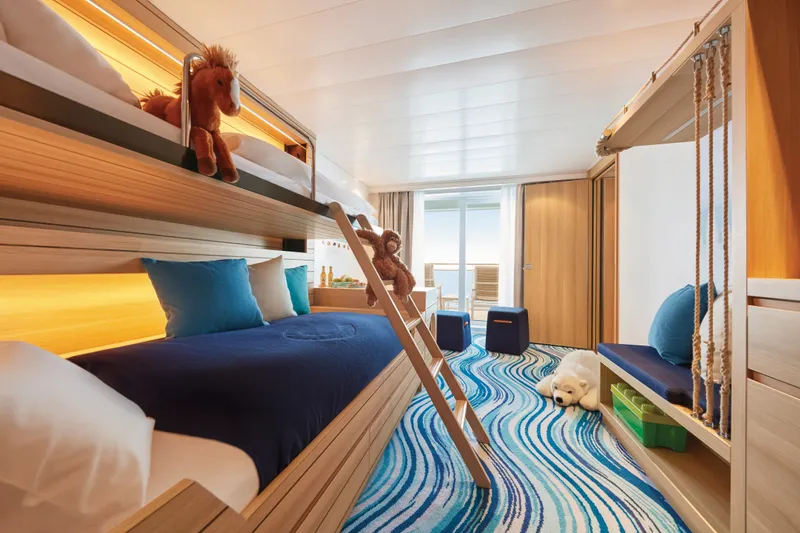
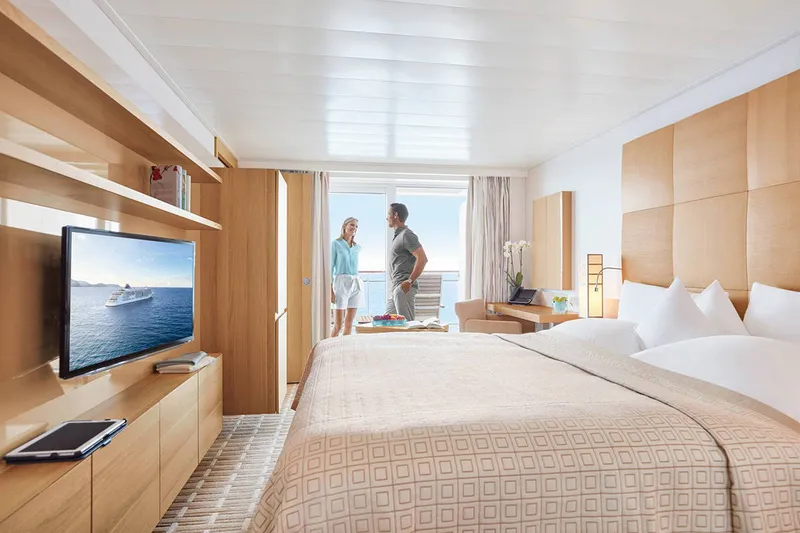
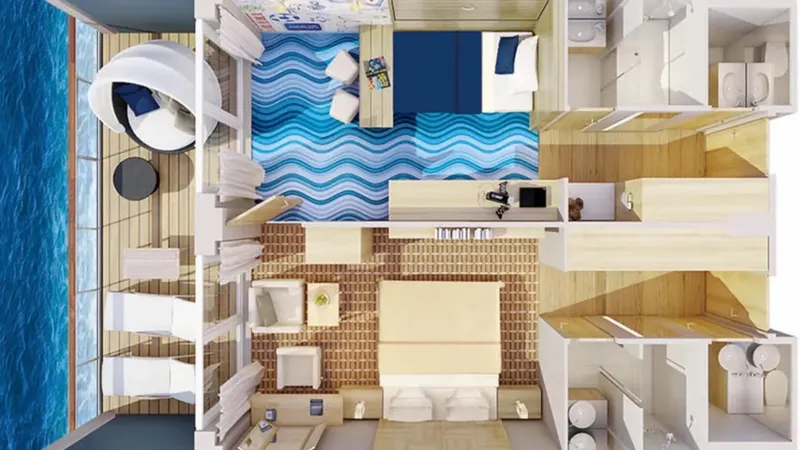
In the family apartment, parents and children live in two separate sections that are connected with each other by a door and via the veranda.
Living area: 2× 20 m²; veranda: 2× 7 m²
Connecting door between the rooms and verandas.
Separate WCs.
Free mini bar (beer and soft drinks).
Double or Twin ConfigurationPullman BedLounge AreaShowerBathRoom Service Available+6
View Details
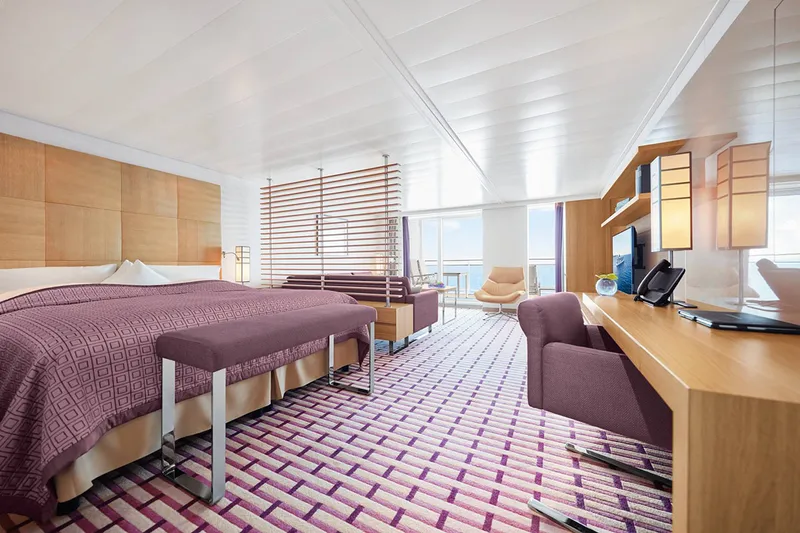
Grand Ocean Suite
Suite
0607
Private oasis of wellbeing and stylish relaxation zone – in the Spa Suite, everyday life is nothing but a distant memory. Indulge your body and soul at the highest level – with warm shades and a spa bathroom with panoramic views of the sea.
Living area: 42 m²; veranda: 10 m².
Bathroom with two washbasins.
Separate WC..
Butler service.
Daylight in the bathroom.
TV in the bathroom mirror.
Rain shower with steam sauna.
Whirlpool tub.
Free mini bar (beer, soft drinks and a selection of high-quality spirits)
US$17,809 /person+ US$0 taxes & fees
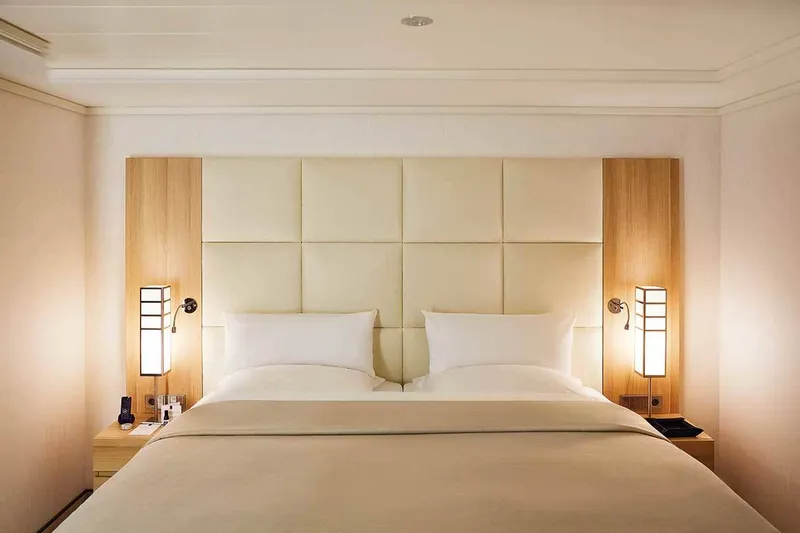
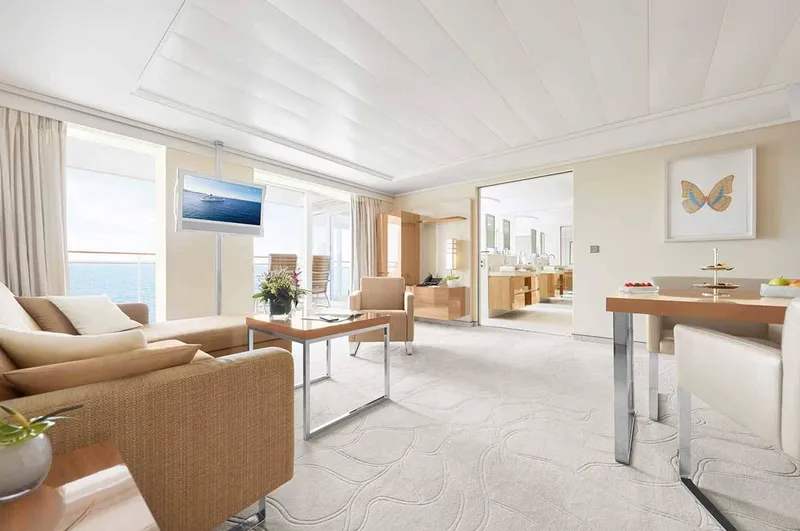
Grand Penthouse Suite
Suite
947 m²Max 3
10
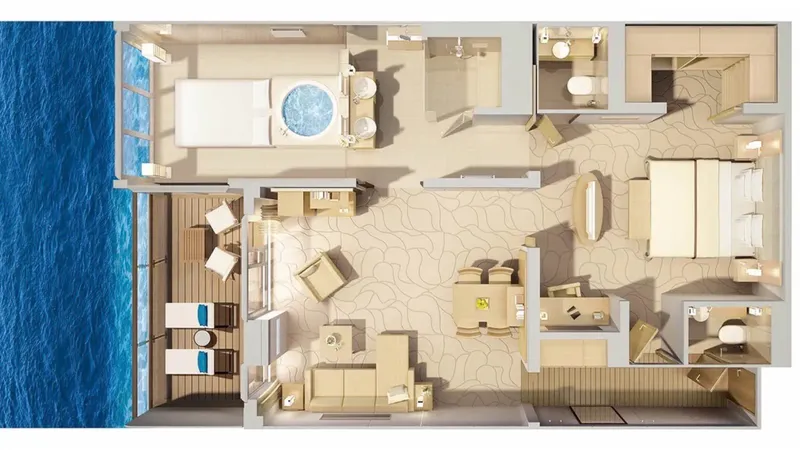
In the Grand Penthouse Suite you can enjoy lavishness at sea and experience an exclusive break of superior quality – on a daybed with view of the endless sea or while taking a bath in the middle of the ocean in your private whirlpool.
Living area: 78 m²; veranda: 10 m²
Separate living and sleeping areas.
Separate dining table.
Guest WC.
Bathroom with two washbasins.
Shower with steam sauna.
Whirlpool.
Daybed and TV in the bathroom area
Spacious walk-in wardrobe
Butler service
Free mini-bar (beer, soft drinks and a selection of high-quality spirits).
Further exclusive service privileges.
Double or Twin ConfigurationLounge AreaShowerWhirlpool BathSuite BenefitsFree Mini Bar+7
View Details
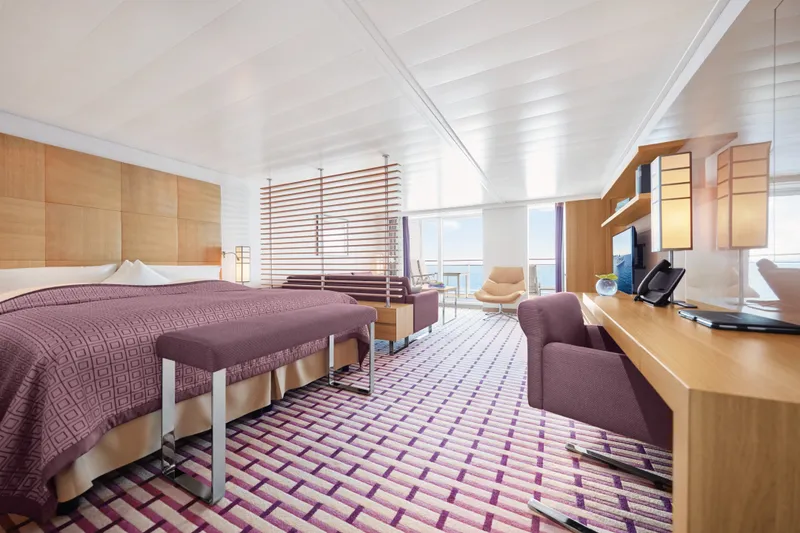
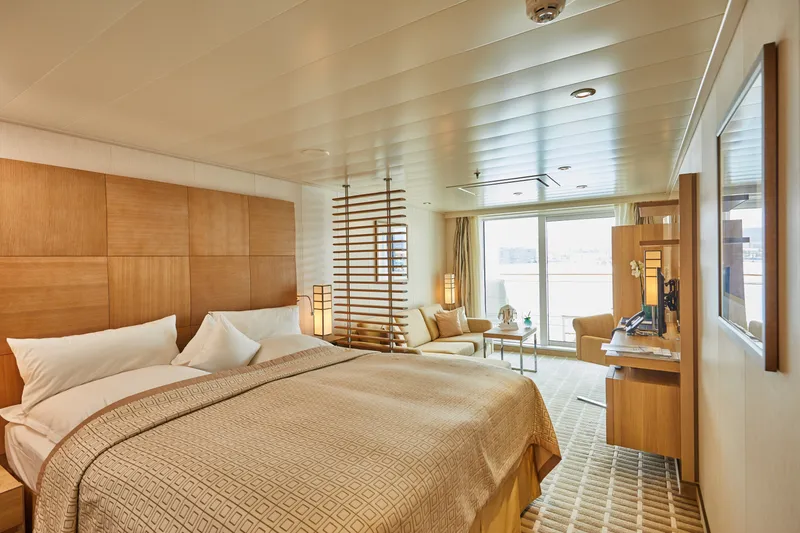
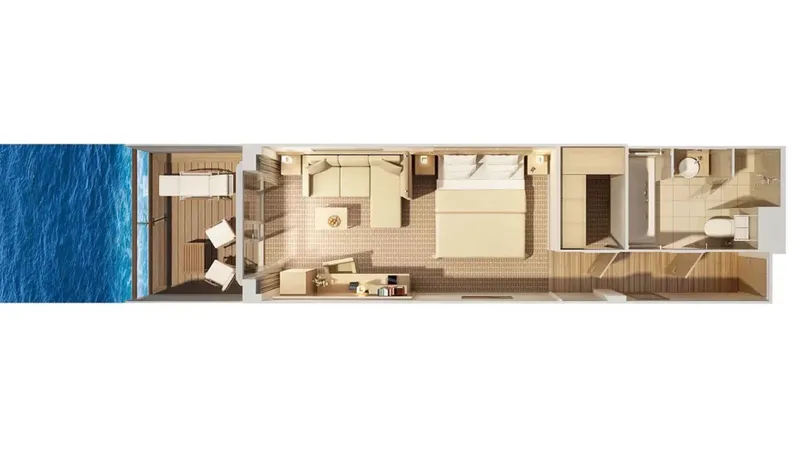
Guaranteed Suite
Suite
377–560 m²Max 3
S01OS01VS02OS02VS03OS03VS04OS04VS05S06S07S08S09SGOSGPSVO1SVO3SVOS
Guaranteed Suite
Double or Twin ConfigurationShowerBathRoom Service AvailableFree Mini BarTV+6
View Details
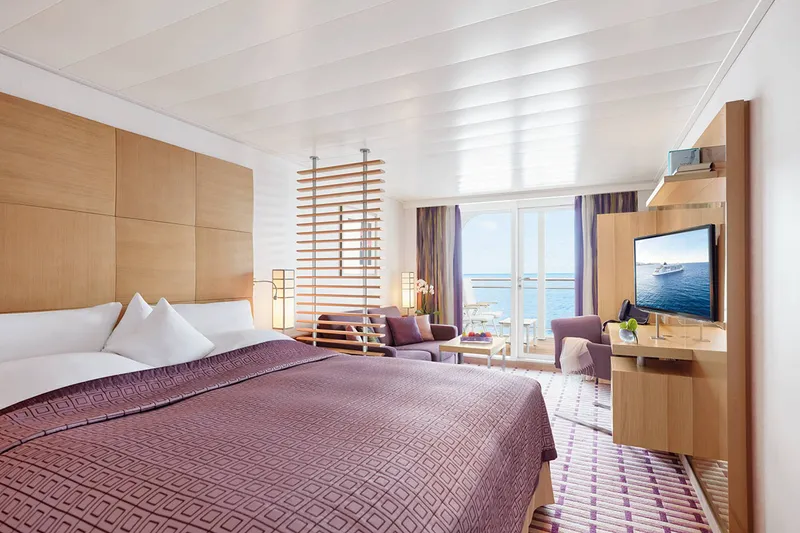
Ocean Suite
Suite
01O02O03O04O
Living area: 28 m² (301 ft²)
Veranda: 7 m² (75 ft²)
Natural light in the bathroom
Bathroom with two sinks
Whirlpool tub and separate shower
Separate toilet
Free mini bar
US$9,779 /person+ US$0 taxes & fees
Owner's Suite
Suite
1227 m²Max 4
11
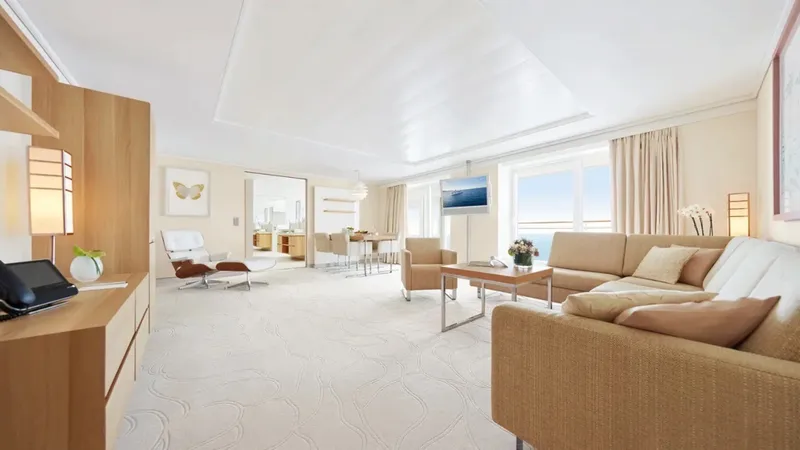
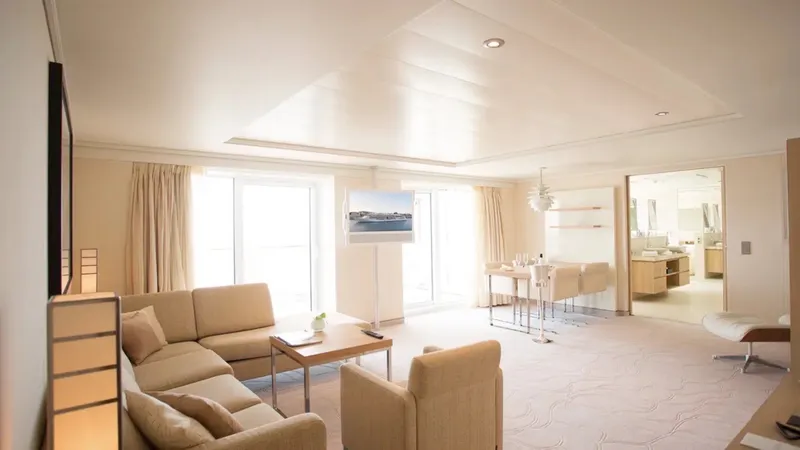
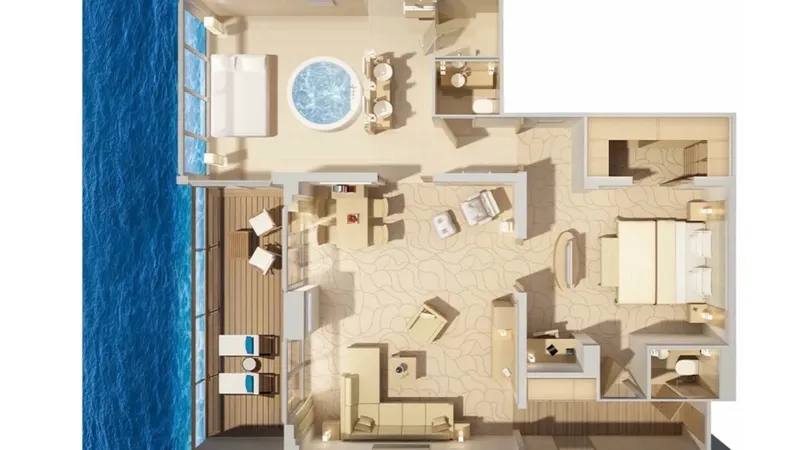
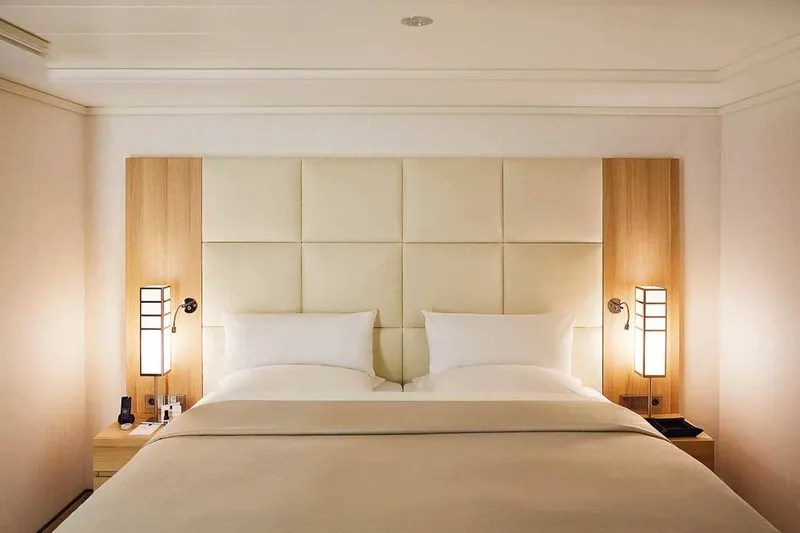
The Owner’s Suite is far more than our most exclusive suite; it is a select domicile on the oceans of the world. Enjoy every imaginable convenience on more than 114 square metres of personal freedom.
Living area: 99 m²; veranda: 15 m².
Separate living and sleeping areas.
Separate dining table.
Guest WC.
Bathroom with two washbasins.
Shower with steam sauna.
Whirlpool.
Daybed and TV in the bathroom area.
Spacious walk-in wardrobe.
Butler service.
Free mini bar (beer, soft drinks and a selection of high-quality spirits).
Further exclusive service privileges.
Double or Twin ConfigurationLounge AreaShowerRoom Service AvailableSuite BenefitsFree Mini Bar+8
US$42,669 /person+ US$0 taxes & fees
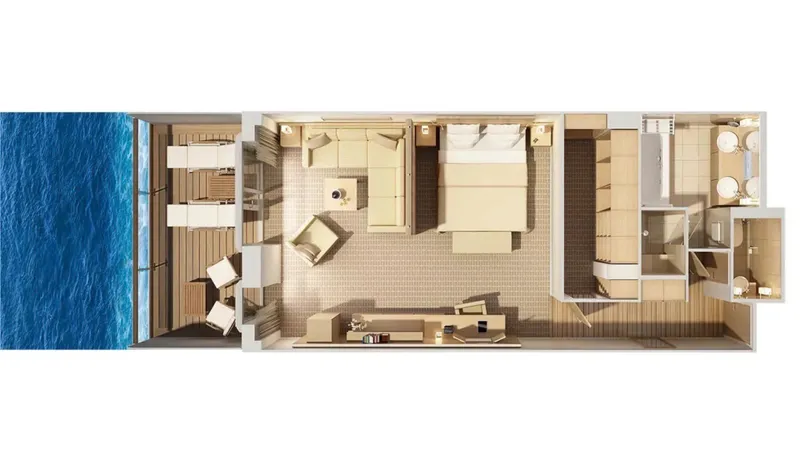
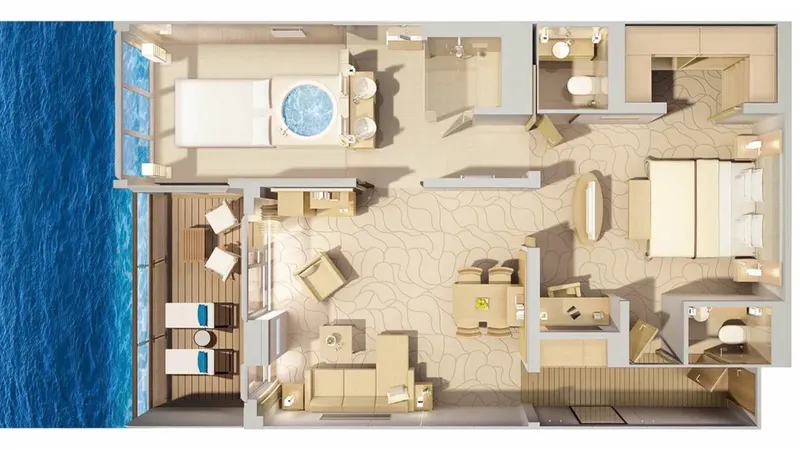
Penthouse Suite
Suite
947 m²Max 3
080913
A fantastically spacious suite with every conceivable comfort, uniquely located on the upper decks – is there a more beautiful place to relax? In the Grand Suite, you can enjoy the endless views of the sea and the conveniences of a classical Grand Suite.
Living area: 42 m²; veranda: 10 m².
Bathroom with two washbasins.
Separate WC.
Butler service.
TV in the bathroom mirror.
Walk-in wardrobe.
Bathtub and separate shower.
Free mini bar (beer, soft drinks and a selection of high-quality spirits).
The Grand Suite is also available with facilities suitable for the physically disabled.
Double or Twin ConfigurationLounge AreaShowerWhirlpool BathSuite BenefitsFree Mini Bar+7
US$17,809 /person+ US$0 taxes & fees
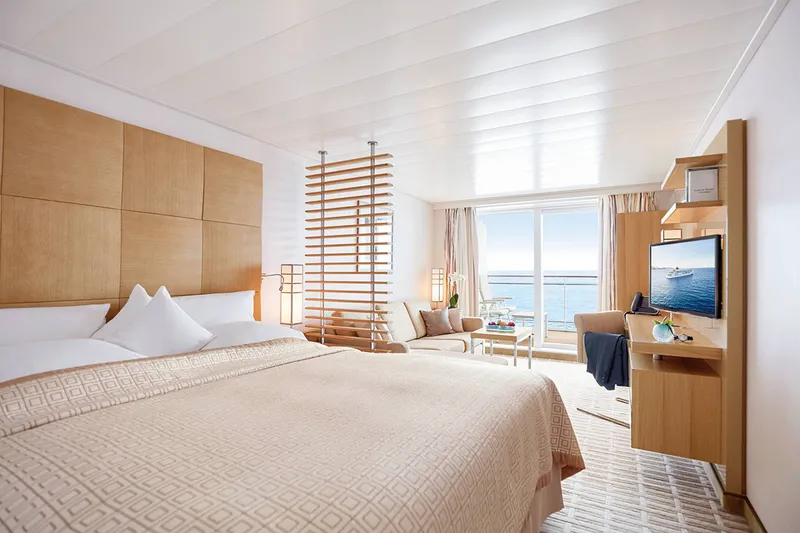
Veranda Suite
Suite
01V02V03V04V05
Living area: 28 m² (301 ft²)
Veranda: 7 m² (75 ft²)
Walk-in wardrobe
Exclusive living area with a chaise longue
Bathtub and separate shower
Free mini bar
US$9,779 /person+ US$0 taxes & fees
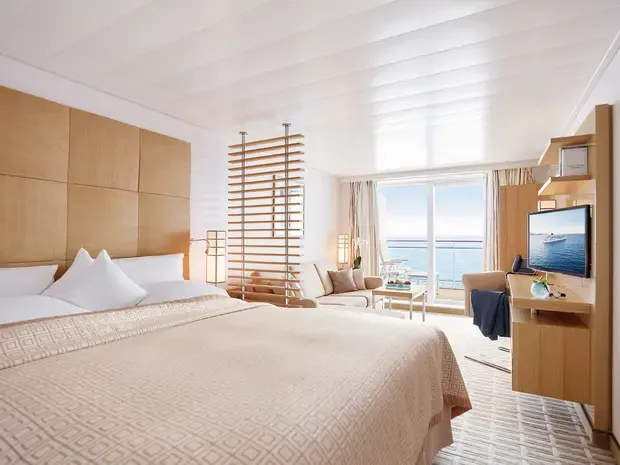
Guaranteed Balcony
Balcony
S12
Guaranteed Balcony
View Details
Interested in This Voyage?
Our cruise specialists can help you find the perfect cabin and the best available pricing.
(+886) 02-2721-7300Contact Advisor