Date
2026-11-21
Duration
7 nights
Departure Port
Ilha de San Cristobal, Ilhas Galápagos
Equador
Arrival Port
Ilha de San Cristobal, Ilhas Galápagos
Equador
Rating
Ultra Luxury
Theme
—

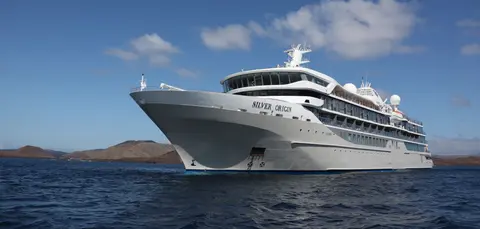
Silversea
2019
—
5,800 GT
100
51
90
331 m
16 m
14 knots
No

A Ilha San Cristóbal, um histórico portal para as Galápagos, oferece uma mistura única de beleza natural e rica cultura. As experiências imperdíveis incluem saborear pratos locais como ceviche de mero e visitar o deslumbrante Ilhéu Las Tintoreras. A melhor época para visitar é durante a estação seca, de junho a novembro, quando o clima é mais fresco e a vida selvagem está particularmente ativa.
Genovesa is one of the northernmost islands of the archipelago. Genovesa’s southern side of the shield volcano’s crater collapsed and a protected bay known as Darwin Bay was formed. The island is often referred to as the “Bird Island” as the numbers and species of land and seabirds on Genovesa are quite extraordinary. There are two visitor sites, and Prince Philip’s Steps give access to the flat plateau above the bay. Named after Prince Philip who visited the Galapagos on two occasions, the “steps” are mostly natural. View less The steep cliffs are home to Red-billed Tropicbirds, while Magnificent Frigatebirds, Nazca and Red-footed Boobies prefer the top. The plateau above Prince Philip’s Steps has a palo santo forest and an extensive lava field. This is an area where one of the Galapagos’ top predators, the Short-eared Owl, is hunting storm petrels. The Short-eared Owls are extremely well camouflaged and are not always easy to spot in between the rocks.

El Barranco (Escadas do Príncipe Philip) na Ilha Genovesa oferece uma das experiências mais imersivas de aves marinhas das Galápagos, com atuns de pés vermelhos nidificando ao nível dos olhos e corujas de orelhas curtas caçando petrel-tempestade em campos de lava. As atividades imperdíveis incluem subir as escadas do penhasco vulcânico e caminhar entre milhares de atuns e fragatas nidificando. De junho a novembro, a atividade de reprodução atinge seu pico, embora diferentes espécies nidifiquem durante todo o ano.

A Ilha North Seymour, uma joia dentro do arquipélago de Galápagos, é famosa por sua notável biodiversidade e deslumbrantes paisagens vulcânicas. As experiências imperdíveis incluem trilhas pelo interior da ilha para testemunhar aves-frigate ninho e fazer snorkel em águas cristalinas nas proximidades. A melhor época para visitar é de junho a dezembro, quando o clima é mais fresco e a atividade da vida selvagem está em seu auge.
Among the impressive new lava fields of Fernandina Island hides a cove surrounded by mangroves. A rewarding place for bird-watching as the bay is the point where the land meets the sea, joining the two environments, with sea birds, shorebirds and land birds all in the same place. The different species of mangroves: Red, White and Black, have formed a root system that serves as a nursery for many species of fish, including juveniles’ sharks and green sea turtles. View less Snorkeling is as rewarding with some unique sightings as Marine Iguanas feeding on algae, or flightless cormorants diving for their prey.
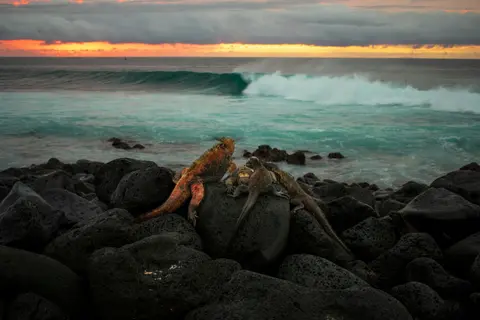
Impressive Pahoehoe lava field that lies between two active volcanoes, Sierra Negra and Cerro Azul, on the south coast of Isabela Island. The rich waters of Cromwell current wash the shores, and as a result, you can see the largest marine iguanas of the archipelago basking on the rocks, flightless cormorants and Galapagos penguins diving for food. Snorkeling can be one of the coldest of the trip, but also one of the most rewarding experiences with good chances to see penguins “flying” underwater, Green Sea Turtles, and Marine Iguanas feeding. View less During the walk you will experience, as an oasis in a desert of lava, some coastal lagoons in the middle of the field, here you can find shorebirds such as White-cheeked Pintail Ducks, Black-necked Stilts and even sometimes Flamingos.

As Terras Altas de Santa Cruz são o interior exuberante e nebuloso da ilha mais populosa das Galápagos, onde gigantescas tartarugas selvagens vagam livremente por campos de grama e florestas de escalésia acima da costa árida. As experiências imperdíveis incluem encontrar tartarugas gigantes no Rancho El Chato, visitar a Estação Científica Charles Darwin e explorar túneis de lava vulcânica. Visite de junho a dezembro para as paisagens mais verdes e as tartarugas mais ativas.

A Baía Gardner, na Ilha Española, é uma das praias de vida selvagem mais espetaculares das Galápagos, onde leões marinhos, iguanas marinhas e tentilhões de Hood interagem com os visitantes em areias brancas e pristinas. As experiências essenciais incluem mergulhar com filhotes de leão marinho brincalhões e visitar a colônia de albatrozes em Punta Suárez. De janeiro a maio, as águas quentes são ideais para snorkeling; de abril a dezembro, ocorre a temporada de reprodução dos albatrozes.

A Ilha San Cristóbal, um histórico portal para as Galápagos, oferece uma mistura única de beleza natural e rica cultura. As experiências imperdíveis incluem saborear pratos locais como ceviche de mero e visitar o deslumbrante Ilhéu Las Tintoreras. A melhor época para visitar é durante a estação seca, de junho a novembro, quando o clima é mais fresco e a vida selvagem está particularmente ativa.
Day 1

A Ilha San Cristóbal, um histórico portal para as Galápagos, oferece uma mistura única de beleza natural e rica cultura. As experiências imperdíveis incluem saborear pratos locais como ceviche de mero e visitar o deslumbrante Ilhéu Las Tintoreras. A melhor época para visitar é durante a estação seca, de junho a novembro, quando o clima é mais fresco e a vida selvagem está particularmente ativa.
Day 2
Genovesa is one of the northernmost islands of the archipelago. Genovesa’s southern side of the shield volcano’s crater collapsed and a protected bay known as Darwin Bay was formed. The island is often referred to as the “Bird Island” as the numbers and species of land and seabirds on Genovesa are quite extraordinary. There are two visitor sites, and Prince Philip’s Steps give access to the flat plateau above the bay. Named after Prince Philip who visited the Galapagos on two occasions, the “steps” are mostly natural. View less The steep cliffs are home to Red-billed Tropicbirds, while Magnificent Frigatebirds, Nazca and Red-footed Boobies prefer the top. The plateau above Prince Philip’s Steps has a palo santo forest and an extensive lava field. This is an area where one of the Galapagos’ top predators, the Short-eared Owl, is hunting storm petrels. The Short-eared Owls are extremely well camouflaged and are not always easy to spot in between the rocks.

El Barranco (Escadas do Príncipe Philip) na Ilha Genovesa oferece uma das experiências mais imersivas de aves marinhas das Galápagos, com atuns de pés vermelhos nidificando ao nível dos olhos e corujas de orelhas curtas caçando petrel-tempestade em campos de lava. As atividades imperdíveis incluem subir as escadas do penhasco vulcânico e caminhar entre milhares de atuns e fragatas nidificando. De junho a novembro, a atividade de reprodução atinge seu pico, embora diferentes espécies nidifiquem durante todo o ano.
Day 3

A Ilha North Seymour, uma joia dentro do arquipélago de Galápagos, é famosa por sua notável biodiversidade e deslumbrantes paisagens vulcânicas. As experiências imperdíveis incluem trilhas pelo interior da ilha para testemunhar aves-frigate ninho e fazer snorkel em águas cristalinas nas proximidades. A melhor época para visitar é de junho a dezembro, quando o clima é mais fresco e a atividade da vida selvagem está em seu auge.
Day 4
Among the impressive new lava fields of Fernandina Island hides a cove surrounded by mangroves. A rewarding place for bird-watching as the bay is the point where the land meets the sea, joining the two environments, with sea birds, shorebirds and land birds all in the same place. The different species of mangroves: Red, White and Black, have formed a root system that serves as a nursery for many species of fish, including juveniles’ sharks and green sea turtles. View less Snorkeling is as rewarding with some unique sightings as Marine Iguanas feeding on algae, or flightless cormorants diving for their prey.
Impressive Pahoehoe lava field that lies between two active volcanoes, Sierra Negra and Cerro Azul, on the south coast of Isabela Island. The rich waters of Cromwell current wash the shores, and as a result, you can see the largest marine iguanas of the archipelago basking on the rocks, flightless cormorants and Galapagos penguins diving for food. Snorkeling can be one of the coldest of the trip, but also one of the most rewarding experiences with good chances to see penguins “flying” underwater, Green Sea Turtles, and Marine Iguanas feeding. View less During the walk you will experience, as an oasis in a desert of lava, some coastal lagoons in the middle of the field, here you can find shorebirds such as White-cheeked Pintail Ducks, Black-necked Stilts and even sometimes Flamingos.
Day 5

As Terras Altas de Santa Cruz são o interior exuberante e nebuloso da ilha mais populosa das Galápagos, onde gigantescas tartarugas selvagens vagam livremente por campos de grama e florestas de escalésia acima da costa árida. As experiências imperdíveis incluem encontrar tartarugas gigantes no Rancho El Chato, visitar a Estação Científica Charles Darwin e explorar túneis de lava vulcânica. Visite de junho a dezembro para as paisagens mais verdes e as tartarugas mais ativas.
Day 6

A Baía Gardner, na Ilha Española, é uma das praias de vida selvagem mais espetaculares das Galápagos, onde leões marinhos, iguanas marinhas e tentilhões de Hood interagem com os visitantes em areias brancas e pristinas. As experiências essenciais incluem mergulhar com filhotes de leão marinho brincalhões e visitar a colônia de albatrozes em Punta Suárez. De janeiro a maio, as águas quentes são ideais para snorkeling; de abril a dezembro, ocorre a temporada de reprodução dos albatrozes.
Day 7

A Ilha San Cristóbal, um histórico portal para as Galápagos, oferece uma mistura única de beleza natural e rica cultura. As experiências imperdíveis incluem saborear pratos locais como ceviche de mero e visitar o deslumbrante Ilhéu Las Tintoreras. A melhor época para visitar é durante a estação seca, de junho a novembro, quando o clima é mais fresco e a vida selvagem está particularmente ativa.


Our cruise specialists can help you find the perfect cabin and the best available pricing.
(+886) 02-2721-7300Contact Advisor