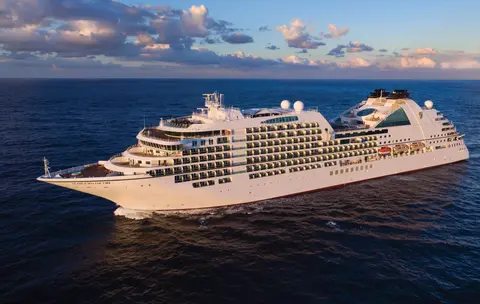
Seabourn7731
7 Zile Ghețari și Pasajul Interior din Alaska
Date
2027-05-28
Duration
7 nights
Departure Port
Vancouver
Canada
Arrival Port
Juneau
Statele Unite
Rating
—
Theme
—
Date
2027-05-28
Duration
7 nights
Departure Port
Vancouver
Canada
Arrival Port
Juneau
Statele Unite
Rating
—
Theme
—





Seabourn
2016
—
40,350 GT
600
266
330
690 m
28 m
19 knots
No
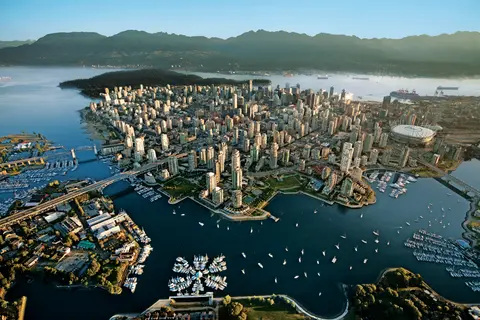
Între Pacific și Munții Coastelor, Vancouver este poarta naturală către Pasajul Interior al Alaskăi — un oraș unde pădurea tropicală temperată întâlnește turnurile de sticlă și unde crabii Dungeness și somonul sălbatic sockeye definesc o bucătărie a Rimului Pacificului care rivalizează cu orice altă din America de Nord. Parcurgeți cele 22 de kilometri ai digului din Stanley Park, pierdeți-vă în piața Granville Island, apoi traversați cu feribotul spre splendoarea edwardiană a Victoriei. Sezonul croazierelor în Alaska atinge apogeul între mai și septembrie, făcând din Vancouver un punct de plecare ideal pentru una dintre cele mai grandioase călătorii oceanice din lume.
The Seymour Narrows is a 3-mile/5 km stretch of the Discovery Channel north of Vancouver Island, British Columbia that is notorious for the strength of the tidal currents flowing through it. The average width of the narrows is just 750 meters. During extreme tides, the current through the narrows is subject to severe Venturi effect, resulting in an increased velocity that can reach 15 knots. For much of its modern history, there was an additional hazard in the narrows called Ripple Rock, a shallow obstruction that claimed no fewer than 119 ships and 114 lives. In 1958, after months of tunneling and preparation, Ripple Rock was blown up in the largest commercial, non-nuclear explosion ever recorded in North America. Still, the navigation of Seymour Narrows is dependent on tidal and other conditions, and requires skill and technical accomplishment.
The Queen Charlotte Sound lies between the Queen Charlotte Strait, which winds between Vancouver Island and the British Columbia mainland in the south, and Hecate Strait, which is northward, adjacent to the Haida Gwaii Islands off the Pacific coast of British Columbia. It is a broad reach in the long shipping route called the Inside Passage threading the myriad islands stretching from Washington’s Puget Sound to Alaska.
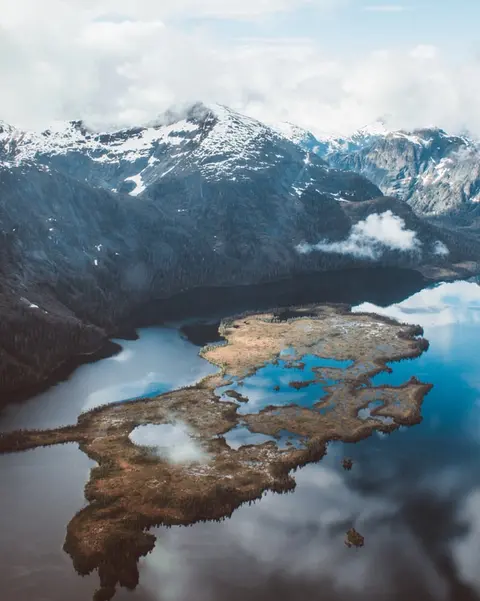
Ketchikan se agață de țărmul împădurit al Insulei Revillagigedo, în pană de sud-est a Alaskăi — un oraș atât de îngust încât localnicii glumesc că are trei mile lungime și trei străzi lățime. Venerat de milenii de poporul Tlingit ca un loc al somonului din abundență, astăzi este celebrat drept Capitala Lumii a Stâlpilor Totemici: colecțiile din Saxman Native Village și Parcul Istoric de Stat Totem Bight păstrează cea mai semnificativă concentrație a acestor opere monumentale oriunde în lume. Creek Street, o pasarelă de case istorice colorate construite deasupra pârâului Ketchikan, nu trebuie ratată. Vara (mai–septembrie) aduce cele mai bune condiții meteo, cu somonul care migrează în pâraiele de dedesubt.
In the passage between Sumner Strait and Clarence Strait in Southeast Alaska’s Alexander Archipelago, midway between Price of Wales Island on the west and Zarembo Island on the east, is a small cluster of islands with a picturesque passageway between them called Snow Pass. It makes a scenic up-close route for your Seabourn ship during the transit.
Decision Passage is the western end of the Sumner Strait, which runs through the Alexander Archipelago into the Pacific Ocean in Southeastern Alaska, bounded on the north by Kuiu Island and Cape Decision, the location of a 1932 lighthouse. This is the route your ship takes when coming from or going to the colorful historic community of Sitka on the west coast of Baranof Island, which was originally the Russian fortress town of New Archangel.
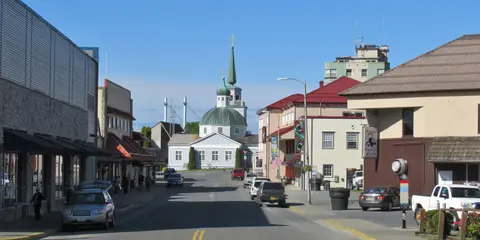
Sitka, situat pe sălbaticul țărm vestic al insulei Baranof din sud-estul Alaskăi, este unul dintre cele mai încărcate de istorie porturi din Pacificul de Nord-Vest — un loc unde cupolele în formă de ceapă ale bisericilor ortodoxe rusești se înalță deasupra totemurilor, iar imensa pădure temperată coboară până la marginea apei. Parcul Național Istoric Sitka păstrează locul bătăliei din 1804 dintre războinicii Tlingit și coloniștii ruși, alături de o colecție magnifică de stâlpi monumentali. Observarea balenelor, caiacul de mare printre vidrele marine și descoperirea urșilor bruni în sălbăticia înconjurătoare definesc experiența în aer liber. Perioada mai-septembrie oferă cele mai accesibile și luminoase condiții.
Yakutat Bay is 18 miles wide at its entry, and cuts from the Gulf of Alaska into Disenchantment Bay, the entryway to the huge Hubbard Glacier, North America’s largest tidewater glacier. As the bay narrows and the shorelines draw closer, the 400-foot face of the glacier exerts a luminous, ghostly presence, often from as much as 30 miles away. More and more floating ice dimples the surface of the water, and seals bob up and disappear again. The chilled air from the glacier flows in a downdraft of cold that gives rise to mists and gray clouds, through which the vivid blue of the ice wall shimmers. It is an impressive sight of nature’s immense raw workplace, shaping the earth itself as part of an endless cycle of water from the sea evaporating to the sky, falling as snow on the heights and inching over centuries back again to the sea.
The Hubbard Glacier is the largest, and one of the most spectacular tidewater glaciers in North America. Its ice cliffs, some 400’ (121 m) tall, calve icebergs into the fjord, which may frequently be larger than a five-story building. The glacier’s surface is creased and contorted, resembling the wrinkled skin of a giant elephant. Records show it has been growing in thickness and advancing since 1895. This stands in stark contrast to other glaciers around the world, most of which have been receding during the past century. In 2002, the glacier blocked Russell Fjord for two and a half months, raising water levels 61’ (18 m) and threatening local communities with flooding. Nutrient-rich waters along the glacier face attract many species. Gulls and kittiwake colonies adorn smaller islands and harbor seals patrol the icy waters. In 1890, Israel Russell explored the area of Yakutat Bay and Hubbard Glacier, naming it after Gardiner G. Hubbard, a financier of his expedition and a founder and the first president of the National Geographic Society. VIEW CRUISES
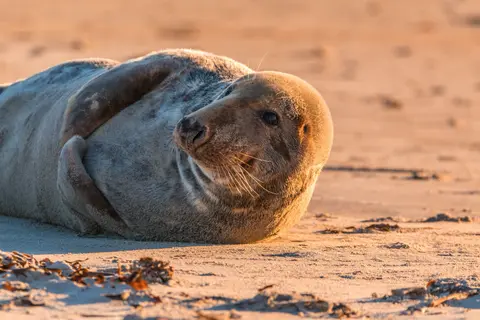
Insulele Inian sunt un grup sălbatic și nelocuit la intrarea în Cross Sound din Alaska, renumit pentru întâlnirile extraordinare cu fauna sălbatică, inclusiv hrănirea balenelor cu cocoașă prin tehnica bulelor și coloniile masive de lei de mare Steller. Experiențele de neratat includ excursii cu Zodiac de-a lungul țărmurilor stâncoase ale insulelor, observarea hrănirii cooperative a balenelor și explorarea piscinelor de maree pline de viață marină. Vizitați în perioada iulie–august pentru activitatea maximă a balenelor și cele mai bune condiții marine.
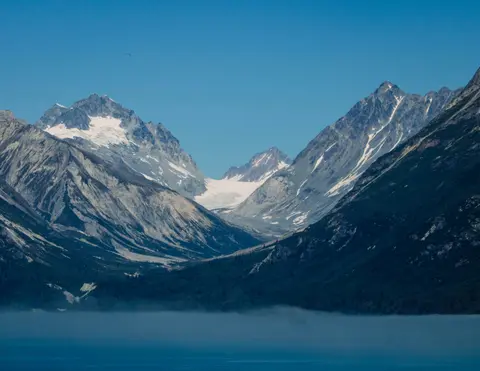
Icy Strait Point este un port alaskan uimitor, renumit pentru frumusețea sa naturală copleșitoare și pentru bogata cultură nativă Tlingit. Experiențele de neratat includ savurarea fructelor de mare proaspete locale și aventurile în sălbăticie în Parcul Național Glacier Bay. Cel mai bun sezon pentru vizită este în lunile de vară, când vremea este blândă și fauna sălbatică abundă.
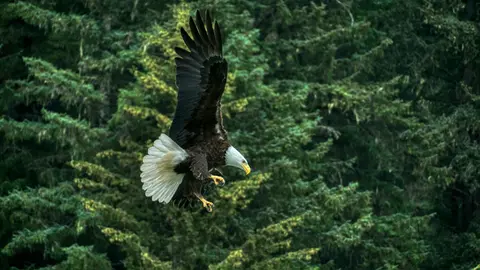
Haines este un oraș autentic din Alaska, situat pe cel mai adânc fiord din America de Nord, gazda celei mai mari congregații de vulturi pleșuvi din lume — până la patru mii de păsări de-a lungul râului Chilkat — și o comunitate artistică înfloritoare care păstrează tradițiile culturale Tlingit. Vizitați între iunie și august prin Cunard sau Lindblad pentru aterizări cu elicopterul pe ghețari și drumeții pe coastă, sau între octombrie și februarie pentru spectacolul extraordinar al vulturilor, care face din Haines cel mai bine păstrat secret al Alaskăi.
Lynn Canal is a 90-mile long inlet into Alaska’s coast running from the Chilkat River in the north to the Chatham Strait and Stephens Passage in the south. Because it connects the towns of Skagway and Haines to Juneau and the rest of the Inside Passage, it is an important shipping lane for ferries, cargo and cruise ships, and was a crucial passageway to the Klondike gold fields during the Gold Rush. It was discovered by Joseph Whidbey in 1794 and named by George Vancouver after his birthplace, King’s Lynn in Norfolk, England. More than 2,000 feet in depth, it is one of the deepest and longest fjords in the world, and the deepest in North America outside Greenland.
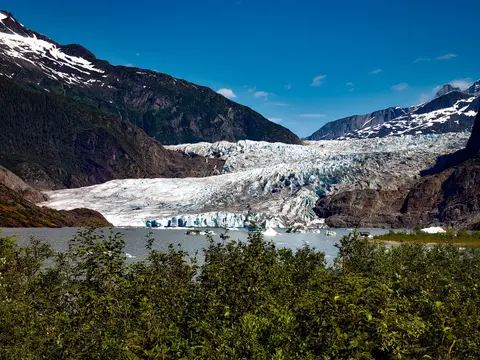
Singura capitală de stat din America inaccesibilă pe cale rutieră, Juneau răsplătește călătoria cu o măreție sălbatică pe care puține orașe din lume o pot egala. Ghețarul Mendenhall — un râu viu de gheață străveche — se află la doar cincisprezece minute de centrul orașului, unde hidroavioanele zboară deasupra unei faleze mărginită de munți acoperiți cu molizi, ce se prăvălesc direct în mare. Experiența obligatorie este o aterizare cu elicopterul pe câmpul de gheață sau o excursie de observare a balenelor în Pasajul Stephens, unde balenele cu cocoașă sar în apropiere uimitoare. Juneau este cel mai cald între iunie și august, deși chiar și zilele de vară pot aduce faimoasa ploaie din sud-estul Alaskăi, care menține pădurea tropicală mereu luminată.
Day 1
Între Pacific și Munții Coastelor, Vancouver este poarta naturală către Pasajul Interior al Alaskăi — un oraș unde pădurea tropicală temperată întâlnește turnurile de sticlă și unde crabii Dungeness și somonul sălbatic sockeye definesc o bucătărie a Rimului Pacificului care rivalizează cu orice altă din America de Nord. Parcurgeți cele 22 de kilometri ai digului din Stanley Park, pierdeți-vă în piața Granville Island, apoi traversați cu feribotul spre splendoarea edwardiană a Victoriei. Sezonul croazierelor în Alaska atinge apogeul între mai și septembrie, făcând din Vancouver un punct de plecare ideal pentru una dintre cele mai grandioase călătorii oceanice din lume.
The Seymour Narrows is a 3-mile/5 km stretch of the Discovery Channel north of Vancouver Island, British Columbia that is notorious for the strength of the tidal currents flowing through it. The average width of the narrows is just 750 meters. During extreme tides, the current through the narrows is subject to severe Venturi effect, resulting in an increased velocity that can reach 15 knots. For much of its modern history, there was an additional hazard in the narrows called Ripple Rock, a shallow obstruction that claimed no fewer than 119 ships and 114 lives. In 1958, after months of tunneling and preparation, Ripple Rock was blown up in the largest commercial, non-nuclear explosion ever recorded in North America. Still, the navigation of Seymour Narrows is dependent on tidal and other conditions, and requires skill and technical accomplishment.
Day 2
The Queen Charlotte Sound lies between the Queen Charlotte Strait, which winds between Vancouver Island and the British Columbia mainland in the south, and Hecate Strait, which is northward, adjacent to the Haida Gwaii Islands off the Pacific coast of British Columbia. It is a broad reach in the long shipping route called the Inside Passage threading the myriad islands stretching from Washington’s Puget Sound to Alaska.
Day 3
Ketchikan se agață de țărmul împădurit al Insulei Revillagigedo, în pană de sud-est a Alaskăi — un oraș atât de îngust încât localnicii glumesc că are trei mile lungime și trei străzi lățime. Venerat de milenii de poporul Tlingit ca un loc al somonului din abundență, astăzi este celebrat drept Capitala Lumii a Stâlpilor Totemici: colecțiile din Saxman Native Village și Parcul Istoric de Stat Totem Bight păstrează cea mai semnificativă concentrație a acestor opere monumentale oriunde în lume. Creek Street, o pasarelă de case istorice colorate construite deasupra pârâului Ketchikan, nu trebuie ratată. Vara (mai–septembrie) aduce cele mai bune condiții meteo, cu somonul care migrează în pâraiele de dedesubt.
In the passage between Sumner Strait and Clarence Strait in Southeast Alaska’s Alexander Archipelago, midway between Price of Wales Island on the west and Zarembo Island on the east, is a small cluster of islands with a picturesque passageway between them called Snow Pass. It makes a scenic up-close route for your Seabourn ship during the transit.
Decision Passage is the western end of the Sumner Strait, which runs through the Alexander Archipelago into the Pacific Ocean in Southeastern Alaska, bounded on the north by Kuiu Island and Cape Decision, the location of a 1932 lighthouse. This is the route your ship takes when coming from or going to the colorful historic community of Sitka on the west coast of Baranof Island, which was originally the Russian fortress town of New Archangel.
Day 4
Sitka, situat pe sălbaticul țărm vestic al insulei Baranof din sud-estul Alaskăi, este unul dintre cele mai încărcate de istorie porturi din Pacificul de Nord-Vest — un loc unde cupolele în formă de ceapă ale bisericilor ortodoxe rusești se înalță deasupra totemurilor, iar imensa pădure temperată coboară până la marginea apei. Parcul Național Istoric Sitka păstrează locul bătăliei din 1804 dintre războinicii Tlingit și coloniștii ruși, alături de o colecție magnifică de stâlpi monumentali. Observarea balenelor, caiacul de mare printre vidrele marine și descoperirea urșilor bruni în sălbăticia înconjurătoare definesc experiența în aer liber. Perioada mai-septembrie oferă cele mai accesibile și luminoase condiții.
Day 5
Yakutat Bay is 18 miles wide at its entry, and cuts from the Gulf of Alaska into Disenchantment Bay, the entryway to the huge Hubbard Glacier, North America’s largest tidewater glacier. As the bay narrows and the shorelines draw closer, the 400-foot face of the glacier exerts a luminous, ghostly presence, often from as much as 30 miles away. More and more floating ice dimples the surface of the water, and seals bob up and disappear again. The chilled air from the glacier flows in a downdraft of cold that gives rise to mists and gray clouds, through which the vivid blue of the ice wall shimmers. It is an impressive sight of nature’s immense raw workplace, shaping the earth itself as part of an endless cycle of water from the sea evaporating to the sky, falling as snow on the heights and inching over centuries back again to the sea.
The Hubbard Glacier is the largest, and one of the most spectacular tidewater glaciers in North America. Its ice cliffs, some 400’ (121 m) tall, calve icebergs into the fjord, which may frequently be larger than a five-story building. The glacier’s surface is creased and contorted, resembling the wrinkled skin of a giant elephant. Records show it has been growing in thickness and advancing since 1895. This stands in stark contrast to other glaciers around the world, most of which have been receding during the past century. In 2002, the glacier blocked Russell Fjord for two and a half months, raising water levels 61’ (18 m) and threatening local communities with flooding. Nutrient-rich waters along the glacier face attract many species. Gulls and kittiwake colonies adorn smaller islands and harbor seals patrol the icy waters. In 1890, Israel Russell explored the area of Yakutat Bay and Hubbard Glacier, naming it after Gardiner G. Hubbard, a financier of his expedition and a founder and the first president of the National Geographic Society. VIEW CRUISES
Day 6
Insulele Inian sunt un grup sălbatic și nelocuit la intrarea în Cross Sound din Alaska, renumit pentru întâlnirile extraordinare cu fauna sălbatică, inclusiv hrănirea balenelor cu cocoașă prin tehnica bulelor și coloniile masive de lei de mare Steller. Experiențele de neratat includ excursii cu Zodiac de-a lungul țărmurilor stâncoase ale insulelor, observarea hrănirii cooperative a balenelor și explorarea piscinelor de maree pline de viață marină. Vizitați în perioada iulie–august pentru activitatea maximă a balenelor și cele mai bune condiții marine.
Icy Strait Point este un port alaskan uimitor, renumit pentru frumusețea sa naturală copleșitoare și pentru bogata cultură nativă Tlingit. Experiențele de neratat includ savurarea fructelor de mare proaspete locale și aventurile în sălbăticie în Parcul Național Glacier Bay. Cel mai bun sezon pentru vizită este în lunile de vară, când vremea este blândă și fauna sălbatică abundă.
Day 7
Haines este un oraș autentic din Alaska, situat pe cel mai adânc fiord din America de Nord, gazda celei mai mari congregații de vulturi pleșuvi din lume — până la patru mii de păsări de-a lungul râului Chilkat — și o comunitate artistică înfloritoare care păstrează tradițiile culturale Tlingit. Vizitați între iunie și august prin Cunard sau Lindblad pentru aterizări cu elicopterul pe ghețari și drumeții pe coastă, sau între octombrie și februarie pentru spectacolul extraordinar al vulturilor, care face din Haines cel mai bine păstrat secret al Alaskăi.
Lynn Canal is a 90-mile long inlet into Alaska’s coast running from the Chilkat River in the north to the Chatham Strait and Stephens Passage in the south. Because it connects the towns of Skagway and Haines to Juneau and the rest of the Inside Passage, it is an important shipping lane for ferries, cargo and cruise ships, and was a crucial passageway to the Klondike gold fields during the Gold Rush. It was discovered by Joseph Whidbey in 1794 and named by George Vancouver after his birthplace, King’s Lynn in Norfolk, England. More than 2,000 feet in depth, it is one of the deepest and longest fjords in the world, and the deepest in North America outside Greenland.
Day 8
Singura capitală de stat din America inaccesibilă pe cale rutieră, Juneau răsplătește călătoria cu o măreție sălbatică pe care puține orașe din lume o pot egala. Ghețarul Mendenhall — un râu viu de gheață străveche — se află la doar cincisprezece minute de centrul orașului, unde hidroavioanele zboară deasupra unei faleze mărginită de munți acoperiți cu molizi, ce se prăvălesc direct în mare. Experiența obligatorie este o aterizare cu elicopterul pe câmpul de gheață sau o excursie de observare a balenelor în Pasajul Stephens, unde balenele cu cocoașă sar în apropiere uimitoare. Juneau este cel mai cald între iunie și august, deși chiar și zilele de vară pot aduce faimoasa ploaie din sud-estul Alaskăi, care menține pădurea tropicală mereu luminată.
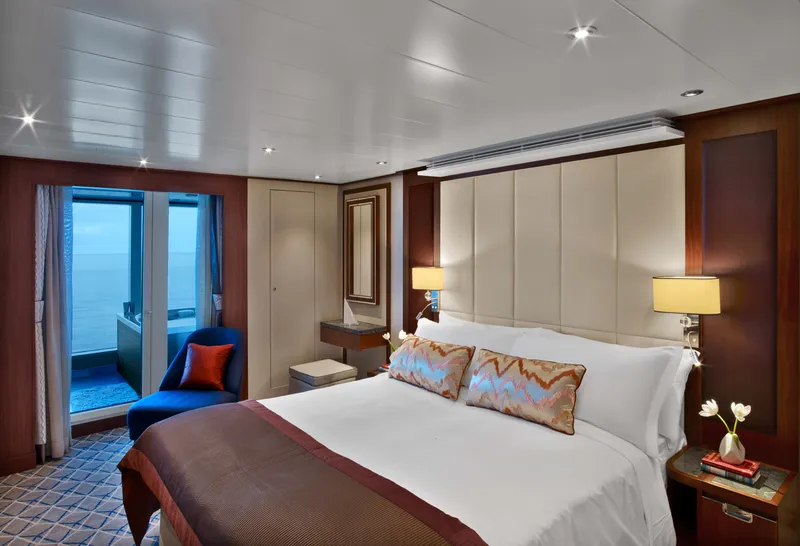
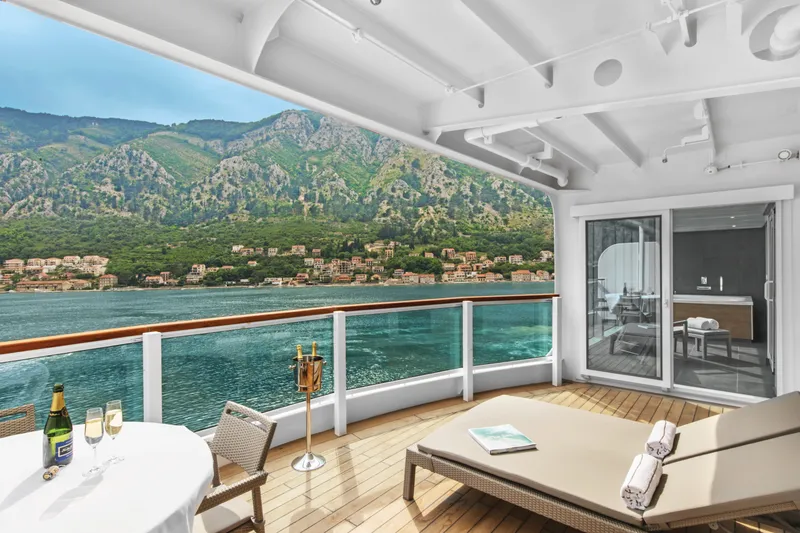

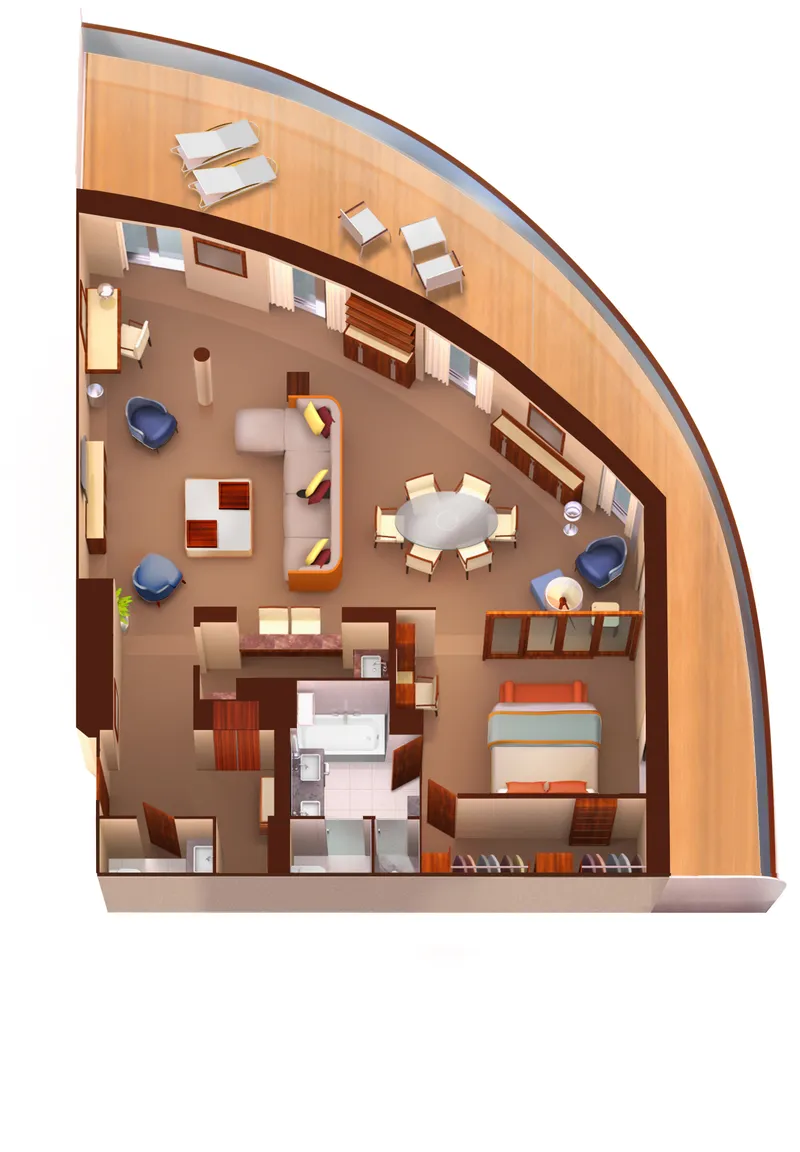
Located on Deck 8; Combine mid-ship suites 849 and 851 for suite 8491 or suites 846 and 848 for suite 8468 for a total inside space of 1,292 square feet (120 square meters) plus two verandas totaling 244 square feet (23 square meters)
Grand Wintergarden Suites feature
Large windows
Dining for six
Glass-enclosed solarium with tub and day bed
Two bedrooms
Two bathrooms (one whirlpool)
Convertible sofa bed for one
Pantry with wet bar
Two flat-screen TVs
Complimentary Internet/Wi-Fi service
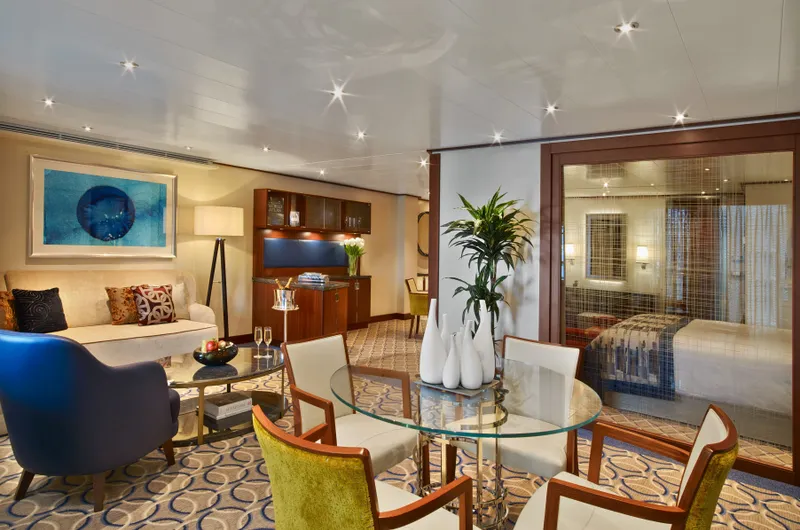
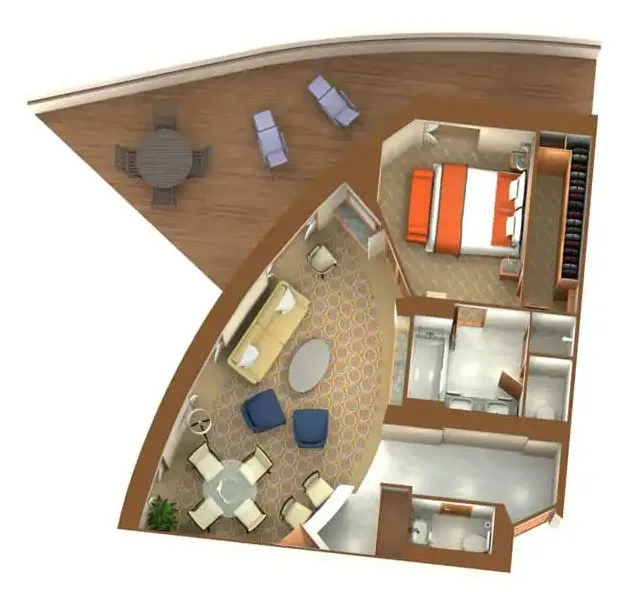
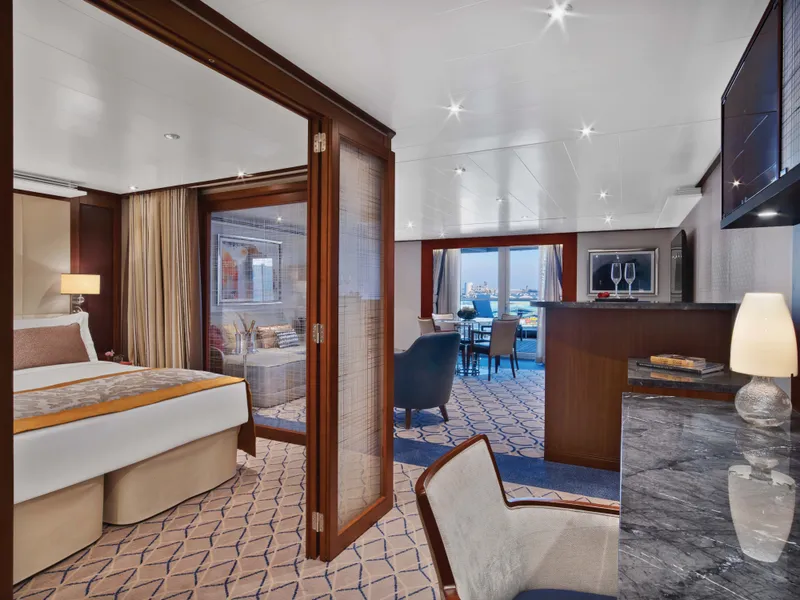


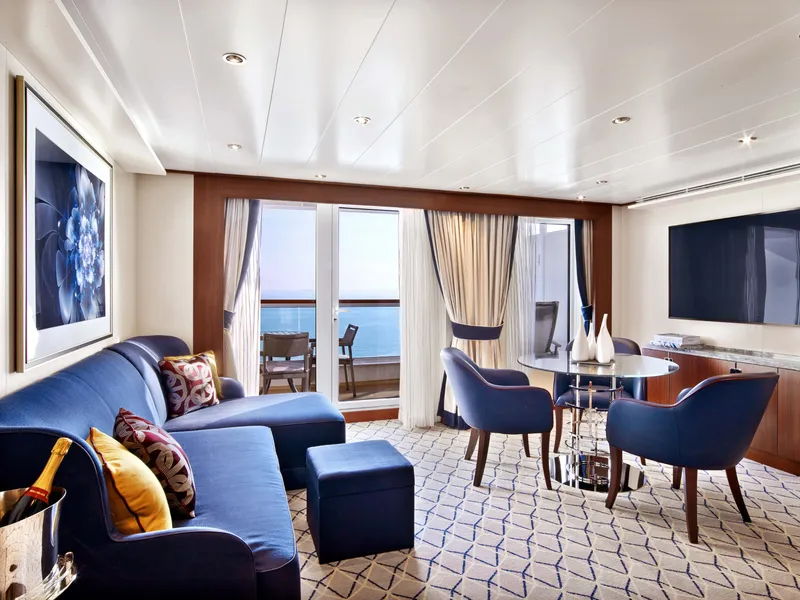

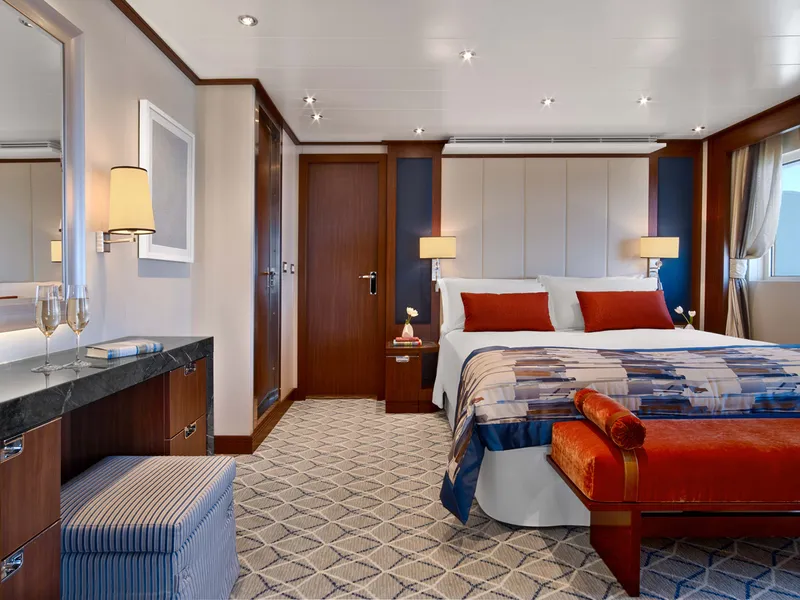
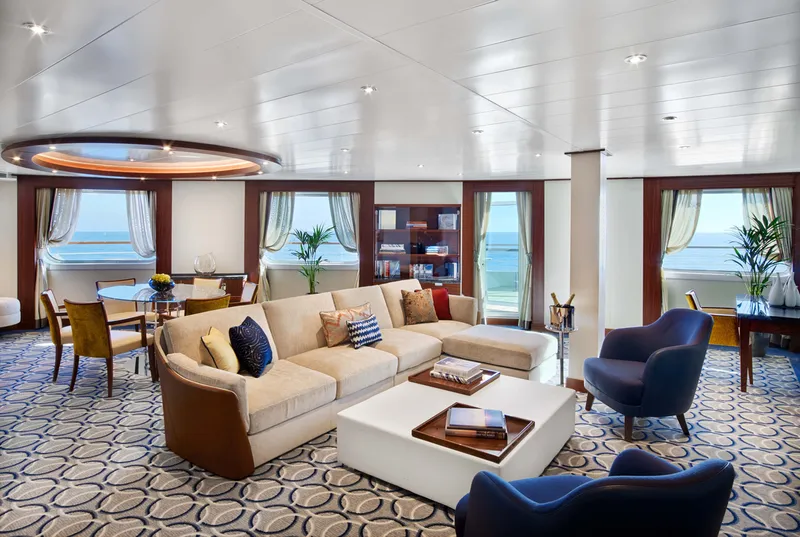
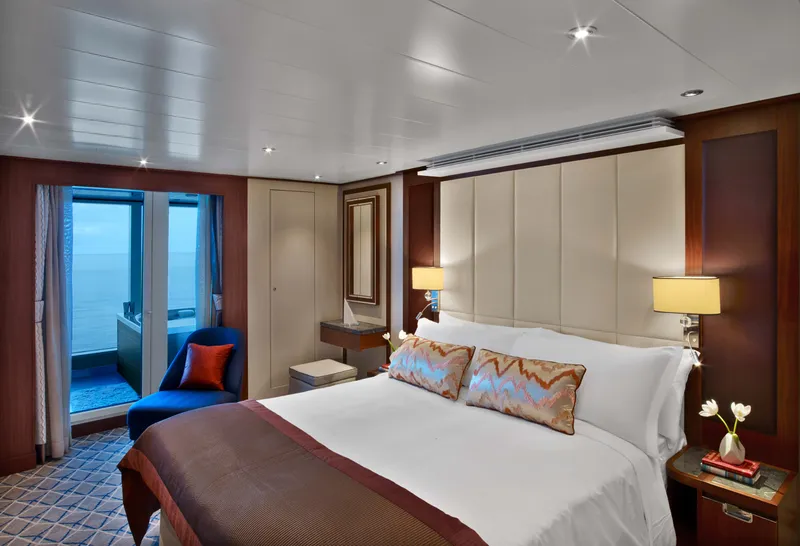
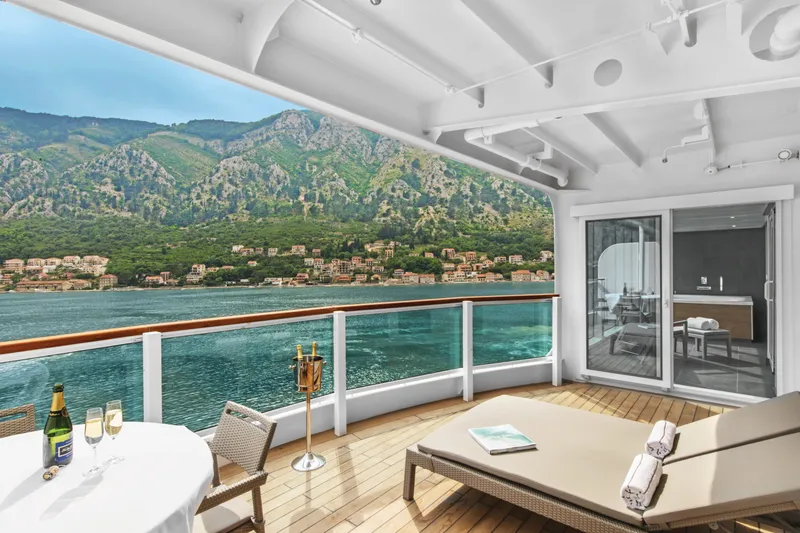

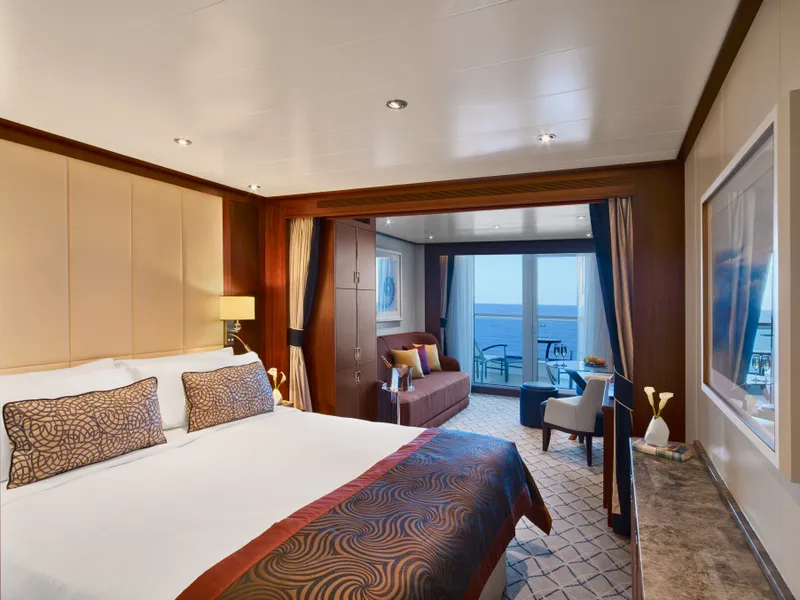
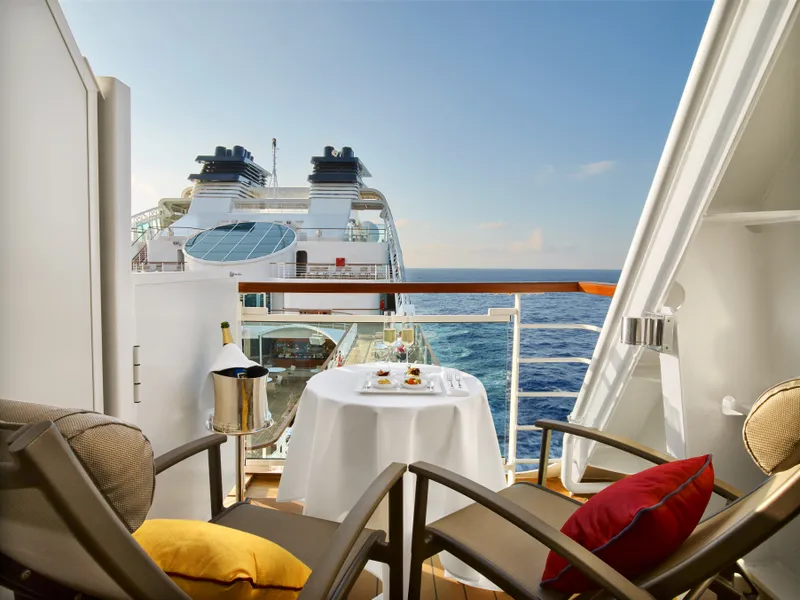
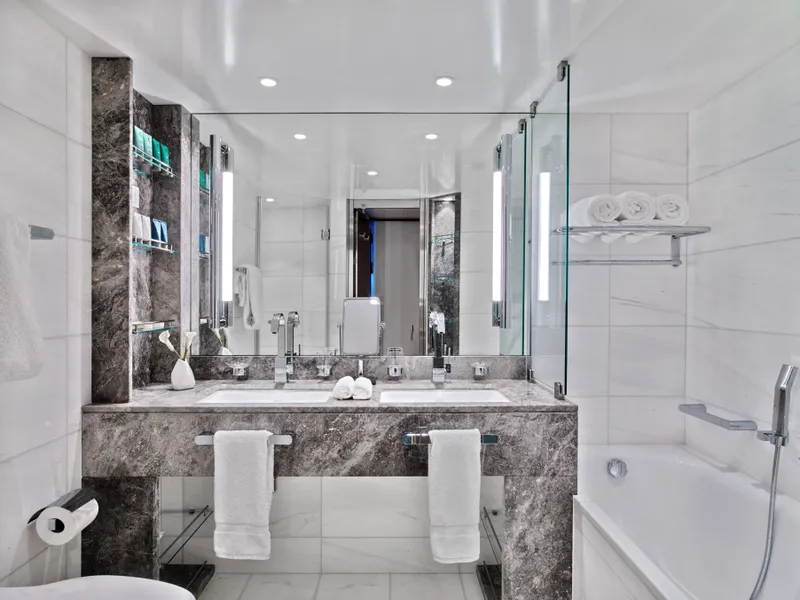
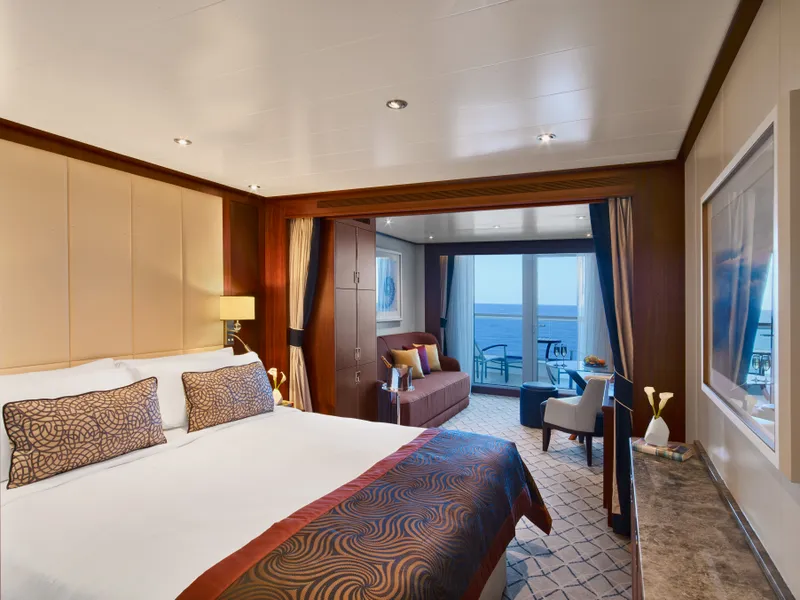
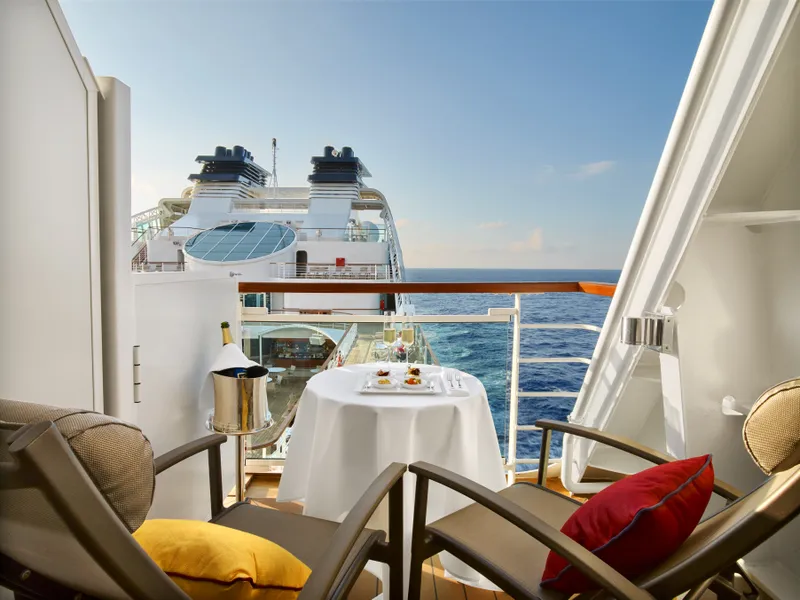

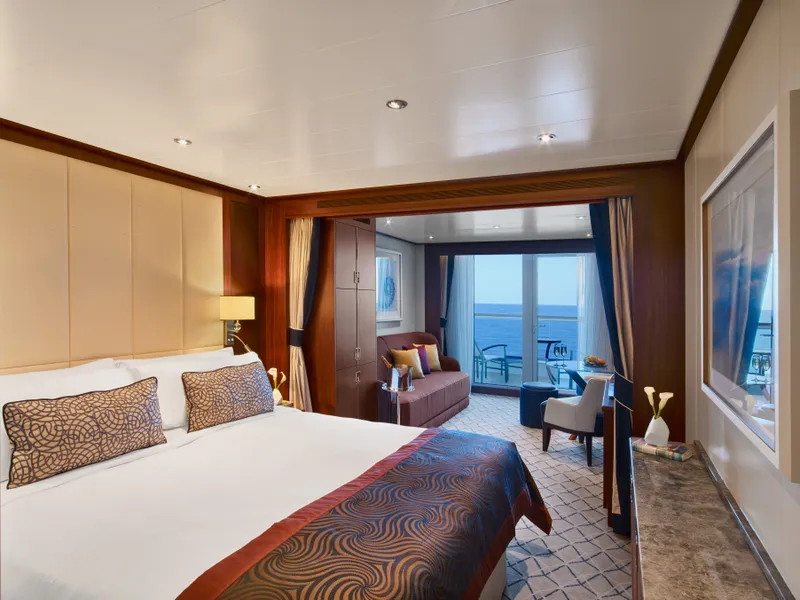
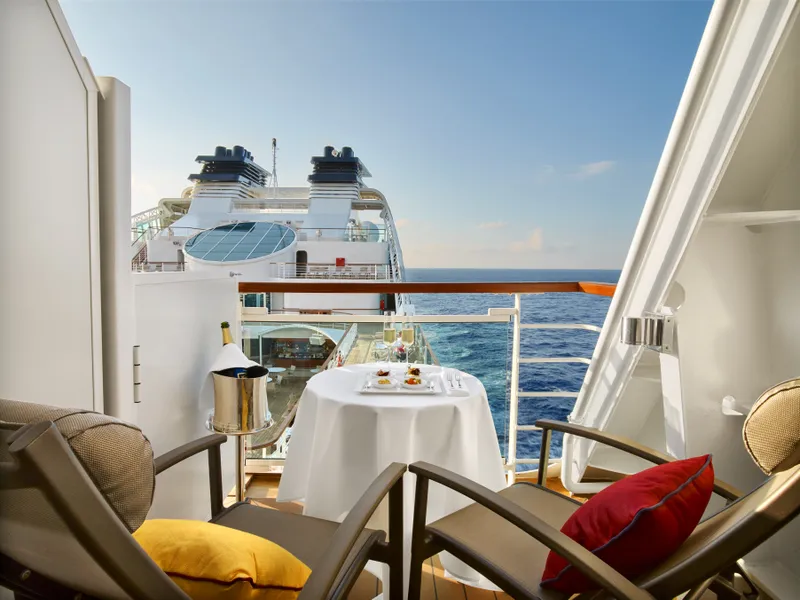
Located on Decks 8,9,10,11; total inside space of between 246 and 302 square feet (23 and 28 square meters) plus one veranda of between 68 and 83 square feet (6 and 7 square meters)
All Veranda Suites feature
A full-length window
Glass door to private veranda
Comfortable living area
Queen-size bed or two twin beds
Dining table for two
Walk-in closet
Interactive flat-screen television with music and movies
Fully stocked bar and refrigerator
Makeup vanity
Spacious bathroom with separate tub and shower

Our cruise specialists can help you find the perfect cabin and the best available pricing.
(+886) 02-2721-7300Contact Advisor