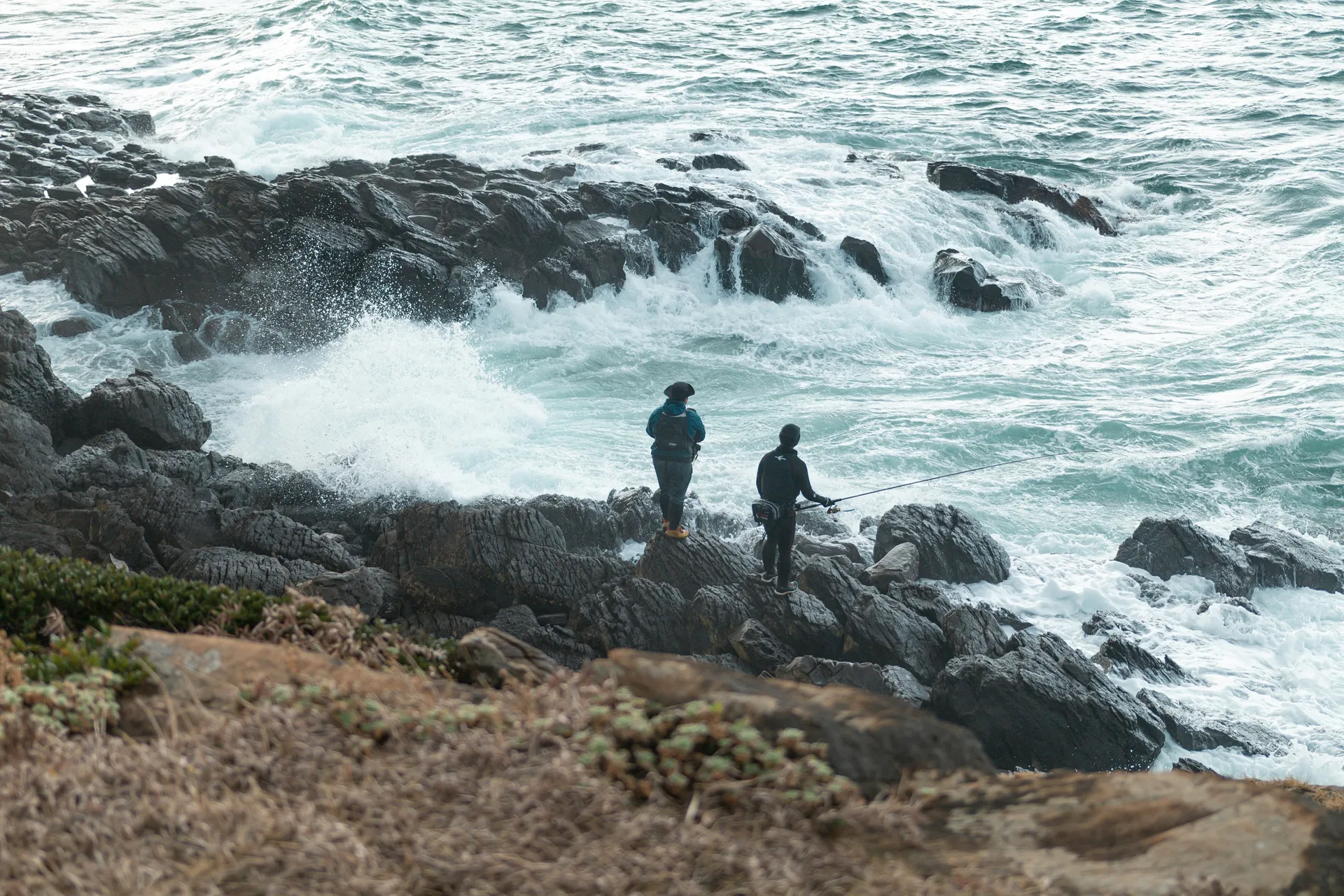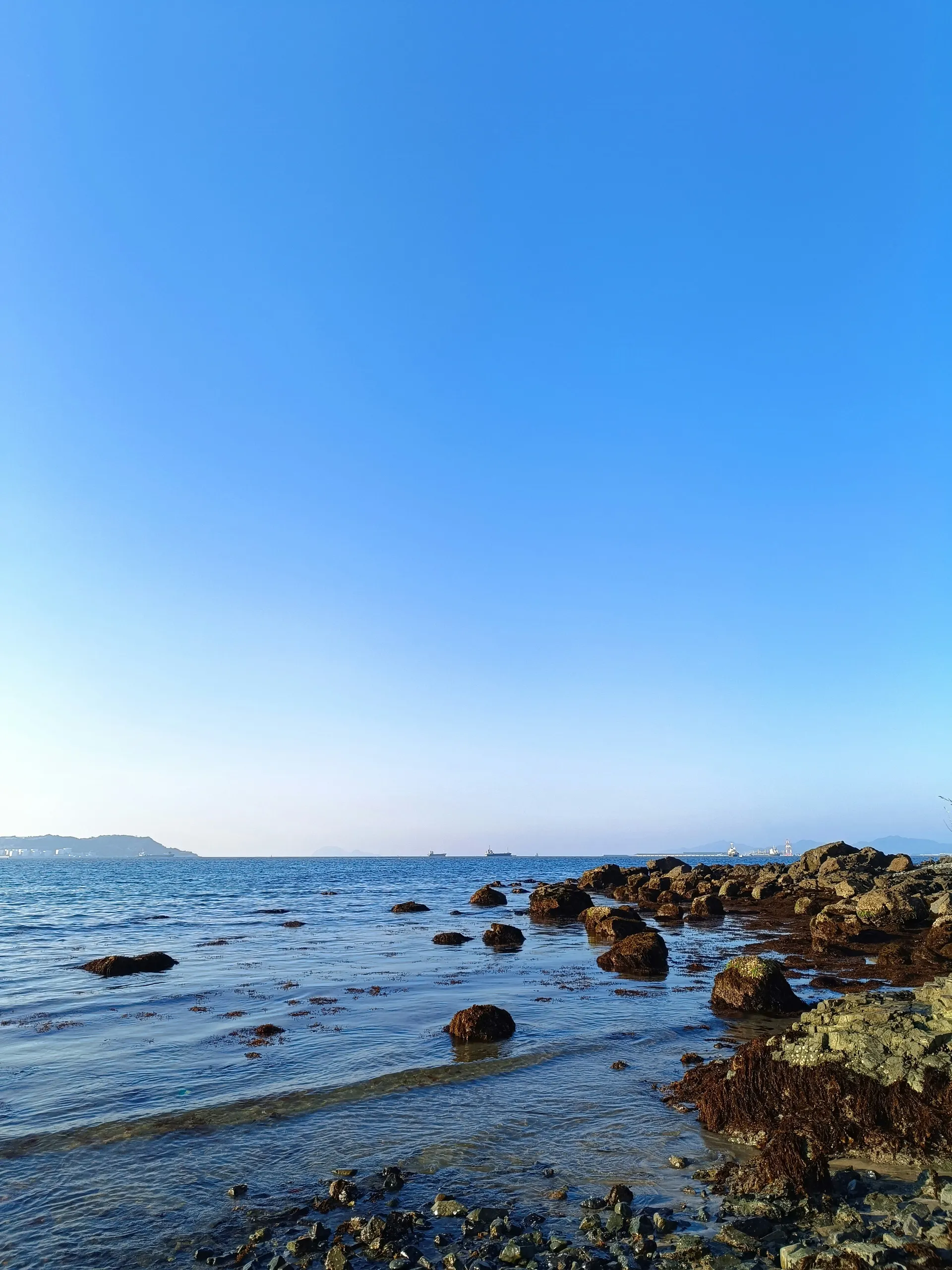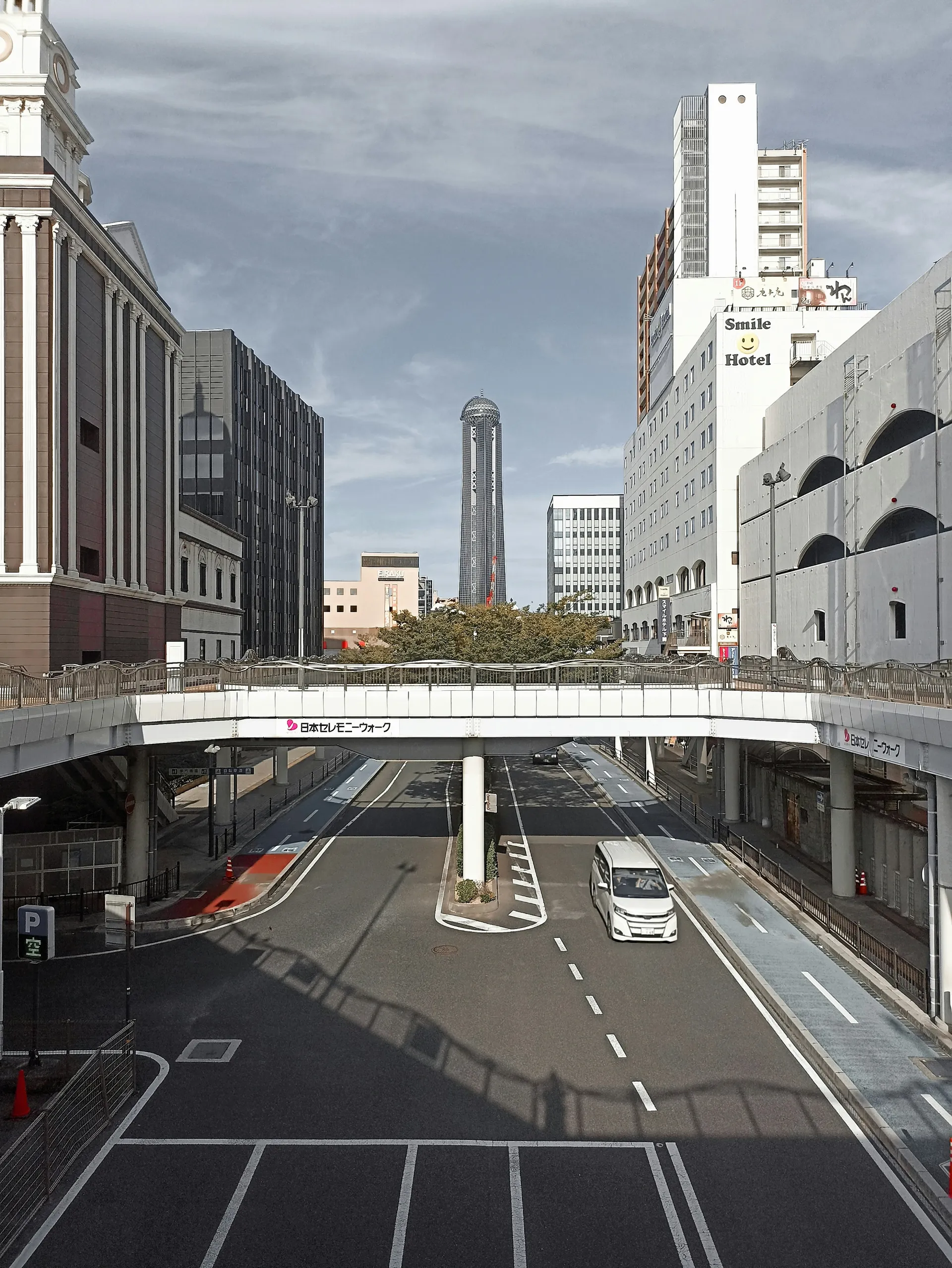
At the western tip of Honshu, where Japan's main island reaches across the Kanmon Straits toward Kyushu, Shimonoseki commands one of the most strategically vital waterways in East Asia. The straits, barely 700 metres wide at their narrowest point, have been the site of decisive naval battles since the 12th century — most notably the Battle of Dan-no-ura in 1185, when the Minamoto clan destroyed the Taira fleet and established the first shogunate, effectively ending the age of imperial court rule and beginning seven centuries of samurai government. The child emperor Antoku perished in the battle, his grandmother leaping into the sea with him in her arms rather than face capture — a tragedy memorialised at the Akama Shrine, which stands on the waterfront in Shimonoseki overlooking the very waters where the boy-emperor drowned.
Shimonoseki is the fugu capital of Japan — the city that has built its culinary identity around the consumption of the pufferfish whose internal organs contain tetrodotoxin, a poison 1,200 times more lethal than cyanide. The city's Karato Market, a bustling waterfront fish market that opens at 5 AM, features an entire section devoted to fugu, where licensed chefs prepare the translucent sashimi (fugu-sashi) so thinly sliced that the pattern of the plate is visible through the fish. Fugu cuisine extends well beyond sashimi: hire-zake (grilled fin in hot sake), fugu-nabe (hot pot), and fugu karaage (fried fugu) are served at restaurants throughout the city, and the Shimonoseki fugu festival in February draws connoisseurs from across Japan. The fish appears on the city's manhole covers, its round, spiny silhouette as iconic to Shimonoseki as the Eiffel Tower is to Paris.
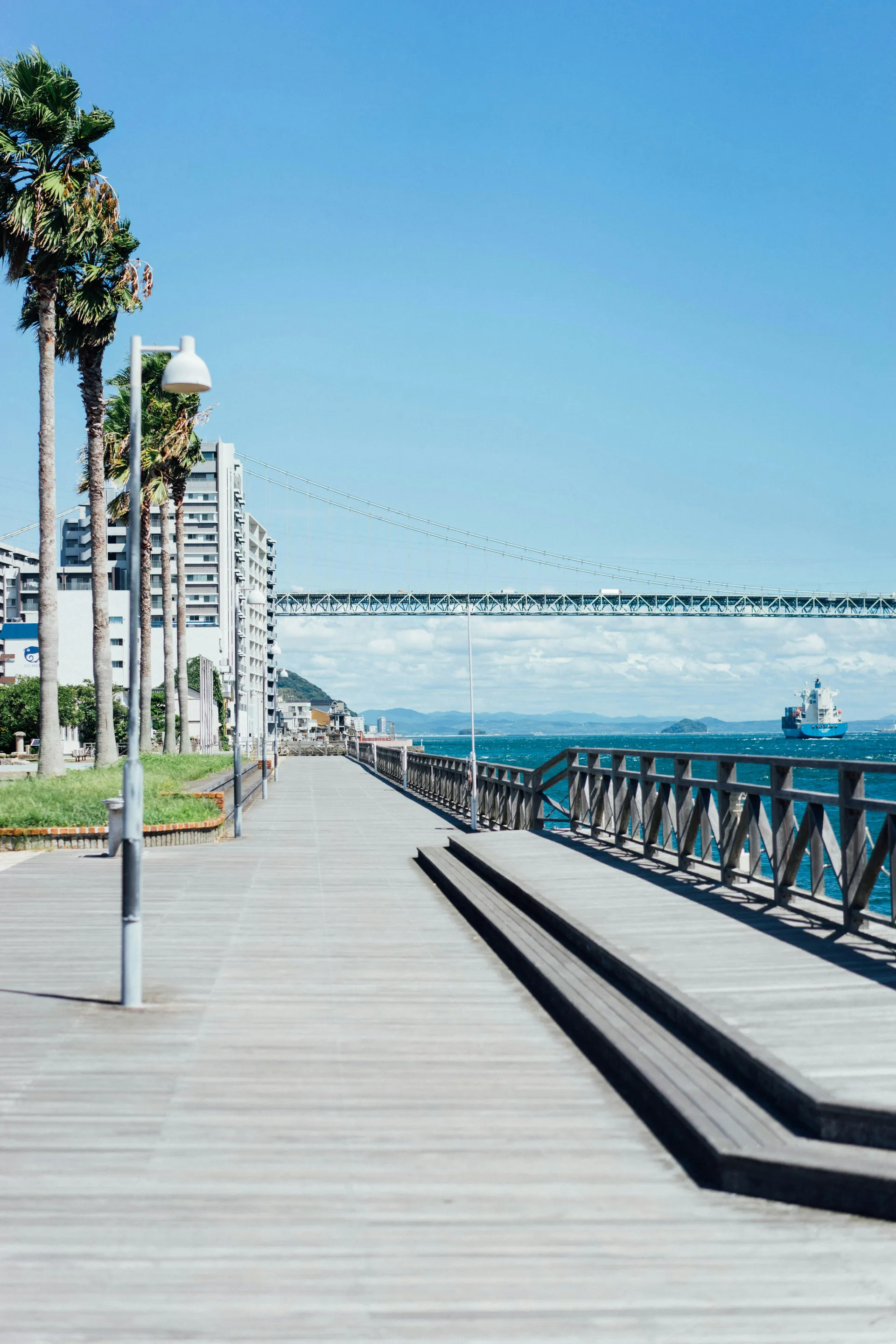
The Kanmon Straits experience is a highlight of any Shimonoseki visit. The undersea pedestrian tunnel, completed in 1958, allows visitors to walk 780 metres beneath the strait from Honshu to Kyushu — the midpoint is marked by a line on the tunnel floor separating Yamaguchi and Fukuoka prefectures, making it possible to stand with one foot on each island. Above ground, the Kanmon Bridge spans the straits in an elegant suspension arc, while the ferries that shuttle between Shimonoseki and Kitakyushu provide deck-level views of the currents that swirl through the narrows — tidal flows so powerful that they reverse direction every six hours, creating the whirlpools that feature in local seafaring legends.
The broader region surrounding Shimonoseki offers excursion possibilities that span centuries of Japanese history. The Kintai Bridge at Iwakuni, a five-arched wooden bridge first constructed in 1673, is one of the most beautiful structures in Japan. Hagi, a castle town on the Sea of Japan coast, preserves a samurai district whose earthen walls and merchant houses recall the Tokugawa era. Miyajima, the island whose floating torii gate is one of Japan's three most celebrated scenic views, is accessible on a day trip. The Akiyoshidai karst plateau, Japan's largest, provides a dramatic landscape of sinkholes and grassland above the Akiyoshido cave — the largest limestone cave in Asia.
Shimonoseki is served by Princess Cruises and Silversea on Japanese coastal itineraries, with ships docking at the Shimonoseki port terminal. The most pleasant visiting seasons are spring (March through May), when cherry blossoms frame the Kanmon Straits, and autumn (October through November), when the maple foliage transforms the temple gardens and mountain forests into galleries of crimson and gold.