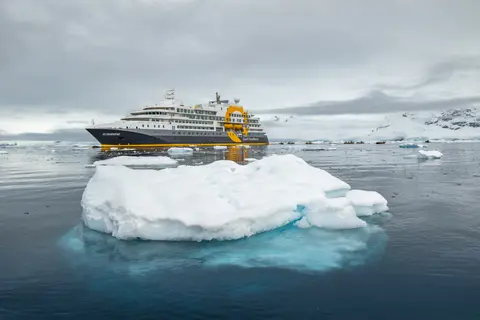
Quark ExpeditionsULT20280504
Từ Scotland đến Spitsbergen: Chim Hải Âu, Băng Biển và Động Vật Hoang Dã
Date
2028-05-04
Duration
16 nights
Departure Port
Arrival Port
Rating
—
Theme
—
Date
2028-05-04
Duration
16 nights
Departure Port
Arrival Port
Rating
—
Theme
—
Quark Expeditions
Ice
2021
—
13,500 GT
199
103
140
128 m
22 m
12 knots
No
Arrive any time on Day 1 and make your way to the group hotel, which is included in your Charter Flight & Hotel Package. The Scottish city of Aberdeen, your gateway for this adventure, is known as the Granite City, as it was once the granite capital of the world. You’ll understand as soon as you see the grey Victorian buildings—that sparkle in the sunlight. A bustling cultural hub, Aberdeen also offers a range of museums, galleries, theaters, shops, cafés and restaurants to explore.

Aberdeen là Thành phố Đá Granite của Scotland, nơi kiến trúc Victorian lấp lánh bạc gặp gỡ một cảng sôi động và tám thế kỷ di sản hàng hải. Du khách nên nếm thử những chiếc bánh cuộn bơ huyền thoại, khám phá lâu đài Dunnottar trên vách đá, và tham quan Royal Deeside hướng về Balmoral. Từ tháng Năm đến tháng Tám mang đến những giờ ánh sáng dài làm cho các mặt tiền granite lấp lánh.
Situated just north of mainland Scotland, Orkney is an archipelago of islands steeped in history. Some of Europe’s most intact Neolithic ruins are found here, dating back 5,000 to 8,000 years. Chief among them is Skara Brae, a small community of ten stone homes, situated within earthen dams, that dates to 3180 BCE. Skara Brae is part of the Heart of Neolithic Orkney World Heritage Site, and is considered one of the most important Neolithic sites in all of Europe. Walking among these ancient homes and looking out toward the sea in the Bay of Skaill provides a sense of connection to humans who lived before the Egyptian pyramids were constructed. Papa Westray, a more remote island just north of Skara Brae—and more difficult to access—is also home to an ancient farmstead dating back to 3700 BCE. The surrounding farmlands are peaceful and quiet. The sounds of summer and migratory birds, combined with waves from the North Atlantic Ocean crashing against the shoreline below, seem to transcend time—offering a fleeting glimpse into what life may have looked and sounded like thousands of years ago. Home to more than 70 islands, 20 of which are inhabited, Orkney is a unique region with strong connections to the polar regions. Dr. John Rae, the famous Arctic explorer who helped map the Northwest Passage in the 1830s and 1840s, was Orcadian, and a monument to his achievements stands in the village of Stromness. Several Orcadian place names can be found in the Antarctic, including the South Orkney Islands and the Stromness whaling station in South Georgia. The region is a network of pastoral green islands framed by rugged coastlines and occasional white sandy beaches. These islands—with cliffs ideal for nesting seabirds—are perfectly situated for both seasonal bird colonies and migratory species en route to the Arctic. Birders will find Orkney an excellent place to spot species like Atlantic puffins, northern gannets, razorbills, kittiwakes, Arctic terns, Arctic skuas, and many others. Guests can explore off-ship—as conditions allow—by joining Zodiac, kayak, and paddling excursions, as well as guided and self-guided walks.
While at sea, be sure to spend time on the outer decks to watch for resident seabirds and migrating birds, or enjoy the views through the floor-to-ceiling windows. We will ride the relatively warm current north—the same current that helps keep the Norwegian coast and west coast of Svalbard relatively temperate. While onboard, your Expedition Team will share their knowledge and expertise through scheduled presentations on ornithology, biology, history, and geology, as well as through informal interactions throughout the voyage. Your at-sea days provide ample opportunity to enjoy the amenities onboard Ultramarine: the Tundra Spa & Sauna, the fitness center, the library, or one of several lounges where you can enjoy a drink with fellow travelers.
Situated more than 400 kilometers north of mainland Norway, where the Greenland, Norwegian, and Barents sea converge, Bear Island is the gateway to Svalbard—and home to prolific bird populations. Visiting is a special privilege, as the island is rarely accessed due to its isolation. But it’s well worth the effort. More than 1.5 million birds flock to Bear Island each year. Hundreds of thousands nest on its near-vertical cliffs, where they can forage in the rich marine environment. If wind and waves allow, it’s possible we’ll offer a Zodiac cruise here along cliffs teeming with birds, with a constant procession coming and going from their nest sites. Little auks, Brünnich’s guillemots, common guillemots, kittiwakes, and northern fulmars are found in prolific numbers, alongside smaller colonies of Atlantic puffins. Many more migratory birds use the island as a critical stopover on their annual journey to the Arctic. On a map, Bear Island appears small. But by Zodiac, its cliff walls—some rising more than 400 meters (1,310 feet) from the sea—feel colossal. Shorelines are fully exposed to the open ocean, with waves crashing in an astounding display of nature’s power. A few sheltered coves—used by whalers, sealers, explorers, and researchers from the 16th to 21st centuries—may offer us a chance to explore this wild outpost at the gates of Svalbard. In early May, we may see hints of green emerging from an otherwise snowy landscape. Arctic foxes may be spotted on shore, eagerly awaiting the return of birds and their eggs. If conditions allow, we’ll make landfall, walking where few humans ever do. Remnants of whaling history from the early 17th century, along with more recent traces of meteorological and military activity, can be found here. Still, despite any human presence, the island retains a powerful sense of wilderness.
After excitedly exploring the open sea ice, we’ll continue toward Svalbard’s west coast for a closer, more intimate encounter with the wilderness of the archipelago. Our first day will be spent in and around Hornsund, a region of striking landscapes, mountains, glaciers and icebergs. Sea ice may still be present, and if so, we’ll watch for wildlife whose lives depend on it for food and survival. Our aim is to explore the fjord by Zodiac and on foot, though you should expect plenty of snow underfoot. Hornsund is home to several tidewater glaciers, which we hope to approach by Zodiac. Icebergs mix with brash and sea ice, creating a unique crackling soundscape that echoes the rhythm of the Arctic. Surrounding us, 800 to 1,400-meter (2,625 to 4,593 feet) peaks rise beneath Midnight Sun skies, the kind of scene many envision when dreaming of the High Arctic. Watch for Arctic fox, often seen in the area. Seabird colonies thrive here too, a reminder of the epic migrations these species undertake each spring to reach Svalbard—and again each fall as they return south.
Overnight, we’ll push far up the coast to Krossfjorden, just 660 nautical miles from the North Pole. We aim to explore as much of the west coast as possible, as this dramatic fjord lies along a stretch of coastline shaped by a relatively warm current flowing from south to north—creating a surprisingly temperate environment compared to the harsher conditions farther north and east. Depending on ice and weather conditions, we hope to venture deep into the fjord to iconic sites such as Lilliehöökbreen—a stunning tidewater glacier where seals often haul out on floating ice. The landscapes here blend the gentle and the dramatic—a picture-perfect scene of northern wilderness. To add variety to your photographs, consider experimenting with black and white photography, as the textures of mountains, valleys, snow, ice, and clouds can create striking images. You may also spot Arctic foxes, whether out on the ice or along the hillsides above, and seabird colonies occupy several of the cliffs deeper in the fjord. Avid birders should keep an eye out for king eiders. While Longyearbyen holds the title of northernmost city in the world, the northernmost settlement—Ny-Ålesund—lies in Kongsfjorden, a southern offshoot of Krossfjorden. Originally a coal mining outpost over a century ago, it now serves as an important year-round research station. Take a moment to soak in the surroundings and imagine what life must be like when the sun doesn’t set for months. Conversely, consider the challenges of staffing a research station through the long polar night, when the sun doesn’t rise for months.
Our final expedition day will likely be spent in or around Isfjorden, the fjord system where Longyearbyen is located. The mountainous, glaciated scenery continues here, and we’ll spend much of the day exploring the coastlines—likely among seabirds. Isfjorden can also be an excellent place to spot whales, some of which may have arrived at their summer feeding grounds by now. Spend time on the outer decks taking in the scenery—you may spot various species of marine life. Our main goal today is to visit Alkhornet, the iconic seabird colony and also a good place to look for reindeer and Arctic fox. If conditions allow, we’ll make landfall, giving ourselves one last chance to set foot in this far northern wilderness. As we prepare to leave, we can appreciate the little auks, perfectly at home beneath the horn-shaped mountain overlooking the fjord, and the reindeer patiently awaiting summer’s abundant vegetation. They’ll remain here for a while, going about their daily lives in a vast wilderness that stretches in all directions for hundreds—if not thousands—of nautical miles.
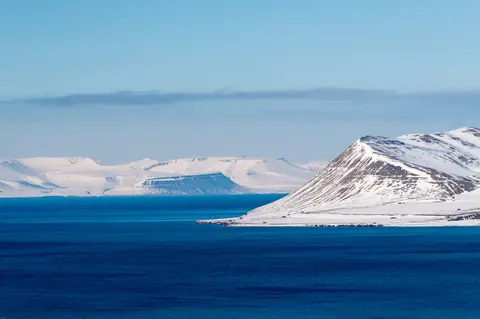
Longyearbyen, khu định cư vĩnh viễn phía bắc nhất trên thế giới, là một cảng độc đáo trong quần đảo Svalbard, giàu lịch sử và cảnh quan Bắc Cực tuyệt đẹp. Những trải nghiệm không thể bỏ qua bao gồm thưởng thức các món đặc sản địa phương như món hầm tuần lộc và khám phá những fjord tuyệt đẹp của Raudfjord và Liefdefjorden. Thời điểm tốt nhất để thăm quan là trong những tháng mùa hè, khi ánh sáng mặt trời giữa đêm chiếu sáng cảnh quan tuyệt đẹp.
After breakfast, make your way independently to the airport for your onward flight home, or stay to explore Finland’s culturally-rich capital on your own.
Day 1
Arrive any time on Day 1 and make your way to the group hotel, which is included in your Charter Flight & Hotel Package. The Scottish city of Aberdeen, your gateway for this adventure, is known as the Granite City, as it was once the granite capital of the world. You’ll understand as soon as you see the grey Victorian buildings—that sparkle in the sunlight. A bustling cultural hub, Aberdeen also offers a range of museums, galleries, theaters, shops, cafés and restaurants to explore.
Day 2
Aberdeen là Thành phố Đá Granite của Scotland, nơi kiến trúc Victorian lấp lánh bạc gặp gỡ một cảng sôi động và tám thế kỷ di sản hàng hải. Du khách nên nếm thử những chiếc bánh cuộn bơ huyền thoại, khám phá lâu đài Dunnottar trên vách đá, và tham quan Royal Deeside hướng về Balmoral. Từ tháng Năm đến tháng Tám mang đến những giờ ánh sáng dài làm cho các mặt tiền granite lấp lánh.
Day 3
Situated just north of mainland Scotland, Orkney is an archipelago of islands steeped in history. Some of Europe’s most intact Neolithic ruins are found here, dating back 5,000 to 8,000 years. Chief among them is Skara Brae, a small community of ten stone homes, situated within earthen dams, that dates to 3180 BCE. Skara Brae is part of the Heart of Neolithic Orkney World Heritage Site, and is considered one of the most important Neolithic sites in all of Europe. Walking among these ancient homes and looking out toward the sea in the Bay of Skaill provides a sense of connection to humans who lived before the Egyptian pyramids were constructed. Papa Westray, a more remote island just north of Skara Brae—and more difficult to access—is also home to an ancient farmstead dating back to 3700 BCE. The surrounding farmlands are peaceful and quiet. The sounds of summer and migratory birds, combined with waves from the North Atlantic Ocean crashing against the shoreline below, seem to transcend time—offering a fleeting glimpse into what life may have looked and sounded like thousands of years ago. Home to more than 70 islands, 20 of which are inhabited, Orkney is a unique region with strong connections to the polar regions. Dr. John Rae, the famous Arctic explorer who helped map the Northwest Passage in the 1830s and 1840s, was Orcadian, and a monument to his achievements stands in the village of Stromness. Several Orcadian place names can be found in the Antarctic, including the South Orkney Islands and the Stromness whaling station in South Georgia. The region is a network of pastoral green islands framed by rugged coastlines and occasional white sandy beaches. These islands—with cliffs ideal for nesting seabirds—are perfectly situated for both seasonal bird colonies and migratory species en route to the Arctic. Birders will find Orkney an excellent place to spot species like Atlantic puffins, northern gannets, razorbills, kittiwakes, Arctic terns, Arctic skuas, and many others. Guests can explore off-ship—as conditions allow—by joining Zodiac, kayak, and paddling excursions, as well as guided and self-guided walks.
Day 5
While at sea, be sure to spend time on the outer decks to watch for resident seabirds and migrating birds, or enjoy the views through the floor-to-ceiling windows. We will ride the relatively warm current north—the same current that helps keep the Norwegian coast and west coast of Svalbard relatively temperate. While onboard, your Expedition Team will share their knowledge and expertise through scheduled presentations on ornithology, biology, history, and geology, as well as through informal interactions throughout the voyage. Your at-sea days provide ample opportunity to enjoy the amenities onboard Ultramarine: the Tundra Spa & Sauna, the fitness center, the library, or one of several lounges where you can enjoy a drink with fellow travelers.
Day 8
Situated more than 400 kilometers north of mainland Norway, where the Greenland, Norwegian, and Barents sea converge, Bear Island is the gateway to Svalbard—and home to prolific bird populations. Visiting is a special privilege, as the island is rarely accessed due to its isolation. But it’s well worth the effort. More than 1.5 million birds flock to Bear Island each year. Hundreds of thousands nest on its near-vertical cliffs, where they can forage in the rich marine environment. If wind and waves allow, it’s possible we’ll offer a Zodiac cruise here along cliffs teeming with birds, with a constant procession coming and going from their nest sites. Little auks, Brünnich’s guillemots, common guillemots, kittiwakes, and northern fulmars are found in prolific numbers, alongside smaller colonies of Atlantic puffins. Many more migratory birds use the island as a critical stopover on their annual journey to the Arctic. On a map, Bear Island appears small. But by Zodiac, its cliff walls—some rising more than 400 meters (1,310 feet) from the sea—feel colossal. Shorelines are fully exposed to the open ocean, with waves crashing in an astounding display of nature’s power. A few sheltered coves—used by whalers, sealers, explorers, and researchers from the 16th to 21st centuries—may offer us a chance to explore this wild outpost at the gates of Svalbard. In early May, we may see hints of green emerging from an otherwise snowy landscape. Arctic foxes may be spotted on shore, eagerly awaiting the return of birds and their eggs. If conditions allow, we’ll make landfall, walking where few humans ever do. Remnants of whaling history from the early 17th century, along with more recent traces of meteorological and military activity, can be found here. Still, despite any human presence, the island retains a powerful sense of wilderness.
Day 11
After excitedly exploring the open sea ice, we’ll continue toward Svalbard’s west coast for a closer, more intimate encounter with the wilderness of the archipelago. Our first day will be spent in and around Hornsund, a region of striking landscapes, mountains, glaciers and icebergs. Sea ice may still be present, and if so, we’ll watch for wildlife whose lives depend on it for food and survival. Our aim is to explore the fjord by Zodiac and on foot, though you should expect plenty of snow underfoot. Hornsund is home to several tidewater glaciers, which we hope to approach by Zodiac. Icebergs mix with brash and sea ice, creating a unique crackling soundscape that echoes the rhythm of the Arctic. Surrounding us, 800 to 1,400-meter (2,625 to 4,593 feet) peaks rise beneath Midnight Sun skies, the kind of scene many envision when dreaming of the High Arctic. Watch for Arctic fox, often seen in the area. Seabird colonies thrive here too, a reminder of the epic migrations these species undertake each spring to reach Svalbard—and again each fall as they return south.
Day 13
Overnight, we’ll push far up the coast to Krossfjorden, just 660 nautical miles from the North Pole. We aim to explore as much of the west coast as possible, as this dramatic fjord lies along a stretch of coastline shaped by a relatively warm current flowing from south to north—creating a surprisingly temperate environment compared to the harsher conditions farther north and east. Depending on ice and weather conditions, we hope to venture deep into the fjord to iconic sites such as Lilliehöökbreen—a stunning tidewater glacier where seals often haul out on floating ice. The landscapes here blend the gentle and the dramatic—a picture-perfect scene of northern wilderness. To add variety to your photographs, consider experimenting with black and white photography, as the textures of mountains, valleys, snow, ice, and clouds can create striking images. You may also spot Arctic foxes, whether out on the ice or along the hillsides above, and seabird colonies occupy several of the cliffs deeper in the fjord. Avid birders should keep an eye out for king eiders. While Longyearbyen holds the title of northernmost city in the world, the northernmost settlement—Ny-Ålesund—lies in Kongsfjorden, a southern offshoot of Krossfjorden. Originally a coal mining outpost over a century ago, it now serves as an important year-round research station. Take a moment to soak in the surroundings and imagine what life must be like when the sun doesn’t set for months. Conversely, consider the challenges of staffing a research station through the long polar night, when the sun doesn’t rise for months.
Day 15
Our final expedition day will likely be spent in or around Isfjorden, the fjord system where Longyearbyen is located. The mountainous, glaciated scenery continues here, and we’ll spend much of the day exploring the coastlines—likely among seabirds. Isfjorden can also be an excellent place to spot whales, some of which may have arrived at their summer feeding grounds by now. Spend time on the outer decks taking in the scenery—you may spot various species of marine life. Our main goal today is to visit Alkhornet, the iconic seabird colony and also a good place to look for reindeer and Arctic fox. If conditions allow, we’ll make landfall, giving ourselves one last chance to set foot in this far northern wilderness. As we prepare to leave, we can appreciate the little auks, perfectly at home beneath the horn-shaped mountain overlooking the fjord, and the reindeer patiently awaiting summer’s abundant vegetation. They’ll remain here for a while, going about their daily lives in a vast wilderness that stretches in all directions for hundreds—if not thousands—of nautical miles.
Day 16
Longyearbyen, khu định cư vĩnh viễn phía bắc nhất trên thế giới, là một cảng độc đáo trong quần đảo Svalbard, giàu lịch sử và cảnh quan Bắc Cực tuyệt đẹp. Những trải nghiệm không thể bỏ qua bao gồm thưởng thức các món đặc sản địa phương như món hầm tuần lộc và khám phá những fjord tuyệt đẹp của Raudfjord và Liefdefjorden. Thời điểm tốt nhất để thăm quan là trong những tháng mùa hè, khi ánh sáng mặt trời giữa đêm chiếu sáng cảnh quan tuyệt đẹp.
Day 17
After breakfast, make your way independently to the airport for your onward flight home, or stay to explore Finland’s culturally-rich capital on your own.
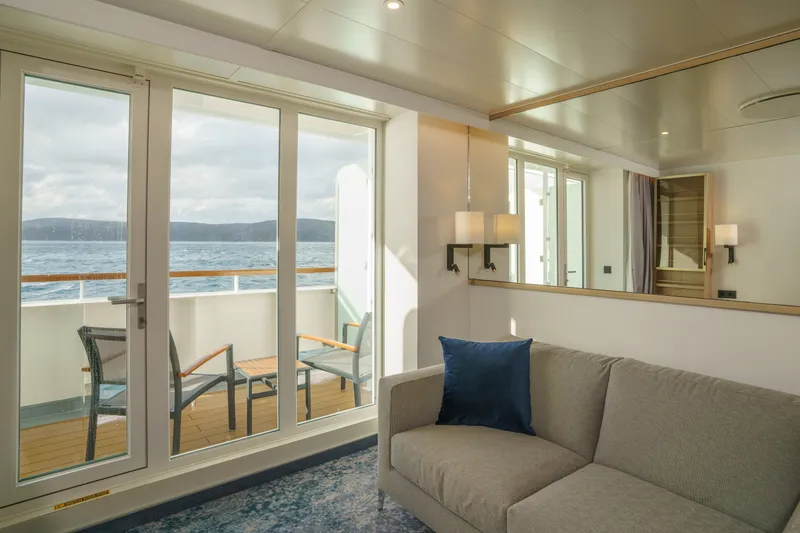
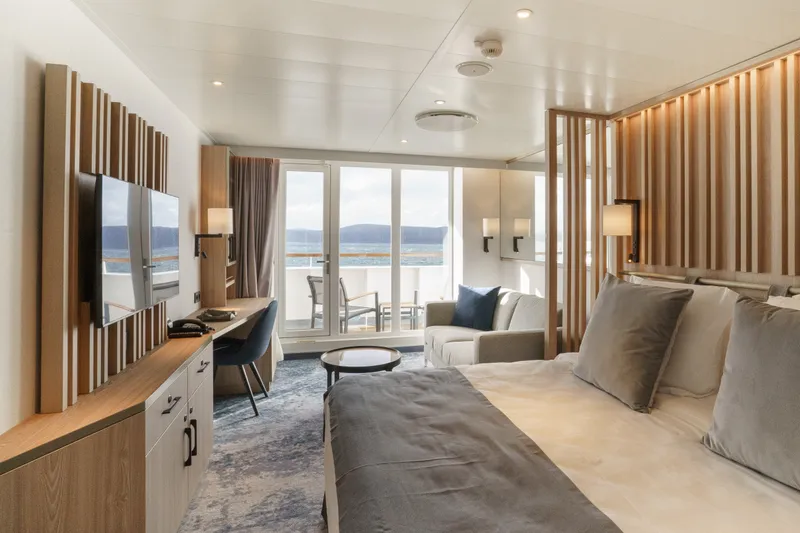
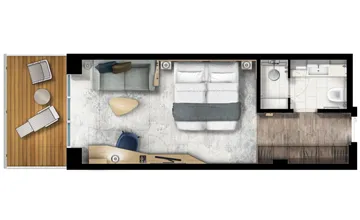
Located on Decks 4 and 6, with approximately 226 sq. ft. (21 m2) of indoor living space, and a 52 sq. ft. (4.8 m2) balcony, this entry-level balcony suite is one of the largest available on a ship of this class. This suite is perfect for guests who are looking for both indoor and outdoor living spaces. There are four connecting suites in this category, making this an excellent option for families or groups wanting to stay connected to each other during their expedition. Features: one double or two single beds, sitting area with sofa bed, private balcony, desk, refrigerator, TV, private bathroom with shower and heated floors. Standard Amenities: hair dryer, bathrobe, slippers, shampoo, conditioner, shower gel, complimentary water bottle.
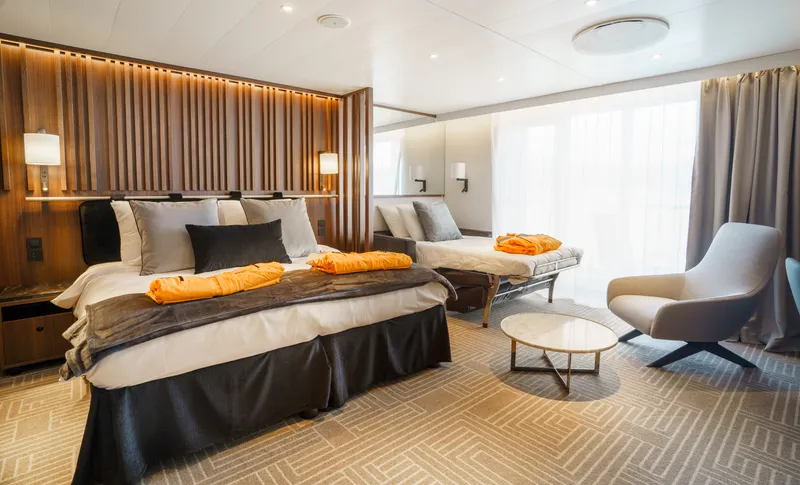
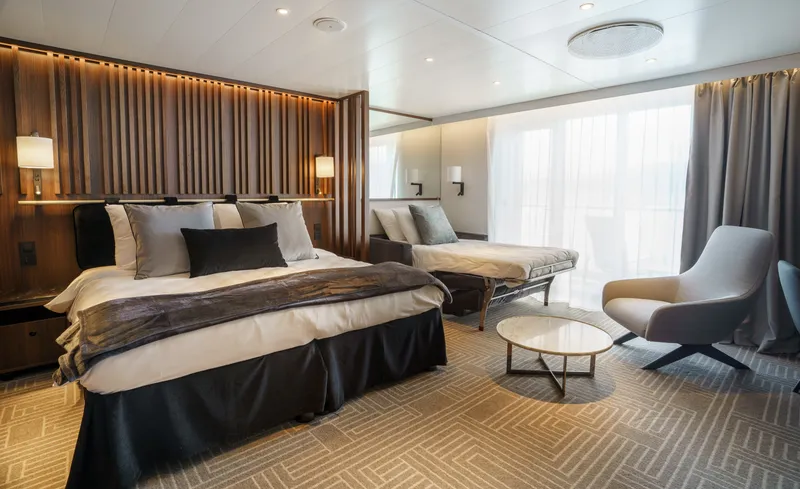
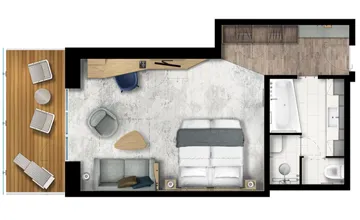
Located on Decks 4 and 6, with approximately 299 sq. ft. (27.8 m2) of indoor living space, and a 70 sq. ft. (6.5 m2) balcony. This suite is perfect for guests wanting a larger living space, full bathroom, and a substantial balcony. Deluxe Balcony Suites are the first suite type to offer additional privacy in the bathroom with an enclosed toilet, a full bath and shower to make it easier for guests to get ready together in the morning. Features: one double or two single beds, sitting area with sofa bed, private balcony, desk, refrigerator, TV, private bathroom with shower, bathtub and heated floors. Standard Amenities: hair dryer, bathrobe, slippers, shampoo, conditioner, shower gel, complimentary water bottle.
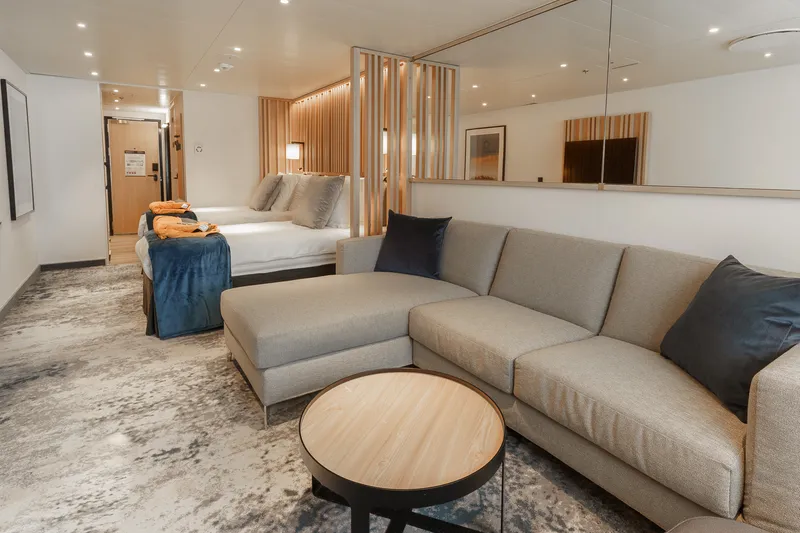
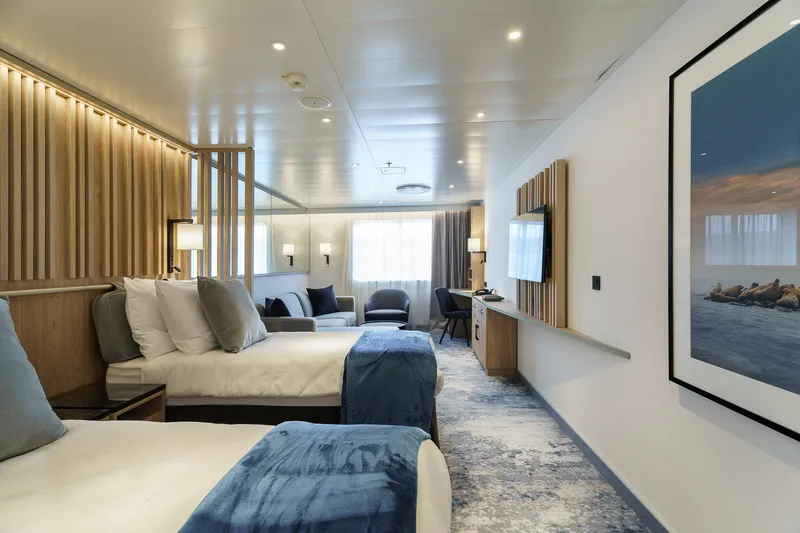
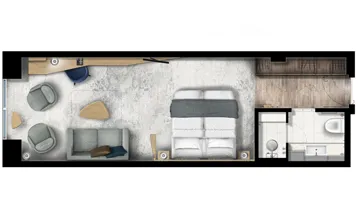
Located on Deck 3, and approximately 285 sq. ft. (26.5 m2). These suites are perfect for people traveling together or solo guests looking to share with like-minded individuals. This suite maximizes interior living space while still offering guests the opportunity to stay connected to the outdoors. Our entry-level twin suites are the largest available on a ship of this class. Features: one double or two single beds, sitting area with sofa bed, picture window, desk, refrigerator, TV, private bathroom with shower and heated floors. Standard Amenities: hair dryer, bathrobe, slippers, shampoo, conditioner, shower gel, complimentary water bottle.
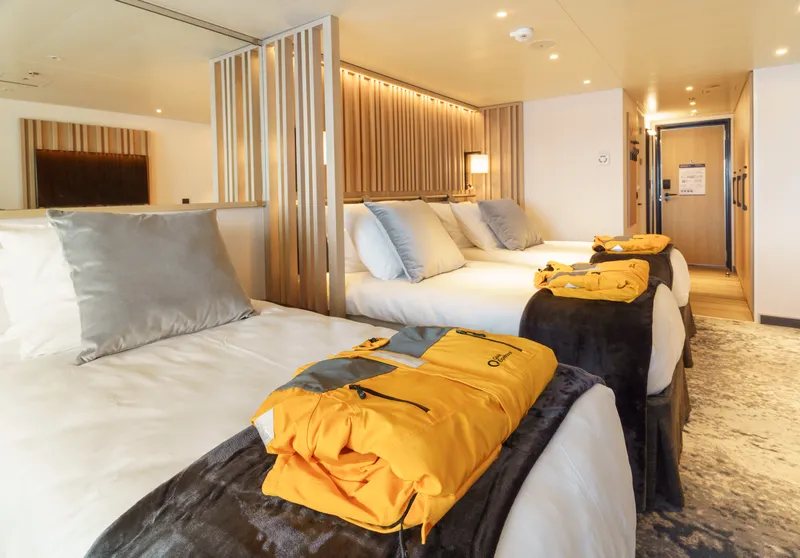
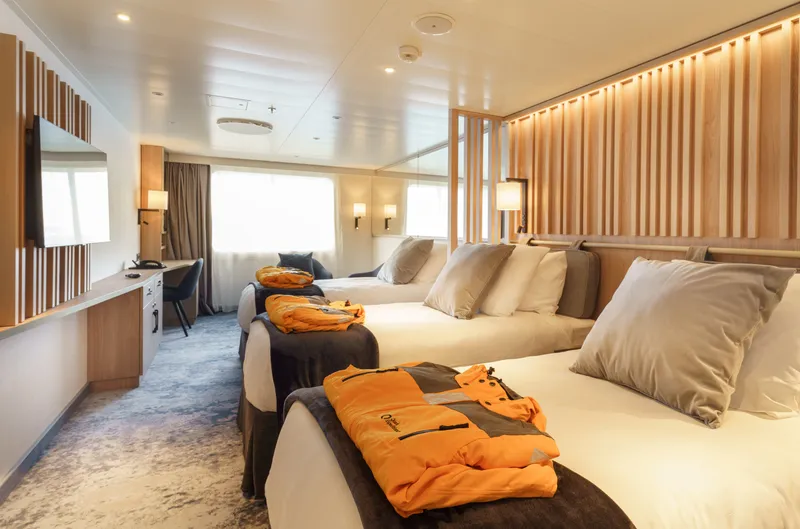
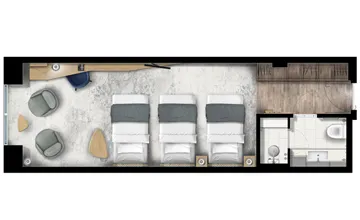
Located on Deck 3, and approximately 285 sq. ft. (26.5 m2). This suite is perfect for guests traveling solo who want to share their experience with other like-minded travelers of the same gender, or for groups of three traveling together. Featuring three separate single beds, and amenities for each of the three guests. Features: three single beds (two of which can be combined into a double bed), sitting area, picture window, desk, refrigerator, TV, private bathroom with shower and heated floors. Standard Amenities: hair dryer, bathrobe, slippers, shampoo, conditioner, shower gel, complimentary water bottle.
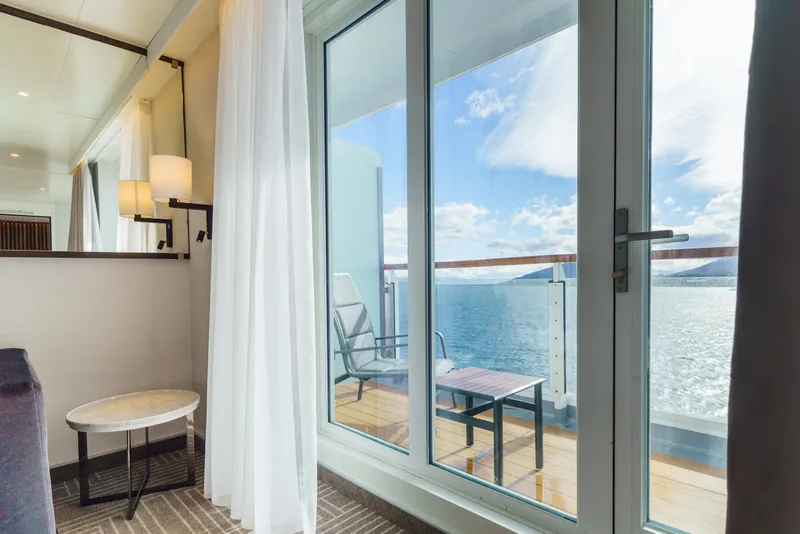
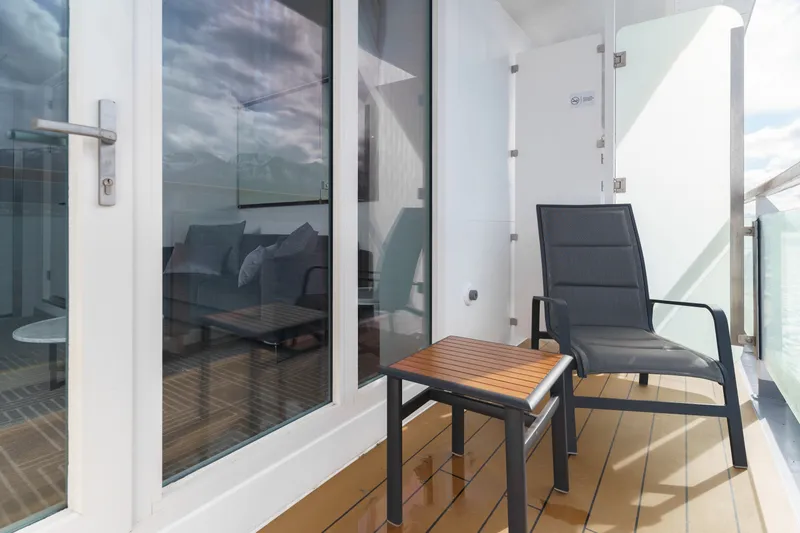
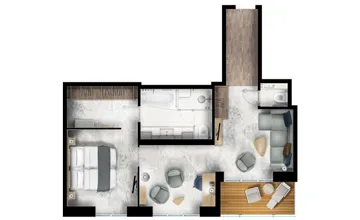
Located on Deck 6, with approximately 446 sq. ft. (41.4 m2) of indoor living space and a 46.3 sq. ft. (4.3 m2) balcony. This suite is perfect for guests who want it all. A large, luxurious suite featuring a private bedroom, full bathroom, powder room, and two separate living spaces. This suite is perfect for families or couples who want all the comforts of home onboard the ship. Features: one double or two single beds in a private bedroom with walk-in closet, sitting area with sofa bed and additional closet, private balcony, desk, refrigerator, TV, private bathroom with shower, bathtub and heated floors and separate powder room. Standard Amenities: hair dryer, bathrobe, slippers, shampoo, conditioner, shower gel, complimentary water bottle.
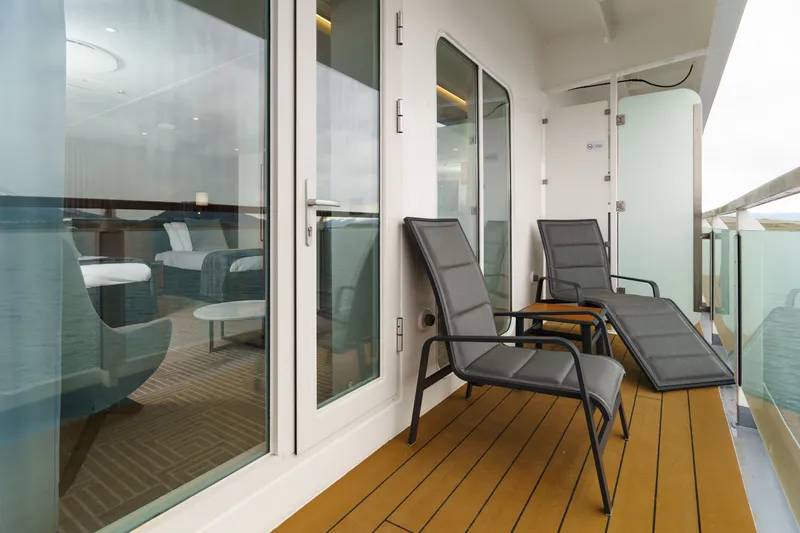
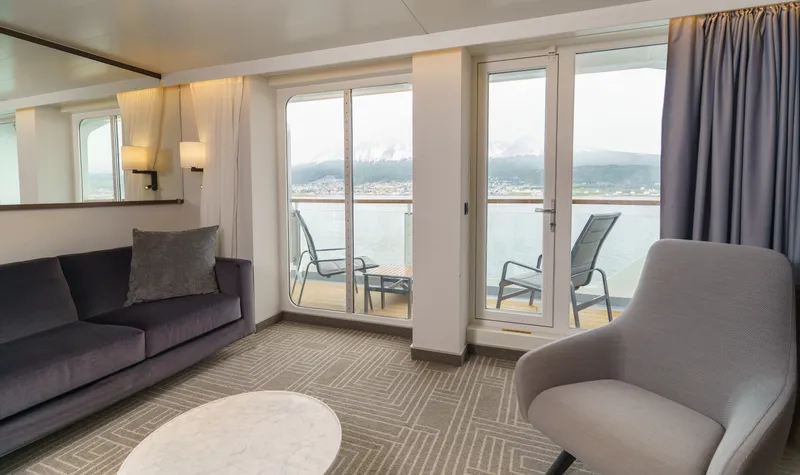
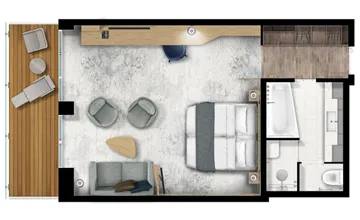
The only suite category to be located on Deck 7, with approximately 369 sq. ft. (34.3 m2) of indoor living space, and a 67 sq. ft. (6.2 m2) balcony. This suite is perfect for guests wanting to wake up to unobstructed polar views from the warmth and comfort of their bed onboard the ship. These suites offer the best of everything—views, spacious interiors, full bathrooms and generous balcony sizes—as well as easy access to the wellness centre. Features: one double or two single beds, sitting area with sofa bed, private balcony, desk, refrigerator, TV, private bathroom with shower, bathtub and heated floors. Standard Amenities: hair dryer, bathrobe, slippers, shampoo, conditioner, shower gel, complimentary water bottle.
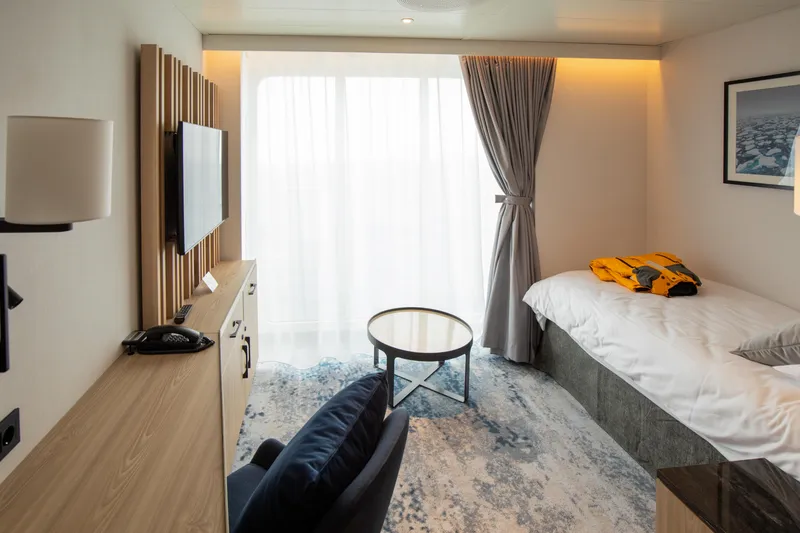
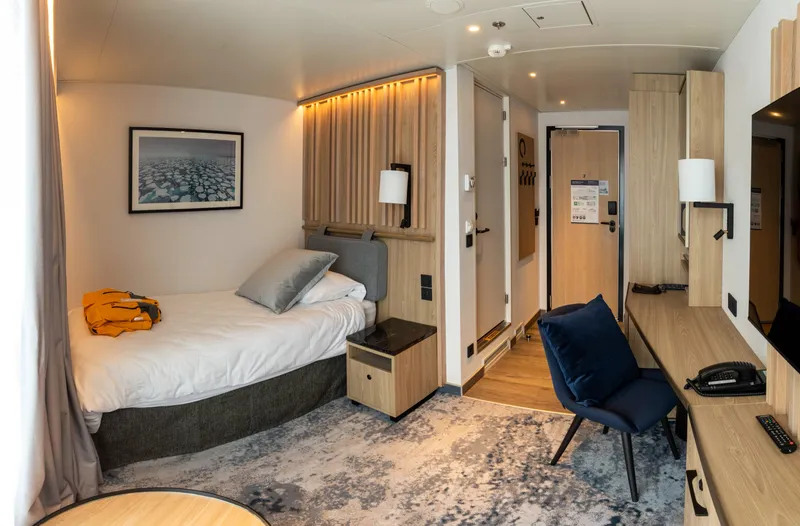
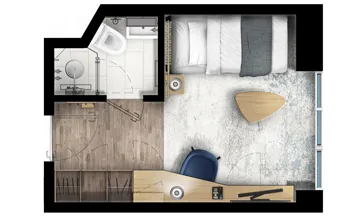
Located on Deck 6, and approximately 132 sq. ft. (12.3 m2). This suite is perfect for solo guests who appreciate privacy and want to wake up to sweeping views from the comfort of their bed. These are the only solo suites with floor-to-ceiling windows available onboard any ship in its class. Features: single bed, floor-to-ceiling window, desk, refrigerator, TV, private bathroom with shower and heated floors. Standard Amenities: hair dryer, bathrobe, slippers, shampoo, conditioner, shower gel, complimentary water bottle.
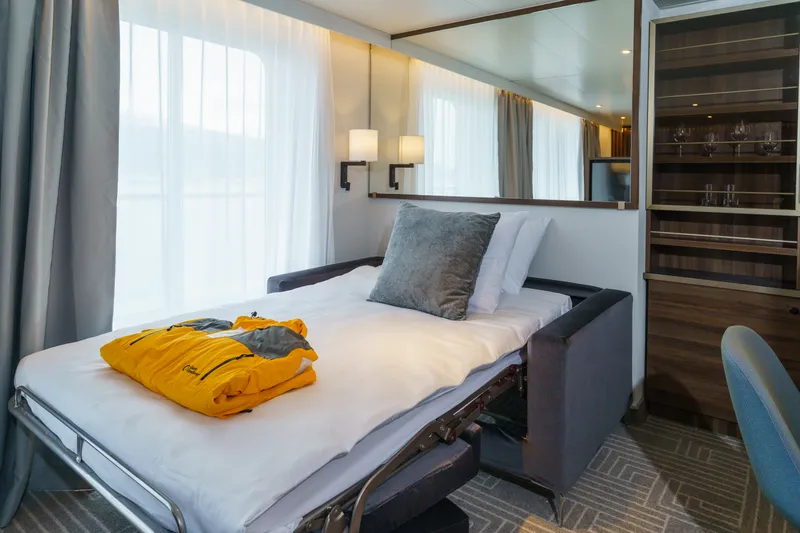
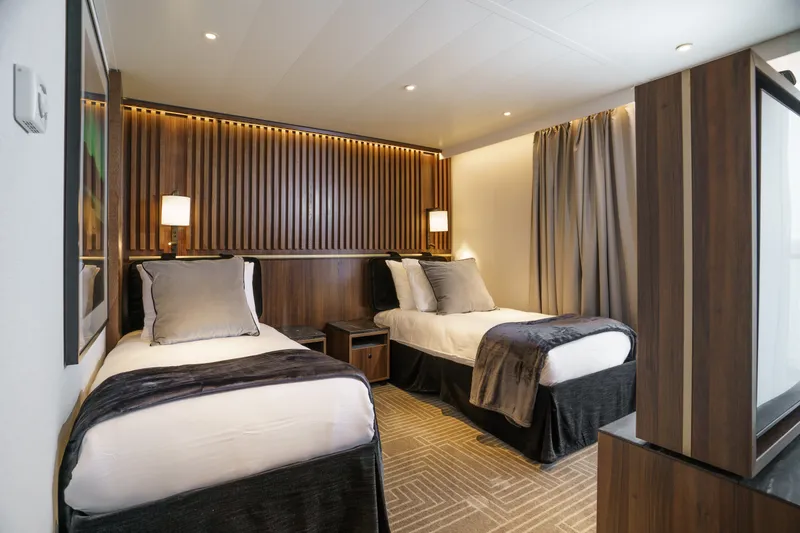
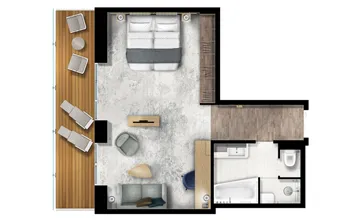
Located on Deck 6, with approximately 350 sq. ft. (32.5 m2) of indoor living space, and a 100 sq. ft. (9.3 m2) balcony. This suite is perfect for guests wanting generous interiors with a wide layout and the largest balconies on the ship. Centrally located on Deck 6, guests will enjoy minimal movement and motion from the comfort of these suites. Features: one double or two single beds, sitting area with sofa bed, private extra-wide balcony, desk, refrigerator, TV, private bathroom with shower, bathtub and heated floors. Standard Amenities: hair dryer, bathrobe, slippers, shampoo, conditioner, shower gel, complimentary water bottle.
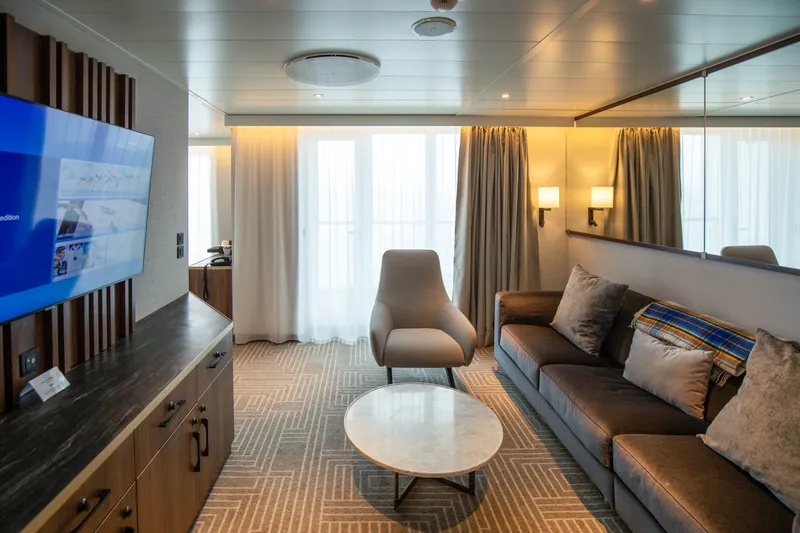
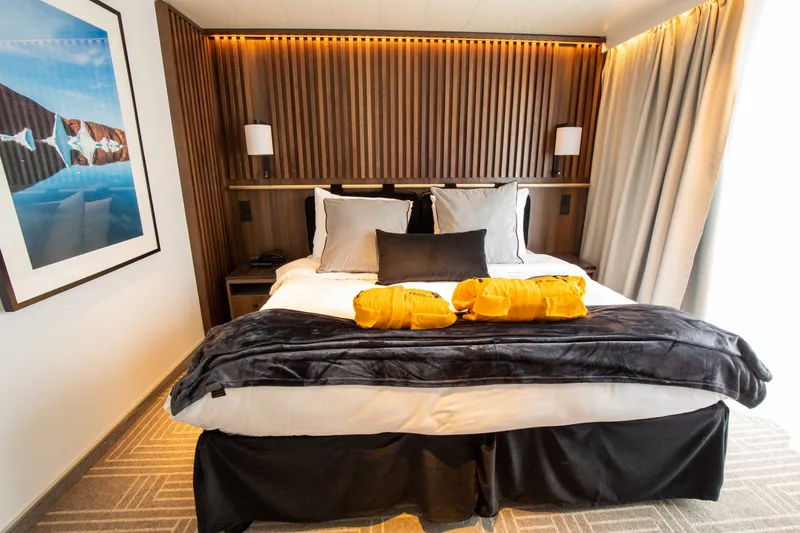
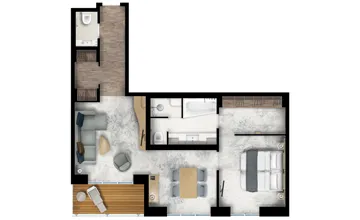
Located on Deck 6, with approximately 563 sq. ft. (52.3m2) of interior living space, and a 46 sq. ft. (4.3 m2) balcony. This suite is perfect for guests who want to travel without compromise. Our largest and most luxurious suite features the most sleeping, entertainment and storage space onboard the ship. It is perfect for families or travelers who want all the comforts of home onboard the ship. Features: one double or two single beds in a private bedroom with walk-in closet, sitting area with sofa bed and additional walk-in hallway closet, private balcony, desk, refrigerator, TV, private bathroom with shower, bathtub and heated floors and separate powder room. Standard Amenities: hair dryer, bathrobe, slippers, shampoo, conditioner, shower gel, complimentary water bottle.
Our cruise specialists can help you find the perfect cabin and the best available pricing.
(+886) 02-2721-7300Contact Advisor