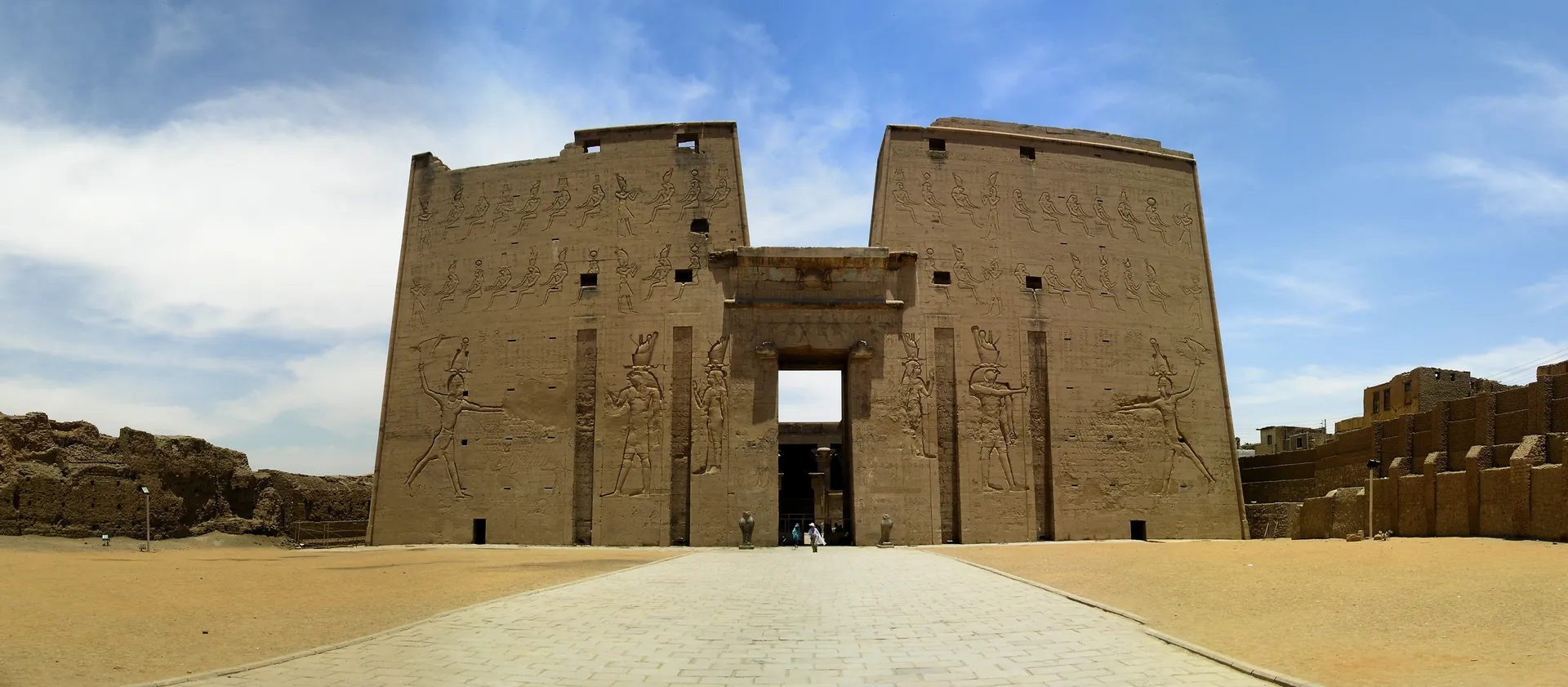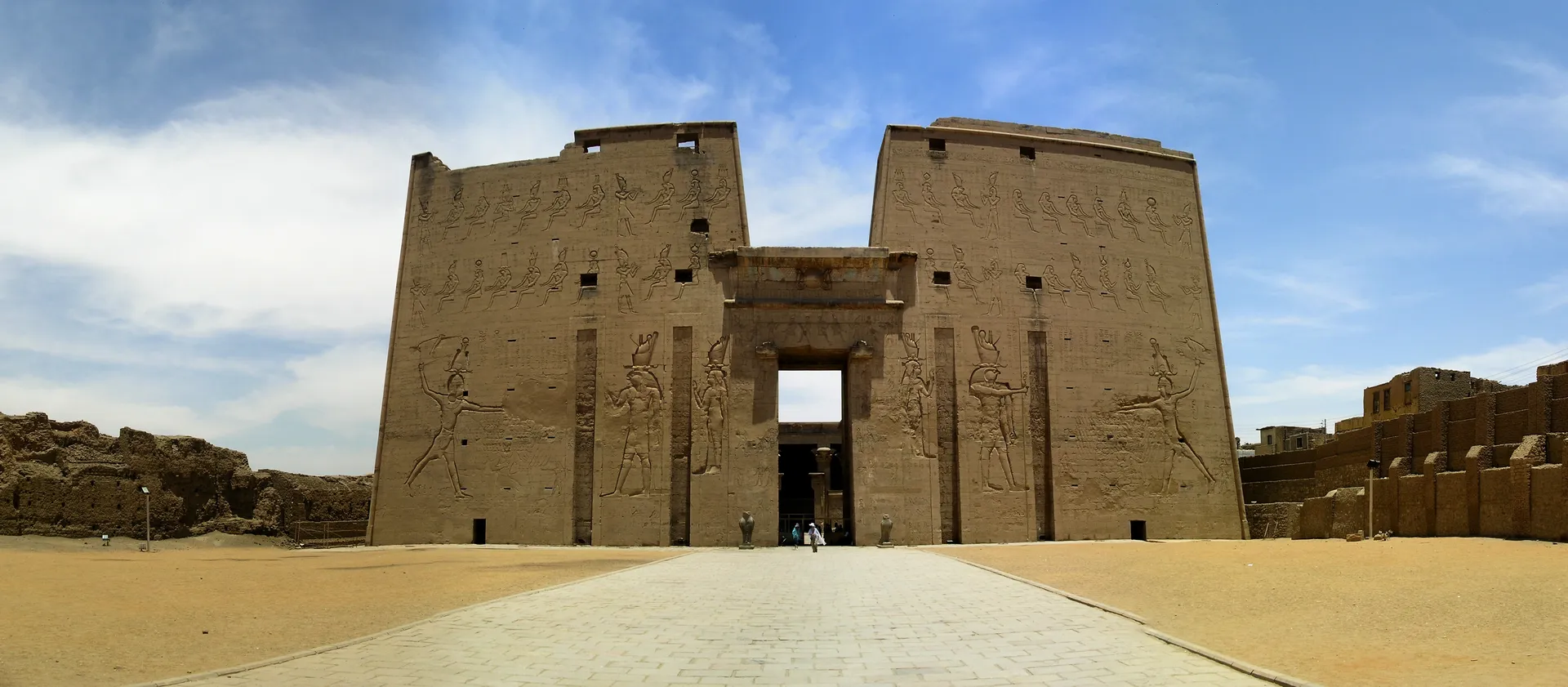
Rising from the western bank of the Nile in Upper Egypt, the Temple of Horus at Edfu is the most completely preserved pharaonic temple in all of Egypt — and one of the finest surviving monuments of the ancient world. Construction began under Ptolemy III in 237 BC and took nearly two centuries to complete, finishing during the reign of Ptolemy XII, the father of Cleopatra. For millennia, the temple lay buried beneath desert sand and the accumulated debris of the town above it, which paradoxically protected its soaring pylons, hypostyle halls, and hieroglyphic inscriptions from the destructive forces of weather and human plunder.
The modern town of Edfu, home to some seventy thousand residents, orbits the temple like a satellite around its planet. Horse-drawn calèches clatter through dusty streets lined with modest shops selling galabeyyas, spices, and painted papyrus. Beyond the town, the Nile Valley here narrows to a fertile ribbon hemmed by limestone cliffs and desert plateaus. Sugar cane fields and date palms line the riverbanks, and feluccas — the traditional lateen-sailed boats that have plied these waters for thousands of years — drift past in the late afternoon light, their silhouettes as timeless as the hieroglyphs on the temple walls.
Egyptian hospitality is best experienced through its food. In Edfu, look for ful medames — slow-cooked fava beans mashed with garlic, lemon, and cumin — served with warm aish baladi flatbread for breakfast. Street vendors offer koshari, the beloved national dish of rice, lentils, macaroni, and crispy fried onions drenched in spiced tomato sauce. For something sweet, try basbousa, a semolina cake soaked in rosewater syrup, or fresh sugar cane juice pressed to order at riverside stalls. The local markets overflow with dates, hibiscus for karkadé tea, and fragrant Egyptian spice blends.
Edfu occupies a strategic position on the Nile between Luxor and Aswan, making it a natural stop on every river itinerary. Luxor — with the Valley of the Kings, Karnak Temple, and the Colossi of Memnon — lies roughly 115 kilometers to the north, about two hours by road. Aswan, gateway to Philae Temple, the Nubian villages, and the High Dam, is approximately 100 kilometers to the south. Between the two, the double temple of Kom Ombo, shared by the crocodile god Sobek and the falcon god Horus the Elder, makes a compelling half-day visit.
Nearly every Nile cruise includes Edfu as a marquee stop. AmaWaterways, Uniworld River Cruises, and Viking offer luxuriously appointed river vessels with Egyptologist-guided excursions. Avalon Waterways provides panoramic-window suites along the same storied route, while Tauck pairs premium river cruising with carefully curated overland programs. APT Cruising brings its hallmark inclusive style, and Lindblad Expeditions combines expedition-grade expertise with National Geographic credentials. The Nile cruising season runs primarily from October through April, when temperatures moderate and the light over the desert turns liquid gold.