Date
2026-09-25
Duration
21 nights
Departure Port
Lake Como
Italy
Arrival Port
Bordeaux
France
Rating
Luxury
Theme
History & Culture
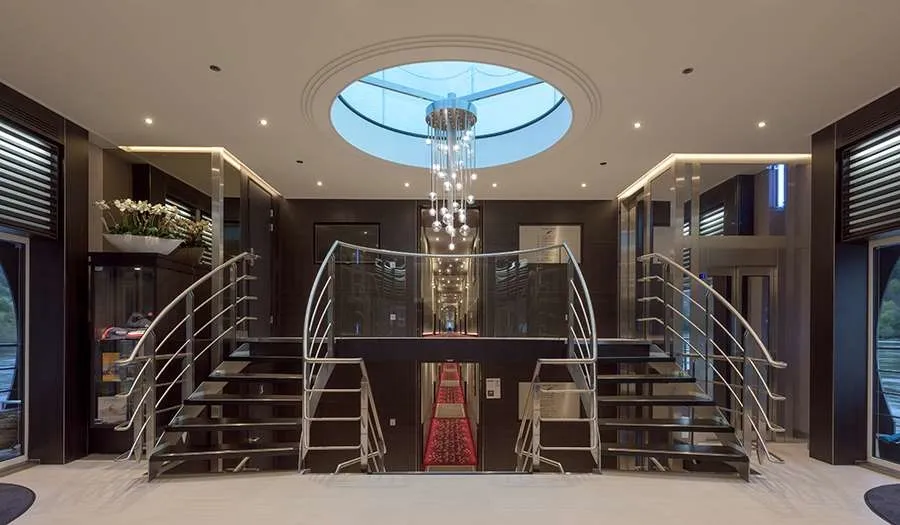


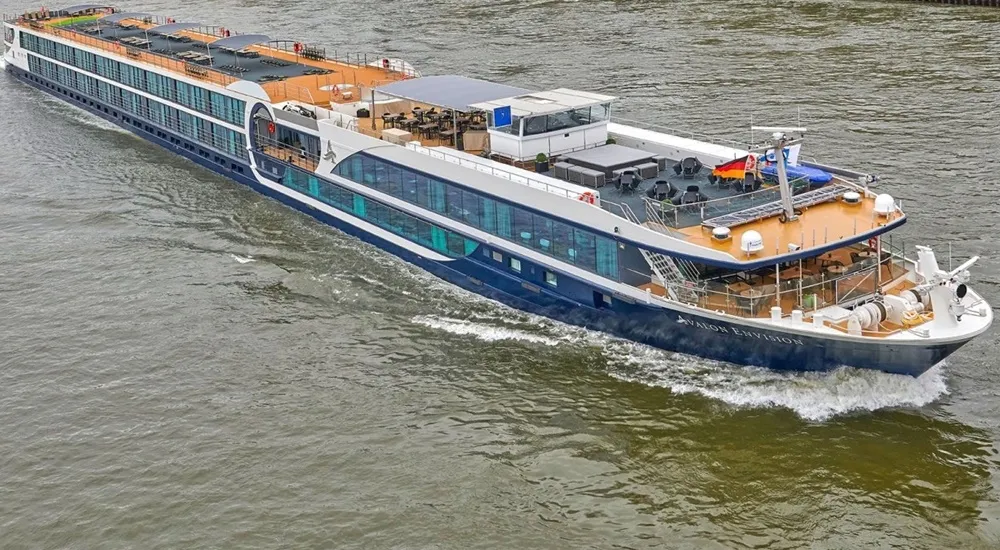
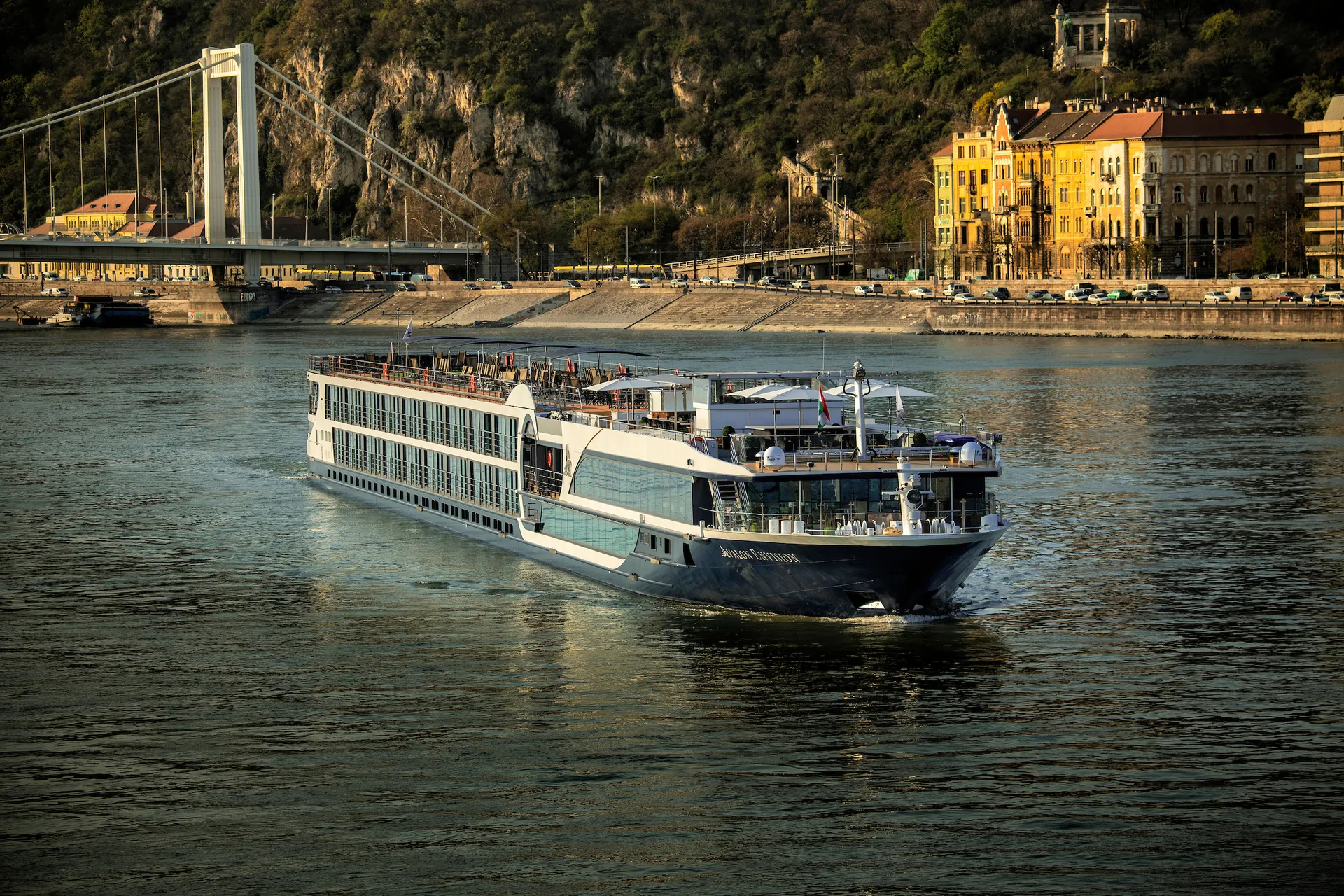
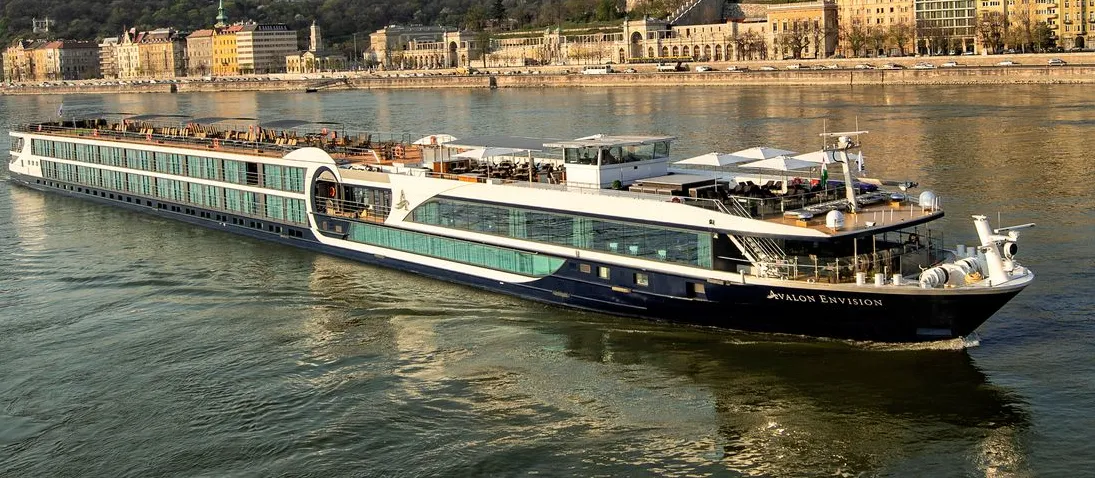
Avalon Waterways
2019
—
2,775 GT
166
83
47
443 m
12 m
12 knots
No

Lake Como, Italy is a distinctive port city where deep cultural heritage meets authentic local atmosphere, featured on itineraries by Uniworld River Cruises. Must-do experiences include walking the historic center to experience the layered architectural heritage, and seeking out the regional culinary traditions at a locally favored establishment away from the port area. The optimal time to visit is May through September, when mild temperatures and long days favor unhurried exploration.

Lake Como, Italy is a distinctive port city where deep cultural heritage meets authentic local atmosphere, featured on itineraries by Uniworld River Cruises. Must-do experiences include walking the historic center to experience the layered architectural heritage, and seeking out the regional culinary traditions at a locally favored establishment away from the port area. The optimal time to visit is May through September, when mild temperatures and long days favor unhurried exploration.

Framed by snowcapped Alps and the mirror-bright waters of Lake Lucerne, this medieval Swiss gem centres on the 14th-century Kapellbrücke — one of Europe's oldest covered bridges — and a colourful Altstadt that has changed little in five centuries. Ride the cog railway to cloud-wreathed Mount Pilatus, savour Älplermagronen in a timber-beamed tavern, and explore the nearby wonders of Interlaken and Grindelwald. Late spring through early autumn offers the most spectacular lake reflections and settled mountain weather.

Still whispered as Saigon by its ten million residents, Ho Chi Minh City pulses with an energy that outlasted every empire and every war. The French colonial grandeur of Notre-Dame Cathedral and Gustave Eiffel's Central Post Office stands in vivid counterpoint to the city's kinetic street life — an endless river of motorbikes, fragrant with pho broth and charcoal-grilled meats. Do not miss the Reunification Palace, a time capsule of Cold War modernism, or a dawn bowl of bánh mì from a sidewalk vendor. The dry season, November through April, offers the most comfortable conditions for exploration.

Breisach am Rhein clings to a volcanic hilltop at the French-German border, commanding the Upper Rhine crossing that made it one of the most fought-over towns in European history — a past the Romanesque-Gothic Münster St. Stephan surveys serenely from its commanding heights. Today peace reigns, and Breisach's true gift is its position as a gateway to three celebrated wine regions: the German Kaiserstuhl, producing some of Germany's finest Spätburgunder; the French Alsace, just across the Rhine; and the rolling hills of the Baden wine country to the east. Visit in autumn for harvest season across all three regions simultaneously. Freiburg im Breisgau, the Black Forest's graceful capital, lies twenty minutes east.

Sitting directly across the Rhine from Strasbourg, Kehl offers Rhine river cruise guests the remarkable experience of crossing from Germany into France in five minutes on foot — arriving at a medieval Alsatian cathedral quarter whose tarte flambée, Riesling estates, and half-timbered Petite France canals represent some of Europe's most enduring pleasures. The surrounding Black Forest and Alsatian Wine Route extend the discovery. Spring blossoms and autumn harvest are the most atmospheric times to visit this Franco-German frontier town.

Mainz is where the modern world was printed into existence: Johannes Gutenberg's invention of movable-type printing around 1440 transformed this ancient Rhine city into the birthplace of the information age, a legacy honoured at the extraordinary Gutenberg Museum, home to one of the surviving original Bibles. The Romanesque cathedral of St. Martin, built over a millennium from the year 975, anchors a charming old town of wine taverns and market squares where Rhenish Rieslings flow freely. Visit between spring and autumn for the famous Mainz Wine Market held beside the Rhine. A day-cruise port with surprising cultural depth.

Rüdesheim am Rhein, a jewel of the UNESCO-listed Upper Middle Rhine Valley, is where Germany's most storied wine river cuts through vine-terraced slopes and medieval castle ruins. The pedestrianised Drosselgasse laneway — beloved since the Romantic era — hums with wine taverns pouring the region's celebrated Rieslings, crisp and mineral from the slate soils. The Niederwald Monument surveys the river from the heights, reached by cable car above the vineyards. Day trips by boat unlock Bacharach, Boppard, and the legendary Lorelei rock. September's harvest festivals transform the entire valley into a convivial celebration of the vintage.

Koblenz stands at the Deutsches Eck — the German Corner — where the Moselle river pours into the Rhine in a confluence so geographically commanding that the Romans built a fortress here in 9 BC. The result is a city of exceptional Rhine Gorge scenery, with the formidable Ehrenbreitstein Fortress, one of Europe's largest, crowning the opposite bank and reachable by gondola for panoramas that stretch across three river valleys. A Rhine wine tasting at one of the city's historic Weinstuben, followed by a stroll through the Altstadt's baroque squares, is the definitive Koblenz afternoon. The finest weather arrives April through October, with the Rhine in Flames fireworks festival in August being particularly spectacular.

Cologne's twin-spired Gothic cathedral, six hundred years in the building and still the city's defining monument, is the inevitable starting point — but this ancient Rhine city rewards exploration well beyond its iconic silhouette. The Romano-Germanic Museum reveals the city's Roman foundations, while the Chocolate Museum on the riverbank offers a distinctly sweeter history lesson. Cologne's famed Kölsch beer culture thrives in the old town's traditional brew-houses, where one round follows another in centuries-old wooden halls. The city is welcoming year-round, though the legendary Christmas markets (November–December) attract visitors from across Europe.

Amsterdam's UNESCO-listed canal ring — a concentric web of seventeenth-century merchant houses and arching stone bridges — remains one of the Western world's most perfectly preserved Golden Age cityscapes, best explored by bicycle or canal boat at a pace that lets the city's genius reveal itself slowly. The Rijksmuseum's collection of Rembrandt and Vermeer masterpieces is essential, while the Anne Frank House offers one of Europe's most profoundly moving historical encounters. Spring brings the iconic tulip season; summer fills the terraces of the Jordaan district. Schiphol Airport makes Amsterdam a seamless gateway to the entire European continent.

Paris rewards every arrival as though it were the first — the sweep of the Seine, the Gothic tracery of Notre-Dame rising again from its 2019 ashes, the Eiffel Tower somehow managing to astonish at each encounter, the Louvre's glass pyramid reflecting clouds in the courtyard of a palace that served French kings for four centuries. Beyond the monuments, Paris is a city of neighbourhoods: the Belle Époque brasseries of Montparnasse, the covered passages of the 2nd arrondissement, the rooftop terraces of Le Marais. The Luxembourg Gardens in April, or a late-September evening on the Canal Saint-Martin, are among the most civilised experiences in the world.

Vernon is a quietly beguiling Norman town on the Seine whose greatest treasure lies just four kilometers beyond its medieval bridge: the garden and water lily ponds at Giverny, where Claude Monet lived and painted for forty-three years, creating the luminous imagery that changed the course of modern art. The town itself retains considerable charm — a romanticly ruined twelfth-century bridge tower draped in ivy, half-timbered houses along the riverbank, and a fine museum housing several original Monet canvases. Monet's garden is open from April through October, reaching its peak splendor in May and June when his beloved water lilies are in full, painterly bloom.

Kampong Cham unfolds along the Mekong's western bank in a languid rhythm far removed from Cambodia's tourist circuit — a provincial capital where saffron-robed monks cross bamboo bridges at dawn and French colonial villas drowse behind frangipani trees. The highlight is Wat Nokor, a twelfth-century Angkorian temple whose moss-covered sandstone galleries envelop a functioning Buddhist sanctuary in a haunting conversation between centuries. The nearby rubber plantations, a legacy of French Indochina, offer a window into the region's complex history. Kampong Cham is best visited November through February, when the dry season transforms the Mekong into a serene silver expanse.

Phnom Penh rises from the confluence of the Mekong, Tonlé Sap, and Bassac rivers with a resilience that makes it one of Southeast Asia's most affecting capitals — a city that endured the Khmer Rouge's "Year Zero" and has re-emerged as a place of broad riverfront boulevards, excellent Khmer cuisine, and a cultural energy that feels earned rather than manufactured. The Royal Palace and its Silver Pagoda, housing a life-size gold Buddha studded with 9,584 diamonds, is the city's architectural centrepiece; the Tuol Sleng Genocide Museum, a former high school converted to a prison by the Khmer Rouge, is sobering but essential history. November through February offers the most comfortable climate for extended exploration.

Siem Reap, the gateway city to the ancient Khmer empire's greatest achievement, is the essential staging post for exploring Angkor — the twelfth-century temple complex whose scale and ambition remain without parallel in human history. Angkor Wat at sunrise, its towers mirrored in the lily-covered moat, is one of the world's most transcendent spectacles; Angkor Thom's enigmatic Bayon, with its serene stone faces emerging from the jungle canopy, is another. The city's Old Market quarter offers silk workshops, street food vendors, and celebrated restaurants serving amok — fish steamed in coconut and lemongrass. November through April brings the driest, most comfortable conditions.

Bangkok is Thailand's exhilarating capital, where gilded temples, world-class street food, and the historic Chao Phraya River create one of Asia's most intoxicating urban experiences. Must-dos include exploring the Grand Palace, feasting on pad thai and tom yum in Chinatown, and cruising the river past illuminated temples. November through February's cool, dry season offers the most comfortable temperatures for temple-hopping and market exploration.

Bangkok is Thailand's exhilarating capital, where gilded temples, world-class street food, and the historic Chao Phraya River create one of Asia's most intoxicating urban experiences. Must-dos include exploring the Grand Palace, feasting on pad thai and tom yum in Chinatown, and cruising the river past illuminated temples. November through February's cool, dry season offers the most comfortable temperatures for temple-hopping and market exploration.

Bordeaux, France's premier port city, is renowned for its historical significance, stunning architecture, and world-class wine. Must-do experiences include savoring local delicacies at Marché des Quais and exploring the breathtaking art installations at Place de la Bourse. The best season to visit is during the late spring and early autumn, when the weather is pleasant and the vineyards are in full bloom.

Cadillac, a picturesque commune in the Gironde department, is celebrated for its rich history, charming architecture, and exquisite culinary offerings. Must-do experiences include savoring local delicacies like foie gras and exploring the historical Château de Cadillac. The best season to visit is during the spring and early autumn, when the weather is delightful, and local markets are bustling with fresh produce.

Where the Gironde estuary broadens toward the Atlantic, Cussac-Fort-Médoc occupies a quietly magnificent corner of Bordeaux wine country, its landscape shaped by Vauban's seventeenth-century star-shaped citadel — a UNESCO World Heritage fortification — and by centuries of châteaux producing some of the Left Bank's most distinguished Haut-Médoc cuvées. River cruisers dock here for château visits and private cellar tastings amid working vineyards, far from the tourist circuits of Saint-Émilion. September brings the harvest, filling the air with the intoxicating scent of fermenting Cabernet Sauvignon; the temperate maritime climate makes spring and autumn equally rewarding.

Crowned by a Vauban citadel that UNESCO recognises as one of Europe's finest military fortifications, Blaye guards the Gironde estuary with a watchful grandeur unchanged since Louis XIV's engineers completed their work in 1689. Taste the local delicacy of poutargue de Blaye — cured mullet roe from the estuary — explore the merlot vineyards of the Blaye Côtes de Bordeaux appellation, and take an excursion south to Bordeaux's grand neoclassical boulevards. September and October bring the heady aromas of harvest season to the surrounding wine country.

The port of Bourg, with its Roman roots and charming medieval architecture, offers a unique glimpse into southern France's history and culture. Must-do experiences include savoring local delicacies like "Pâté en Croûte" and exploring nearby attractions such as the Lascaux caves and the ancient city of Arles. The best season to visit is spring, when the region blooms into life and the markets are brimming with fresh produce.
Day 1

Lake Como, Italy is a distinctive port city where deep cultural heritage meets authentic local atmosphere, featured on itineraries by Uniworld River Cruises. Must-do experiences include walking the historic center to experience the layered architectural heritage, and seeking out the regional culinary traditions at a locally favored establishment away from the port area. The optimal time to visit is May through September, when mild temperatures and long days favor unhurried exploration.
Day 3

Lake Como, Italy is a distinctive port city where deep cultural heritage meets authentic local atmosphere, featured on itineraries by Uniworld River Cruises. Must-do experiences include walking the historic center to experience the layered architectural heritage, and seeking out the regional culinary traditions at a locally favored establishment away from the port area. The optimal time to visit is May through September, when mild temperatures and long days favor unhurried exploration.
Day 5

Framed by snowcapped Alps and the mirror-bright waters of Lake Lucerne, this medieval Swiss gem centres on the 14th-century Kapellbrücke — one of Europe's oldest covered bridges — and a colourful Altstadt that has changed little in five centuries. Ride the cog railway to cloud-wreathed Mount Pilatus, savour Älplermagronen in a timber-beamed tavern, and explore the nearby wonders of Interlaken and Grindelwald. Late spring through early autumn offers the most spectacular lake reflections and settled mountain weather.

Still whispered as Saigon by its ten million residents, Ho Chi Minh City pulses with an energy that outlasted every empire and every war. The French colonial grandeur of Notre-Dame Cathedral and Gustave Eiffel's Central Post Office stands in vivid counterpoint to the city's kinetic street life — an endless river of motorbikes, fragrant with pho broth and charcoal-grilled meats. Do not miss the Reunification Palace, a time capsule of Cold War modernism, or a dawn bowl of bánh mì from a sidewalk vendor. The dry season, November through April, offers the most comfortable conditions for exploration.
Day 6

Breisach am Rhein clings to a volcanic hilltop at the French-German border, commanding the Upper Rhine crossing that made it one of the most fought-over towns in European history — a past the Romanesque-Gothic Münster St. Stephan surveys serenely from its commanding heights. Today peace reigns, and Breisach's true gift is its position as a gateway to three celebrated wine regions: the German Kaiserstuhl, producing some of Germany's finest Spätburgunder; the French Alsace, just across the Rhine; and the rolling hills of the Baden wine country to the east. Visit in autumn for harvest season across all three regions simultaneously. Freiburg im Breisgau, the Black Forest's graceful capital, lies twenty minutes east.
Day 7

Sitting directly across the Rhine from Strasbourg, Kehl offers Rhine river cruise guests the remarkable experience of crossing from Germany into France in five minutes on foot — arriving at a medieval Alsatian cathedral quarter whose tarte flambée, Riesling estates, and half-timbered Petite France canals represent some of Europe's most enduring pleasures. The surrounding Black Forest and Alsatian Wine Route extend the discovery. Spring blossoms and autumn harvest are the most atmospheric times to visit this Franco-German frontier town.
Day 8

Mainz is where the modern world was printed into existence: Johannes Gutenberg's invention of movable-type printing around 1440 transformed this ancient Rhine city into the birthplace of the information age, a legacy honoured at the extraordinary Gutenberg Museum, home to one of the surviving original Bibles. The Romanesque cathedral of St. Martin, built over a millennium from the year 975, anchors a charming old town of wine taverns and market squares where Rhenish Rieslings flow freely. Visit between spring and autumn for the famous Mainz Wine Market held beside the Rhine. A day-cruise port with surprising cultural depth.
Day 9

Rüdesheim am Rhein, a jewel of the UNESCO-listed Upper Middle Rhine Valley, is where Germany's most storied wine river cuts through vine-terraced slopes and medieval castle ruins. The pedestrianised Drosselgasse laneway — beloved since the Romantic era — hums with wine taverns pouring the region's celebrated Rieslings, crisp and mineral from the slate soils. The Niederwald Monument surveys the river from the heights, reached by cable car above the vineyards. Day trips by boat unlock Bacharach, Boppard, and the legendary Lorelei rock. September's harvest festivals transform the entire valley into a convivial celebration of the vintage.

Koblenz stands at the Deutsches Eck — the German Corner — where the Moselle river pours into the Rhine in a confluence so geographically commanding that the Romans built a fortress here in 9 BC. The result is a city of exceptional Rhine Gorge scenery, with the formidable Ehrenbreitstein Fortress, one of Europe's largest, crowning the opposite bank and reachable by gondola for panoramas that stretch across three river valleys. A Rhine wine tasting at one of the city's historic Weinstuben, followed by a stroll through the Altstadt's baroque squares, is the definitive Koblenz afternoon. The finest weather arrives April through October, with the Rhine in Flames fireworks festival in August being particularly spectacular.
Day 10

Cologne's twin-spired Gothic cathedral, six hundred years in the building and still the city's defining monument, is the inevitable starting point — but this ancient Rhine city rewards exploration well beyond its iconic silhouette. The Romano-Germanic Museum reveals the city's Roman foundations, while the Chocolate Museum on the riverbank offers a distinctly sweeter history lesson. Cologne's famed Kölsch beer culture thrives in the old town's traditional brew-houses, where one round follows another in centuries-old wooden halls. The city is welcoming year-round, though the legendary Christmas markets (November–December) attract visitors from across Europe.
Day 11

Amsterdam's UNESCO-listed canal ring — a concentric web of seventeenth-century merchant houses and arching stone bridges — remains one of the Western world's most perfectly preserved Golden Age cityscapes, best explored by bicycle or canal boat at a pace that lets the city's genius reveal itself slowly. The Rijksmuseum's collection of Rembrandt and Vermeer masterpieces is essential, while the Anne Frank House offers one of Europe's most profoundly moving historical encounters. Spring brings the iconic tulip season; summer fills the terraces of the Jordaan district. Schiphol Airport makes Amsterdam a seamless gateway to the entire European continent.
Day 12

Paris rewards every arrival as though it were the first — the sweep of the Seine, the Gothic tracery of Notre-Dame rising again from its 2019 ashes, the Eiffel Tower somehow managing to astonish at each encounter, the Louvre's glass pyramid reflecting clouds in the courtyard of a palace that served French kings for four centuries. Beyond the monuments, Paris is a city of neighbourhoods: the Belle Époque brasseries of Montparnasse, the covered passages of the 2nd arrondissement, the rooftop terraces of Le Marais. The Luxembourg Gardens in April, or a late-September evening on the Canal Saint-Martin, are among the most civilised experiences in the world.
Day 13

Vernon is a quietly beguiling Norman town on the Seine whose greatest treasure lies just four kilometers beyond its medieval bridge: the garden and water lily ponds at Giverny, where Claude Monet lived and painted for forty-three years, creating the luminous imagery that changed the course of modern art. The town itself retains considerable charm — a romanticly ruined twelfth-century bridge tower draped in ivy, half-timbered houses along the riverbank, and a fine museum housing several original Monet canvases. Monet's garden is open from April through October, reaching its peak splendor in May and June when his beloved water lilies are in full, painterly bloom.

Kampong Cham unfolds along the Mekong's western bank in a languid rhythm far removed from Cambodia's tourist circuit — a provincial capital where saffron-robed monks cross bamboo bridges at dawn and French colonial villas drowse behind frangipani trees. The highlight is Wat Nokor, a twelfth-century Angkorian temple whose moss-covered sandstone galleries envelop a functioning Buddhist sanctuary in a haunting conversation between centuries. The nearby rubber plantations, a legacy of French Indochina, offer a window into the region's complex history. Kampong Cham is best visited November through February, when the dry season transforms the Mekong into a serene silver expanse.
Day 14

Phnom Penh rises from the confluence of the Mekong, Tonlé Sap, and Bassac rivers with a resilience that makes it one of Southeast Asia's most affecting capitals — a city that endured the Khmer Rouge's "Year Zero" and has re-emerged as a place of broad riverfront boulevards, excellent Khmer cuisine, and a cultural energy that feels earned rather than manufactured. The Royal Palace and its Silver Pagoda, housing a life-size gold Buddha studded with 9,584 diamonds, is the city's architectural centrepiece; the Tuol Sleng Genocide Museum, a former high school converted to a prison by the Khmer Rouge, is sobering but essential history. November through February offers the most comfortable climate for extended exploration.
Day 15

Siem Reap, the gateway city to the ancient Khmer empire's greatest achievement, is the essential staging post for exploring Angkor — the twelfth-century temple complex whose scale and ambition remain without parallel in human history. Angkor Wat at sunrise, its towers mirrored in the lily-covered moat, is one of the world's most transcendent spectacles; Angkor Thom's enigmatic Bayon, with its serene stone faces emerging from the jungle canopy, is another. The city's Old Market quarter offers silk workshops, street food vendors, and celebrated restaurants serving amok — fish steamed in coconut and lemongrass. November through April brings the driest, most comfortable conditions.
Day 17

Bangkok is Thailand's exhilarating capital, where gilded temples, world-class street food, and the historic Chao Phraya River create one of Asia's most intoxicating urban experiences. Must-dos include exploring the Grand Palace, feasting on pad thai and tom yum in Chinatown, and cruising the river past illuminated temples. November through February's cool, dry season offers the most comfortable temperatures for temple-hopping and market exploration.
Day 19

Bangkok is Thailand's exhilarating capital, where gilded temples, world-class street food, and the historic Chao Phraya River create one of Asia's most intoxicating urban experiences. Must-dos include exploring the Grand Palace, feasting on pad thai and tom yum in Chinatown, and cruising the river past illuminated temples. November through February's cool, dry season offers the most comfortable temperatures for temple-hopping and market exploration.

Bordeaux, France's premier port city, is renowned for its historical significance, stunning architecture, and world-class wine. Must-do experiences include savoring local delicacies at Marché des Quais and exploring the breathtaking art installations at Place de la Bourse. The best season to visit is during the late spring and early autumn, when the weather is pleasant and the vineyards are in full bloom.
Day 20

Cadillac, a picturesque commune in the Gironde department, is celebrated for its rich history, charming architecture, and exquisite culinary offerings. Must-do experiences include savoring local delicacies like foie gras and exploring the historical Château de Cadillac. The best season to visit is during the spring and early autumn, when the weather is delightful, and local markets are bustling with fresh produce.
Day 21

Where the Gironde estuary broadens toward the Atlantic, Cussac-Fort-Médoc occupies a quietly magnificent corner of Bordeaux wine country, its landscape shaped by Vauban's seventeenth-century star-shaped citadel — a UNESCO World Heritage fortification — and by centuries of châteaux producing some of the Left Bank's most distinguished Haut-Médoc cuvées. River cruisers dock here for château visits and private cellar tastings amid working vineyards, far from the tourist circuits of Saint-Émilion. September brings the harvest, filling the air with the intoxicating scent of fermenting Cabernet Sauvignon; the temperate maritime climate makes spring and autumn equally rewarding.
Day 22

Crowned by a Vauban citadel that UNESCO recognises as one of Europe's finest military fortifications, Blaye guards the Gironde estuary with a watchful grandeur unchanged since Louis XIV's engineers completed their work in 1689. Taste the local delicacy of poutargue de Blaye — cured mullet roe from the estuary — explore the merlot vineyards of the Blaye Côtes de Bordeaux appellation, and take an excursion south to Bordeaux's grand neoclassical boulevards. September and October bring the heady aromas of harvest season to the surrounding wine country.

The port of Bourg, with its Roman roots and charming medieval architecture, offers a unique glimpse into southern France's history and culture. Must-do experiences include savoring local delicacies like "Pâté en Croûte" and exploring nearby attractions such as the Lascaux caves and the ancient city of Arles. The best season to visit is spring, when the region blooms into life and the markets are brimming with fresh produce.


Stateroom Features:
Comfort Collection Beds
Luxurious mattress toppers
Egyptian super-combed cotton linens
European-style duvets
Soft & firm pillows
Extra blankets
Choice of bed configuration
Nightly turn-down service
Bedside tables with reading lamps
Premium Hairdryer
L'Occitane bath products
Spacious 3-door closets with shelves for ample storage
Easy under-bed luggage storage
Flatscreen satellite TV with English-speaking channels & over 100 free movie options
Alarm clock
Direct-dial telephone
Bathrobes & slippers
Well-stocked minibar
Complimentary filtered water
In-room safe
Individual climate control
Elegant, contemporary design
Large mirror in bathroom
Two windows
Full shower with glass door
Writing desk and chair
Lighted makeup mirror
Complimentary Wi-Fi
One Queen-Sized Bed or Two Twins
USB Ports


Stateroom Features:
Comfort Collection Beds
Luxurious mattress toppers
Egyptian super-combed cotton linens
European-style duvets
Soft & firm pillows
Extra blankets
Choice of bed configuration
Nightly turn-down service
Bedside tables with reading lamps
Premium Hairdryer
L'Occitane bath products
Spacious 3-door closets with shelves for ample storage
Easy under-bed luggage storage
Flatscreen satellite TV with English-speaking channels & over 100 free movie options
Alarm clock
Direct-dial telephone
Bathrobes & slippers
Well-stocked minibar
Complimentary filtered water
In-room safe
Individual climate control
Elegant, contemporary design
Large mirror in bathroom
Two windows
Full shower with glass door
Writing desk and chair
Lighted makeup mirror
Complimentary Wi-Fi
One Queen-Sized Bed or Two Twins
USB Ports


Stateroom Features:
Comfort Collection Beds
Luxurious mattress toppers
Egyptian super-combed cotton linens
European-style duvets
Soft & firm pillows
Extra blankets
Choice of bed configuration
Nightly turn-down service
Bedside tables with reading lamps
Premium Hairdryer
L'Occitane bath products
Spacious 3-door closets with shelves for ample storage
Easy under-bed luggage storage
Flatscreen satellite TV with English-speaking channels & over 100 free movie options
Alarm clock
Direct-dial telephone
Bathrobes & slippers
Well-stocked minibar
Complimentary filtered water
In-room safe
Individual climate control
Elegant, contemporary design
Large mirror in bathroom
Two windows
Full shower with glass door
Writing desk and chair
Lighted makeup mirror
Complimentary Wi-Fi
One Queen-Sized Bed or Two Twins
USB Ports
Our cruise specialists can help you find the perfect cabin and the best available pricing.
(+886) 02-2721-7300Contact Advisor