Date
2026-10-12
Duration
7 nights
Departure Port
London (England)
United Kingdom
Arrival Port
Paris
France
Rating
Luxury
Theme
History & Culture
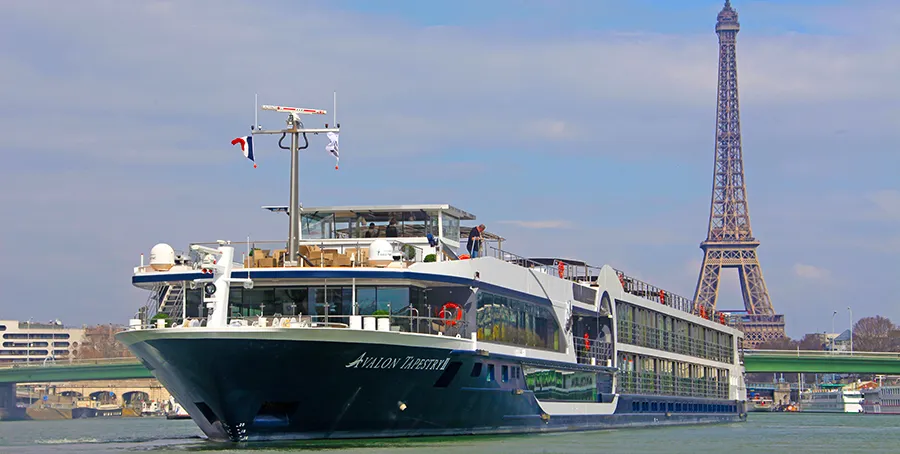


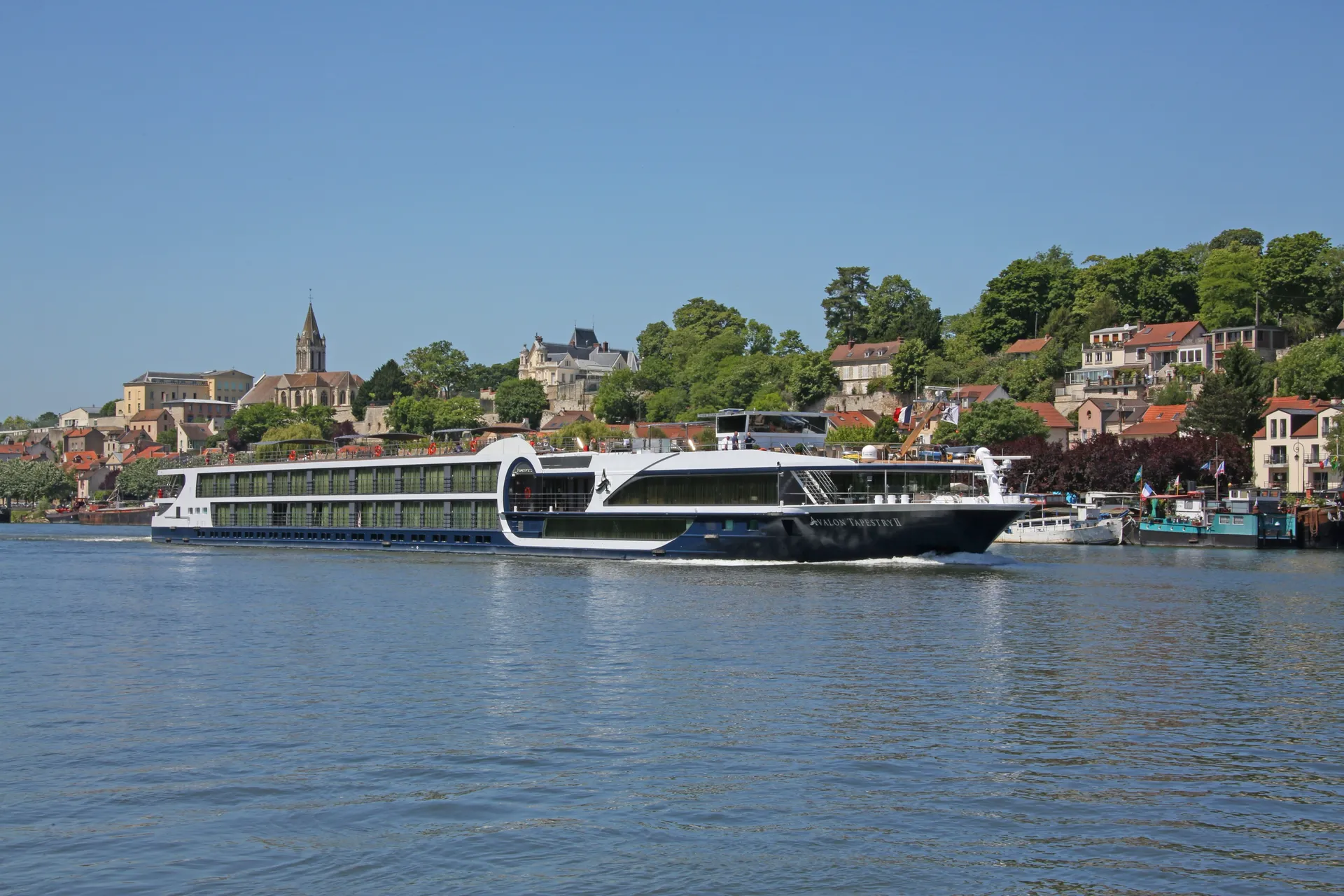
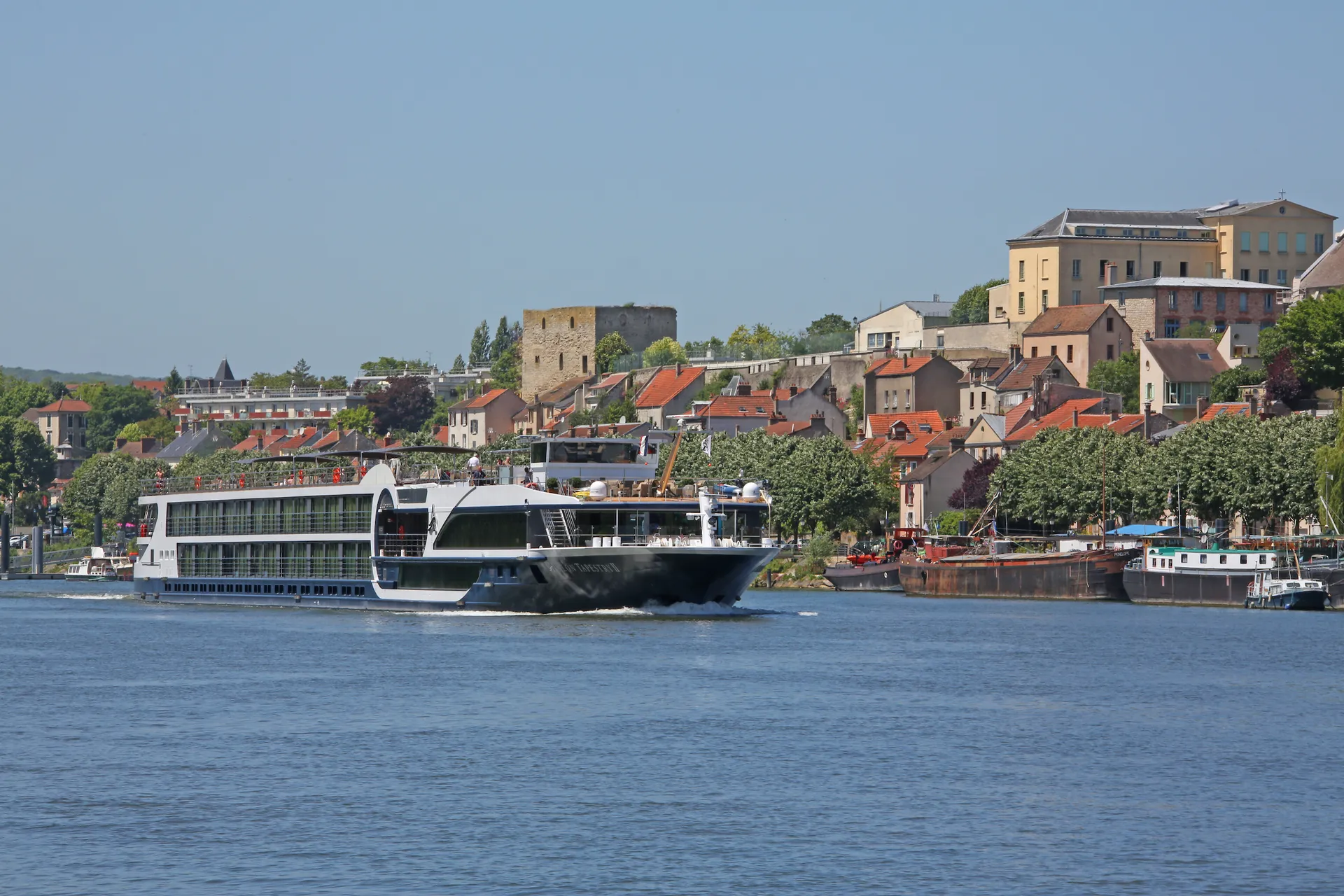
Avalon Waterways
Suite Ship
2015
—
2,022 GT
130
64
37
361 m
12 m
12 knots
No

Bucharest, Romania's sprawling and magnificently contradictory capital, layers Belle Époque mansions, communist-era boulevards, and a furiously creative twenty-first-century scene into a city that rewards the curious traveler who looks beyond the obvious. Ceaușescu's colossal Palace of the Parliament — the world's heaviest building and a monument to totalitarian hubris — is unmissable; equally essential is the neighborhood of Floreasca, where design studios, natural wine bars, and acclaimed restaurants have made Bucharest one of Europe's most exciting emerging food capitals. Visit April through June for the most pleasant weather. Transylvania, with Bran Castle and the medieval city of Brașov, lies two hours north through dramatic Carpathian scenery.

The Port of London is a historic maritime hub, blending ancient traditions with modern vibrancy. Must-do experiences include sampling classic fish and chips at local pubs and exploring the culinary treasures of Borough Market. The best season to visit is spring, when the city comes alive with blooming flowers and outdoor events.

Still whispered as Saigon by its ten million residents, Ho Chi Minh City pulses with an energy that outlasted every empire and every war. The French colonial grandeur of Notre-Dame Cathedral and Gustave Eiffel's Central Post Office stands in vivid counterpoint to the city's kinetic street life — an endless river of motorbikes, fragrant with pho broth and charcoal-grilled meats. Do not miss the Reunification Palace, a time capsule of Cold War modernism, or a dawn bowl of bánh mì from a sidewalk vendor. The dry season, November through April, offers the most comfortable conditions for exploration.

Ruse, Bulgaria's elegant Danube gateway, surprises with a Belle Époque city centre of Austro-Hungarian grandeur — neoclassical facades, ornate fountains, and a Liberty Monument that would not look out of place in Vienna. The city serves as the gateway to the spectacular Rusenski Lom Nature Park, whose limestone canyon shelters medieval rock-carved monasteries of eerie beauty. The remarkable Basarbovo Monastery, still inhabited by monks, clings to cliffs above the turquoise river. Local wineries produce distinguished Mavrud and Cabernet from the nearby Danube plains. May through September offers the most pleasant temperatures for exploration.

Nuremberg commands the imagination on two levels: as the glittering medieval city where Holy Roman Emperors held court, Albrecht Dürer was born, and craftsmen produced the first pocket watch — and as the site of the 20th century's darkest chapter, where Nazi rallies and subsequent war crimes trials left permanent marks on European history and conscience. The Kaiserburg castle crowning the hill above the perfectly preserved old town offers sweeping views of a cityscape that, despite wartime bombing, remains one of Germany's most beautiful. The Documentation Centre on the former Nazi Rally Grounds is essential, sobering history; the Christmas Market on the Hauptmarkt, held since 1628, is among Europe's finest. Visit May through October or December.

Vidin is a captivating port town on the Danube River known for its rich history, eclectic architecture, and vibrant local culture. Must-do experiences include exploring the Baba Vida Fortress and savoring local dishes like **kavarma** and **lutenitsa**. The best time to visit is during the spring and autumn months when the weather is pleasant and the local markets are bustling with activity.
Llangollen is a Welsh market town of extraordinary heritage, home to the Pontcysyllte Aqueduct UNESCO World Heritage Site, medieval Dee bridge, and the July International Musical Eisteddfod. Must-do experiences include crossing the vertiginous aqueduct by narrowboat, hiking to Castell Dinas Brân's hilltop ruins, and tasting Welsh lamb at the riverside Corn Mill. April through October is best, with July's Eisteddfod transforming the valley.

Liverpool, an historic port city, is renowned for its unique blend of vibrant culture and rich maritime heritage. Must-do experiences include sampling authentic Scouse and exploring the Three Graces along the waterfront. The best season to visit is during the mild summer months, when festivals and events enliven the city’s atmosphere.

Donji Milanovac is a tranquil Serbian town on the banks of Lake Đerdap, nestled within the dramatic Iron Gates gorge of the Danube and surrounded by pristine national parkland. Visitors should not miss the Lepenski Vir archaeological site, home to seven-thousand-year-old Mesolithic sculptures, and the restored medieval fortress at nearby Golubac. The ideal time to cruise through the Iron Gates is from late May through September, when long daylight hours illuminate the gorge walls and riverside terraces invite lingering over fresh riblja čorba and local šljivovica.
Grassington is a quintessential Yorkshire Dales village of grey limestone houses and cobblestone streets in the heart of England's finest upland national park. Must-do experiences include walking through ancient Grass Wood to Linton Falls, tasting Wensleydale cheese with fruit cake, and exploring the dramatic limestone pavement above the village. May through September is best, with June's wildflower meadows and the summer festival.
Gretna Green is Scotland's legendary elopement village, where desperate lovers married over a blacksmith's anvil for nearly three centuries after England's 1754 Marriage Act drove them north to Scotland's more permissive laws. Visit May through September via Avalon Waterways for the Famous Blacksmiths Shop, Solway Firth birdwatching, and the Anglo-Scottish borderlands' rich landscape of castles and ruined abbeys.

Edinburgh, the capital of Scotland, is a historic port city renowned for its stunning architecture and rich cultural heritage. Must-do experiences include exploring the iconic Edinburgh Castle and indulging in traditional dishes like haggis and Cullen skink. The best season to visit is during the summer, when the city comes alive with festivals and outdoor events.

Belgrade, the 'White City' rebuilt at least forty times at the confluence of the Danube and Sava rivers, surprises every visitor with its raw, uncurated vitality — a capital that wears its turbulent history lightly while embracing the present with irresistible energy. The Kalemegdan Fortress, fortified for over two thousand years, offers the most dramatic river panorama on the entire Danube; below it, the Skadarlija cobblestone quarter fills nightly with kafana musicians and the aromas of Serbian rakija and roasted meats. Belgrade's nightlife — centered on the floating river clubs called splavovi — is genuinely legendary in Europe. Spring and early autumn offer the most comfortable conditions; the Iron Gate gorge is two hours downstream by river.

Edinburgh, the capital of Scotland, is a historic port city renowned for its stunning architecture and rich cultural heritage. Must-do experiences include exploring the iconic Edinburgh Castle and indulging in traditional dishes like haggis and Cullen skink. The best season to visit is during the summer, when the city comes alive with festivals and outdoor events.

Phnom Penh rises from the confluence of the Mekong, Tonlé Sap, and Bassac rivers with a resilience that makes it one of Southeast Asia's most affecting capitals — a city that endured the Khmer Rouge's "Year Zero" and has re-emerged as a place of broad riverfront boulevards, excellent Khmer cuisine, and a cultural energy that feels earned rather than manufactured. The Royal Palace and its Silver Pagoda, housing a life-size gold Buddha studded with 9,584 diamonds, is the city's architectural centrepiece; the Tuol Sleng Genocide Museum, a former high school converted to a prison by the Khmer Rouge, is sobering but essential history. November through February offers the most comfortable climate for extended exploration.

Novi Sad — the "Serbian Athens" — unfolds along the left bank of the Danube beneath the commanding walls of the Petrovaradin Fortress, a Habsburg military masterpiece whose underground tunnel labyrinth and hilltop clock tower (with hands reversed, to confuse enemy gunners) make for one of Europe's most unusual fortress visits. The city's elegant pedestrian street, the Zmaj Jovina, is lined with 19th-century Habsburg architecture that rewards a leisurely afternoon, while the Serbian cultural renaissance of the same era left behind museums, galleries, and coffee house traditions that endure today. In July, the EXIT music festival transforms the fortress into one of Europe's most storied outdoor stages. Visit May through September for the finest weather.

York is one of England's most historically layered cities, where Roman foundations, Viking heritage, and medieval splendour converge beneath the soaring Gothic arches of York Minster. A stroll along the complete medieval city walls and an afternoon tea with Fat Rascals at the iconic Bettys Café Tea Rooms rank among its essential pleasures. Late spring through early autumn offers the finest experience, when long golden evenings illuminate the ancient limestone and the surrounding Yorkshire Dales are at their most magnificent.

Ilok, a historical port in Croatia, enchants visitors with its medieval architecture, serene riverfront, and vibrant local culture. Must-do experiences include savoring traditional dishes like "čobanac" and sampling the exquisite local wine, "Traminac." The best time to visit is during the late spring or early fall, when the weather is pleasant and the vineyards are lush.

The port of Vienna is a cultural gem along the Danube River, famous for its stunning architecture, rich history, and vibrant culinary scene. Must-do experiences include sampling authentic Wiener Schnitzel and visiting the picturesque village of Dürnstein. The best season to visit is spring or early fall, when the city's gardens bloom and outdoor activities abound.
Day 1

Bucharest, Romania's sprawling and magnificently contradictory capital, layers Belle Époque mansions, communist-era boulevards, and a furiously creative twenty-first-century scene into a city that rewards the curious traveler who looks beyond the obvious. Ceaușescu's colossal Palace of the Parliament — the world's heaviest building and a monument to totalitarian hubris — is unmissable; equally essential is the neighborhood of Floreasca, where design studios, natural wine bars, and acclaimed restaurants have made Bucharest one of Europe's most exciting emerging food capitals. Visit April through June for the most pleasant weather. Transylvania, with Bran Castle and the medieval city of Brașov, lies two hours north through dramatic Carpathian scenery.
Day 3

The Port of London is a historic maritime hub, blending ancient traditions with modern vibrancy. Must-do experiences include sampling classic fish and chips at local pubs and exploring the culinary treasures of Borough Market. The best season to visit is spring, when the city comes alive with blooming flowers and outdoor events.

Still whispered as Saigon by its ten million residents, Ho Chi Minh City pulses with an energy that outlasted every empire and every war. The French colonial grandeur of Notre-Dame Cathedral and Gustave Eiffel's Central Post Office stands in vivid counterpoint to the city's kinetic street life — an endless river of motorbikes, fragrant with pho broth and charcoal-grilled meats. Do not miss the Reunification Palace, a time capsule of Cold War modernism, or a dawn bowl of bánh mì from a sidewalk vendor. The dry season, November through April, offers the most comfortable conditions for exploration.

Ruse, Bulgaria's elegant Danube gateway, surprises with a Belle Époque city centre of Austro-Hungarian grandeur — neoclassical facades, ornate fountains, and a Liberty Monument that would not look out of place in Vienna. The city serves as the gateway to the spectacular Rusenski Lom Nature Park, whose limestone canyon shelters medieval rock-carved monasteries of eerie beauty. The remarkable Basarbovo Monastery, still inhabited by monks, clings to cliffs above the turquoise river. Local wineries produce distinguished Mavrud and Cabernet from the nearby Danube plains. May through September offers the most pleasant temperatures for exploration.
Day 4

Nuremberg commands the imagination on two levels: as the glittering medieval city where Holy Roman Emperors held court, Albrecht Dürer was born, and craftsmen produced the first pocket watch — and as the site of the 20th century's darkest chapter, where Nazi rallies and subsequent war crimes trials left permanent marks on European history and conscience. The Kaiserburg castle crowning the hill above the perfectly preserved old town offers sweeping views of a cityscape that, despite wartime bombing, remains one of Germany's most beautiful. The Documentation Centre on the former Nazi Rally Grounds is essential, sobering history; the Christmas Market on the Hauptmarkt, held since 1628, is among Europe's finest. Visit May through October or December.

Vidin is a captivating port town on the Danube River known for its rich history, eclectic architecture, and vibrant local culture. Must-do experiences include exploring the Baba Vida Fortress and savoring local dishes like **kavarma** and **lutenitsa**. The best time to visit is during the spring and autumn months when the weather is pleasant and the local markets are bustling with activity.
Llangollen is a Welsh market town of extraordinary heritage, home to the Pontcysyllte Aqueduct UNESCO World Heritage Site, medieval Dee bridge, and the July International Musical Eisteddfod. Must-do experiences include crossing the vertiginous aqueduct by narrowboat, hiking to Castell Dinas Brân's hilltop ruins, and tasting Welsh lamb at the riverside Corn Mill. April through October is best, with July's Eisteddfod transforming the valley.

Liverpool, an historic port city, is renowned for its unique blend of vibrant culture and rich maritime heritage. Must-do experiences include sampling authentic Scouse and exploring the Three Graces along the waterfront. The best season to visit is during the mild summer months, when festivals and events enliven the city’s atmosphere.
Day 5

Donji Milanovac is a tranquil Serbian town on the banks of Lake Đerdap, nestled within the dramatic Iron Gates gorge of the Danube and surrounded by pristine national parkland. Visitors should not miss the Lepenski Vir archaeological site, home to seven-thousand-year-old Mesolithic sculptures, and the restored medieval fortress at nearby Golubac. The ideal time to cruise through the Iron Gates is from late May through September, when long daylight hours illuminate the gorge walls and riverside terraces invite lingering over fresh riblja čorba and local šljivovica.
Grassington is a quintessential Yorkshire Dales village of grey limestone houses and cobblestone streets in the heart of England's finest upland national park. Must-do experiences include walking through ancient Grass Wood to Linton Falls, tasting Wensleydale cheese with fruit cake, and exploring the dramatic limestone pavement above the village. May through September is best, with June's wildflower meadows and the summer festival.
Gretna Green is Scotland's legendary elopement village, where desperate lovers married over a blacksmith's anvil for nearly three centuries after England's 1754 Marriage Act drove them north to Scotland's more permissive laws. Visit May through September via Avalon Waterways for the Famous Blacksmiths Shop, Solway Firth birdwatching, and the Anglo-Scottish borderlands' rich landscape of castles and ruined abbeys.

Edinburgh, the capital of Scotland, is a historic port city renowned for its stunning architecture and rich cultural heritage. Must-do experiences include exploring the iconic Edinburgh Castle and indulging in traditional dishes like haggis and Cullen skink. The best season to visit is during the summer, when the city comes alive with festivals and outdoor events.
Day 6

Belgrade, the 'White City' rebuilt at least forty times at the confluence of the Danube and Sava rivers, surprises every visitor with its raw, uncurated vitality — a capital that wears its turbulent history lightly while embracing the present with irresistible energy. The Kalemegdan Fortress, fortified for over two thousand years, offers the most dramatic river panorama on the entire Danube; below it, the Skadarlija cobblestone quarter fills nightly with kafana musicians and the aromas of Serbian rakija and roasted meats. Belgrade's nightlife — centered on the floating river clubs called splavovi — is genuinely legendary in Europe. Spring and early autumn offer the most comfortable conditions; the Iron Gate gorge is two hours downstream by river.
Day 7

Edinburgh, the capital of Scotland, is a historic port city renowned for its stunning architecture and rich cultural heritage. Must-do experiences include exploring the iconic Edinburgh Castle and indulging in traditional dishes like haggis and Cullen skink. The best season to visit is during the summer, when the city comes alive with festivals and outdoor events.

Phnom Penh rises from the confluence of the Mekong, Tonlé Sap, and Bassac rivers with a resilience that makes it one of Southeast Asia's most affecting capitals — a city that endured the Khmer Rouge's "Year Zero" and has re-emerged as a place of broad riverfront boulevards, excellent Khmer cuisine, and a cultural energy that feels earned rather than manufactured. The Royal Palace and its Silver Pagoda, housing a life-size gold Buddha studded with 9,584 diamonds, is the city's architectural centrepiece; the Tuol Sleng Genocide Museum, a former high school converted to a prison by the Khmer Rouge, is sobering but essential history. November through February offers the most comfortable climate for extended exploration.

Novi Sad — the "Serbian Athens" — unfolds along the left bank of the Danube beneath the commanding walls of the Petrovaradin Fortress, a Habsburg military masterpiece whose underground tunnel labyrinth and hilltop clock tower (with hands reversed, to confuse enemy gunners) make for one of Europe's most unusual fortress visits. The city's elegant pedestrian street, the Zmaj Jovina, is lined with 19th-century Habsburg architecture that rewards a leisurely afternoon, while the Serbian cultural renaissance of the same era left behind museums, galleries, and coffee house traditions that endure today. In July, the EXIT music festival transforms the fortress into one of Europe's most storied outdoor stages. Visit May through September for the finest weather.

York is one of England's most historically layered cities, where Roman foundations, Viking heritage, and medieval splendour converge beneath the soaring Gothic arches of York Minster. A stroll along the complete medieval city walls and an afternoon tea with Fat Rascals at the iconic Bettys Café Tea Rooms rank among its essential pleasures. Late spring through early autumn offers the finest experience, when long golden evenings illuminate the ancient limestone and the surrounding Yorkshire Dales are at their most magnificent.
Day 8

Ilok, a historical port in Croatia, enchants visitors with its medieval architecture, serene riverfront, and vibrant local culture. Must-do experiences include savoring traditional dishes like "čobanac" and sampling the exquisite local wine, "Traminac." The best time to visit is during the late spring or early fall, when the weather is pleasant and the vineyards are lush.

The port of Vienna is a cultural gem along the Danube River, famous for its stunning architecture, rich history, and vibrant culinary scene. Must-do experiences include sampling authentic Wiener Schnitzel and visiting the picturesque village of Dürnstein. The best season to visit is spring or early fall, when the city's gardens bloom and outdoor activities abound.


Stateroom Features:
Comfort Collection Beds
Luxurious mattress toppers
Egyptian super-combed cotton linens
European-style duvets
Soft & firm pillows
Extra blankets
Choice of bed configuration
Nightly turn-down service
Bedside tables with reading lamps
Premium Hairdryer
L'Occitane bath products
Spacious 3-door closets with shelves for ample storage
Easy under-bed luggage storage
Flatscreen satellite TV with English-speaking channels & over 100 free movie options
Alarm clock
Make-up mirror
Direct-dial telephone
Bathrobes & slippers
Well-stocked minibar
Complimentary filtered water
In-room safe
Individual climate control
Elegant, contemporary design
Large mirror in bathroom
Marble countertops in bathroom
Wall-to-Wall Panoramic Window with Open-Air Balcony
6-person sitting area
Full shower with glass door
Writing desk and chair
Lighted makeup mirror
Sofa
Coffee table
Complimentary Wi-Fi
One Queen-Sized Bed or Two Twins
USB Ports


Stateroom Features:
Comfort Collection Beds
Luxurious mattress toppers
Egyptian super-combed cotton linens
European-style duvets
Soft & firm pillows
Extra blankets
Choice of bed configuration
Nightly turn-down service
Bedside tables with reading lamps
Premium Hairdryer
L'Occitane bath products
Spacious 3-door closets with shelves for ample storage
Easy under-bed luggage storage
Flatscreen satellite TV with English-speaking channels & over 100 free movie options
Alarm clock
Make-up mirror
Direct-dial telephone
Bathrobes & slippers
Well-stocked minibar
Complimentary filtered water
In-room safe
Individual climate control
Elegant, contemporary design
Large mirror in bathroom
Marble countertops in bathroom
Wall-to-Wall Panoramic Window with Open-Air Balcony
6-person sitting area
Full shower with glass door
Writing desk and chair
Lighted makeup mirror
Sofa
Coffee table
Complimentary Wi-Fi
One Queen-Sized Bed or Two Twins
USB Ports


Stateroom Features:
Comfort Collection Beds
Luxurious mattress toppers
Egyptian super-combed cotton linens
European-style duvets
Soft & firm pillows
Extra blankets
Choice of bed configuration
Nightly turn-down service
Bedside tables with reading lamps
Premium Hairdryer
L'Occitane bath products
Spacious 3-door closets with shelves for ample storage
Easy under-bed luggage storage
Flatscreen satellite TV with English-speaking channels & over 100 free movie options
Alarm clock
Make-up mirror
Direct-dial telephone
Bathrobes & slippers
Well-stocked minibar
Complimentary filtered water
In-room safe
Individual climate control
Elegant, contemporary design
Large mirror in bathroom
Marble countertops in bathroom
Wall-to-Wall Panoramic Window with Open-Air Balcony
6-person sitting area
Full shower with glass door
Writing desk and chair
Lighted makeup mirror
Sofa
Coffee table
Complimentary Wi-Fi
One Queen-Sized Bed or Two Twins
USB Ports
Our cruise specialists can help you find the perfect cabin and the best available pricing.
(+886) 02-2721-7300Contact Advisor