Date
August 8, 2027
Duration
24 nights
Departure Port
Seattle · United States
Arrival Port
Reykjavik · Iceland
Rating
—
Theme
—


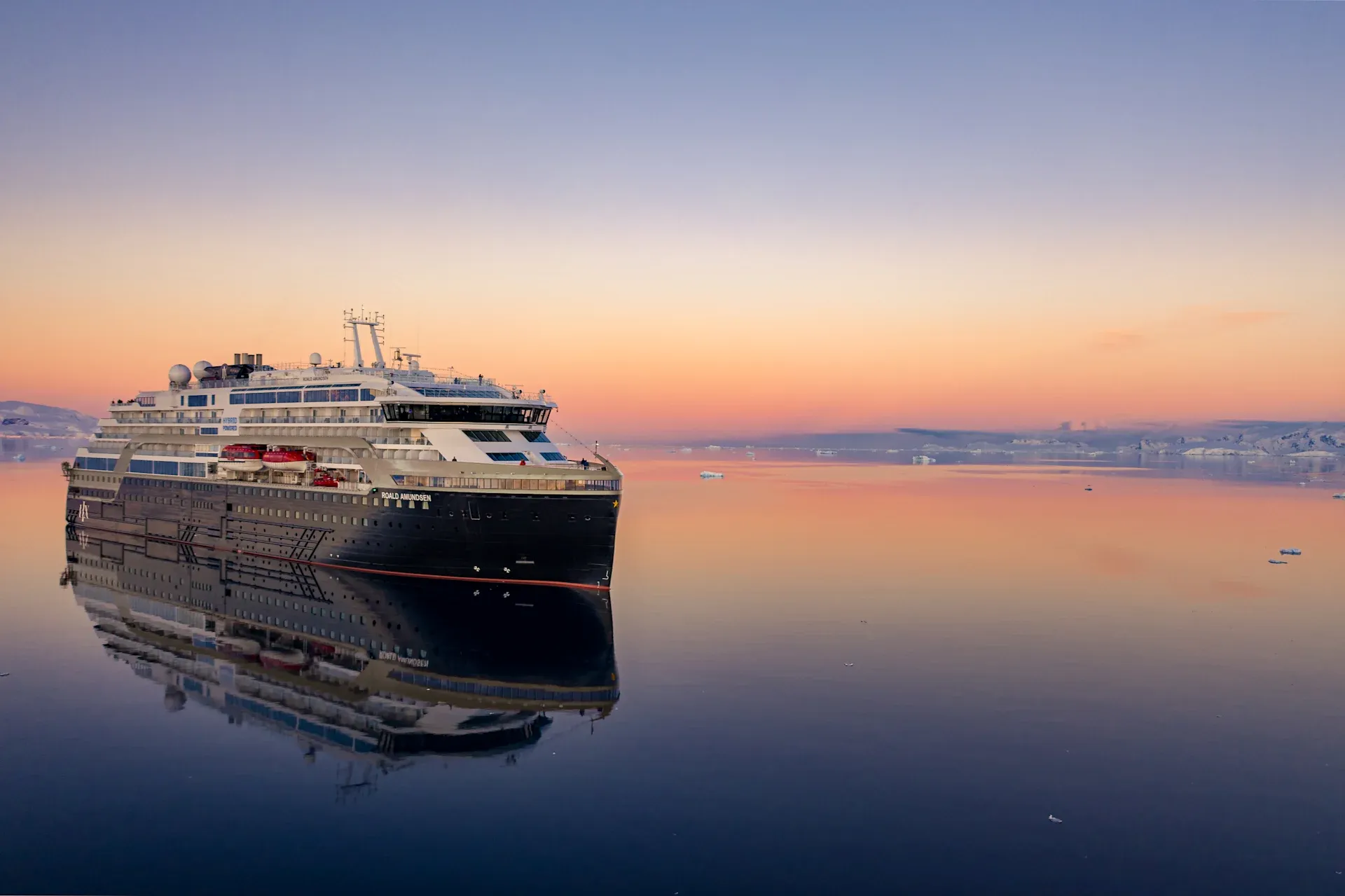
HX Expeditions
2019
—
20,889 GT
530
265
150
459 m
23.6 m
15 knots
No


Even if you think you know Seattle, we guarantee that by your next visit, the city will have changed. Because that is the nature of Seattle, always marching unashamedly towards the future. This is the city that gave us Starbucks, Nirvana and Fraser (plus numerous other celebrities from music legends to retail giants). It’s a city that knows how to surf the next wave with aplomb and grace. It is the city of the future. That is not to say that it doesn’t treat its past with respect. View less Settled by five pioneer families in 1851, the town quickly grew after the Northern Railway was extended to meet the coast in 1893. The Gold Rush of 1897 sealed the city as one of the great places on the west coast. The history of the city’s 100 Mercer girls – girls that were brought back by pioneer Asa Mercer who deemed the city had shortage of marriageable women – is just one of the quirky facts that makes the Seattle impossible not to love. Seattle is the largest city in the state of Washington, yet there is a village vibe that is uncommon in metropolises. If you truly want to enjoy the unique hybrid of tradition and progression, then take a tour of Pike Place, Seattle’s famous farmer’s market. This was where the term “locavore” was coined, and local producer-customer meetings are not only commonplace, but are encouraged. Go hungry as the huge indoor market is laden with tasty options of food options, from fresh vegetables and fruit from to prepared food that can be eaten whilst enjoying a great view of the bay.

Nome is a city in the Nome Census Area in the Unorganized Borough of Alaska, United States. The city is located on the southern Seward Peninsula coast on Norton Sound of the Bering Sea. In 2018 the population was estimated at 3,866, a rise from the 3,598 recorded in the 2010 census, up from 3,505 in 2000.
Discover Fort Ross, the last trading post established by the Hudson's Bay Company. Constructed in 1937, it was used as a fur and whaling trading post at the same time. Fort Ross, located on a small island at the entrance to the Bellot Strait, is still home to this former store as well as the house for the manager and staff. The interior of these two buildings has been damaged over time and by the presence of polar bears. After a short walk towards the summits of the island, you will be able to enjoy a breathtaking panoramic view over the Bellot Strait and surrounding area.

Beechey Island is a small island off the southwest coast of Devon Island, separated by a narrow waterway called the Barrow Strait. Captain William Edward Parry was the first European to visit the island in 1819. His lieutenant, Frederick William Beechey, named the island after his father, the artist William Beechey (1753–1839). Beechey Island played a significant role in the history of Arctic Exploration. During the winter of 1845-46, Sir John Franklin and his men camped on the island as part of their ill-fated quest to find the Northwest Passage. Mummified remains of three of Franklin’s crew were discovered, giving a better understanding of what happened before the disappearance of the expedition. In 1850 Edward Belcher used the island as a base while surveying the area. Later, in 1903, Norwegian explorer Roald Amundsen stopped at the island at the beginning of his successful voyage in search for the Northwest Passage. Subsequently, Beechey Island has been declared a "Territorial Historic Site" since 1975 by the Northwest Territories government

Beechey Island is a small island off the southwest coast of Devon Island, separated by a narrow waterway called the Barrow Strait. Captain William Edward Parry was the first European to visit the island in 1819. His lieutenant, Frederick William Beechey, named the island after his father, the artist William Beechey (1753–1839). Beechey Island played a significant role in the history of Arctic Exploration. During the winter of 1845-46, Sir John Franklin and his men camped on the island as part of their ill-fated quest to find the Northwest Passage. Mummified remains of three of Franklin’s crew were discovered, giving a better understanding of what happened before the disappearance of the expedition. In 1850 Edward Belcher used the island as a base while surveying the area. Later, in 1903, Norwegian explorer Roald Amundsen stopped at the island at the beginning of his successful voyage in search for the Northwest Passage. Subsequently, Beechey Island has been declared a "Territorial Historic Site" since 1975 by the Northwest Territories government

Vis is a Croatian island in the Adriatic Sea, off the Dalmatian Coast. In Vis town, parts of the ancient city walls remain, along with a thermae (public bath). Levaman Fortress houses the Archaeological Museum, with exhibits including a 4th-century-B.C. bronze head of the goddess Artemis and amphorae recovered offshore. On a small peninsula, St. Jerome’s Church and Monastery is built over an ancient Roman theater.


Nuuk, meaning “the cape”, was Greenland’s first town (1728). Started as a fort and later mission and trading post some 240 kilometers south of the Arctic Circle, it is the current capital. Almost 30% of Greenland’s population lives in the town. Not only does Nuuk have great natural beauty in its vicinity, but there are Inuit ruins, Hans Egede’s home, the parliament, and the Church of our Saviour as well. The Greenlandic National Museum has an outstanding collection of Greenlandic traditional dresses, as well as the famous Qilakitsoq mummies. The Katuaq Cultural Center’s building was inspired by the undulating Northern Lights and can house 10% of Nuuk’s inhabitants.


Reykjavík is mirrored in the waters of its bay, as you can see when your cruise ship sets anchor in the port. The quays along the seafront host a variety of shops, live music clubs and cafés. Take a stroll down Frakkastigur up to Lækjartorg, to admire the Sólfar, also known as the Sun Voyager, a large modern steelsculpture by Jón Gunnar Árnason, that represents a Viking vessel, with the bow pointing towards the north. Go back in history as you reach the historic centre, in the districts of Aðalstræti and Suðurgata, where you can still see the remains of some primitive Icelandic dwellings. Also the church of Hallgrímur, probably the most important architectural monument in Reykjavik, is worth a visit. As you will discover during your MSC cruise of Northern Europe, geothermal energy positively conditions the life of the entire country and there is an abundance of spas. Don’t miss an excursion to the Þingvellir national park, in the south west region of the island, a UNESCO world heritage site since 2004. On the northern shores of the Þingvallavatn, the largest Icelandic lake, the Öxará river forms the Öxaráfoss waterfall in the vicinity of Almannagjá, the largest cleft in this land. If you like waterfalls, you should not miss a visit to Gullfoss, in the south east of the island: the river Hvítá here drops down 11 and then 21 metres forming the queen of all Icelandic waterfalls and then continues along a narrow gorge in the plateau. In this area we also find the Strokkur, the only geyser that regularly erupts every 4-8 minutes. Then proceed to Geysir, in the Haukadalur valley, the oldest known geyser, from which the term originates. Its eruptions spray boiling water up to 60 metres into the air, but often reach higher than 100 metres: it is the tallest of the active geysers.


Aft corner suite with private balcony and jacuzzi, various sizes, large windows, flexible sleeping arrangements, some w/sofa, TV, mini-bar, amenity kit, bathrobe, kettle, tea and coffee, espresso maker


Large corner suite with private balcony, flexible sleeping arrangements, sofabed, TV, mini-bar, amenity kit, bathrobe, kettle espresso maker, adapted for guests with wheelchair ]


Suites with private balcony, different sizes, top-high decks, flexible sleeping arrangements, some with sofabed, TV, mini-bar, amenity kit, kettle, tea and coffee, bathrobe, espresso maker


Extra large corner suite with private balcony, most spacious cabins w/flexible sleeping arrangements, large windows, sofa bed, TV, mini-bar, amenity kit, bathrobe kettle, tea and coffee, espresso maker


High deck cabins with balcony. Spacious cabins, different sizes, flexible sleeping arrangements, some with sofabed, TV, kettle, tea and coffee. With limited view.


Cabins on middle decks, double bed, TV
Our cruise specialists can help you find the perfect cabin and the best available pricing.
(+886) 02-2721-7300Contact Advisor