Date
April 29, 2027
Duration
28 nights
Departure Port
New York · United States
Arrival Port
Le Havre · France
Rating
Ultra Luxury
Theme
—


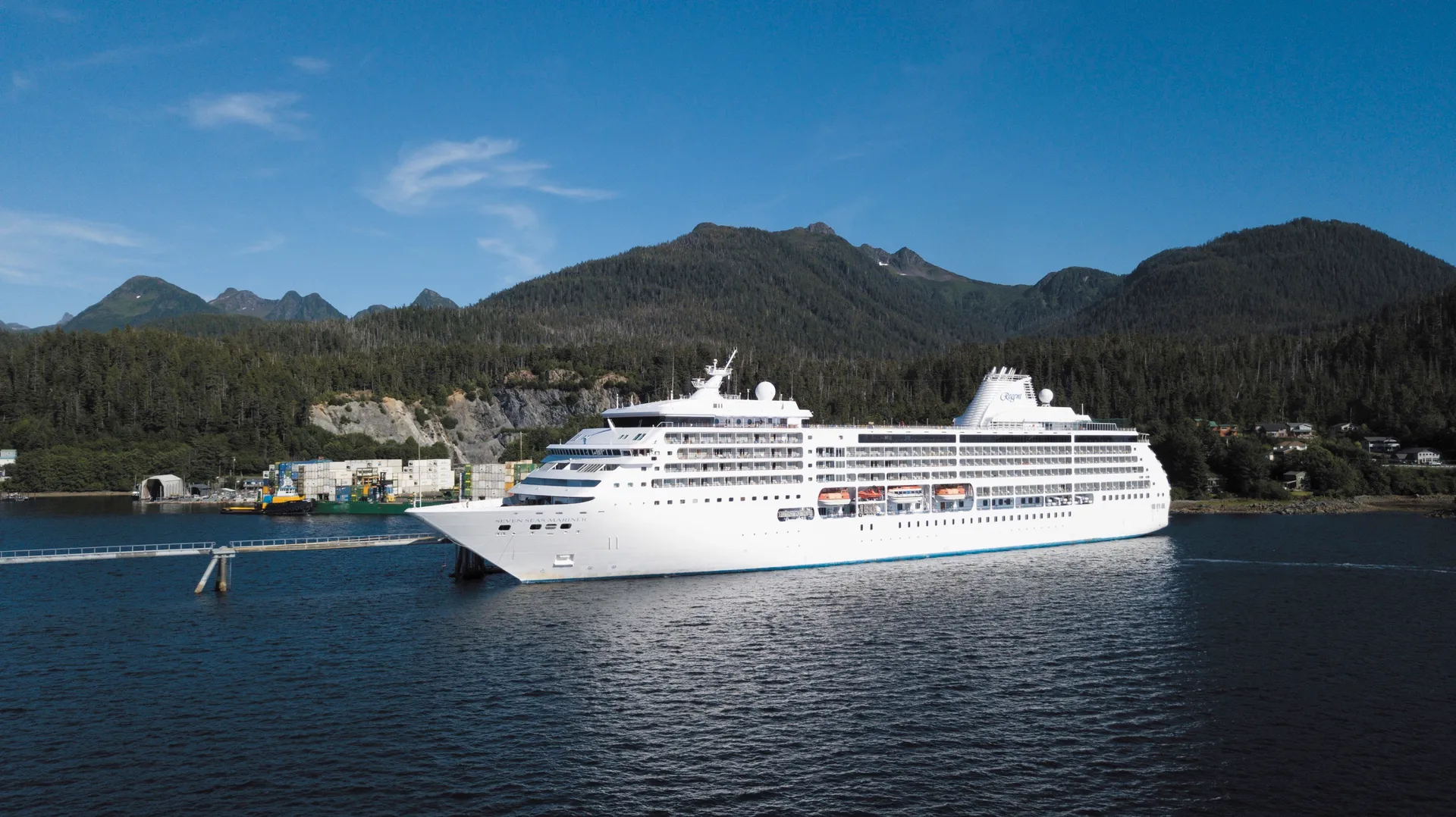
Regent Seven Seas Cruises
2001
2018
48,075 GT
700
350
459
216 m
28 m
20 knots
No


Wake up to be part of a city that never sleeps. Fly by helicopter over the Manhattan Skyline for flawless images of the Statue of Liberty, neon-lit Times Square, sprawling Central Park, the skyscraping Empire State Building and Brooklyn Bridge. Explore Picasso, Pollock and others at the Museum of Modern Art. Then create your own kitsch masterpiece from a blank canvas at a painting party in Havana’s emporium. Pay your respects and honour gallant heroes at the 9/11 Memorial and Museum mission. Listen to backstage stories in the Broadway theatre district, shop in the East Village, eat streetside hotdogs, sip cocktails in elegant bars, take in a show. And as evening falls, take a walk with your loved one over Brooklyn Bridge. Big, bold and brash – there's a lot to bite off in the Big Apple.


Canada is a huge country that offers tourists a large number of wonderful attractions to visit and explore. One of those not to be missed is Halifax, the capital city of Nova Scotia found on the east coast of Canada and one of the places you can visit on an MSC Cruise. Each city has a symbol that represents it more than anything else: for Halifax, its citadel that dates back to the late 18th century, famous in Canada both for its beauty and for its historical importance, fills that role. Inside the star-shaped citadel, you can explore the history of Halifax on guided tours. The museum staff, dressed as soldiers of the army and navy, will show you the clothes used in the past and other items in maritime activities. To the south-west of the city, your MSC cruise will offer you an excursion to one of the most beautiful and evocative settings on the Atlantic coast, the small village of Peggy's Cove, famous for its red lighthouse that was built in 1868. In this fishing village, elements of nature and domestic intimacy coexist: it is a land of boulders eroded by glaciers where the presence of humans can be found only in a handful of colorful houses and fishing shacks over the waters of the marina. The village lighthouse stands on top of a granite outcropping, made slippery by the splashes of the ocean waves. Less than a kilometer from the public gardens of Halifax can be found another place of great historical-cultural interest that you can visit on your MSC cruise: the Fairview Cemetery, a Canadian cemetery, famous for being the resting place for 121 victims of the shipwreck of the Titanic. Halifax's connection with the famous naval tragedy on April 15, 1912 can also be seen at the Maritime Museum of the Atlantic, which houses an excellent permanent exhibition on the disaster, including photographs, wooden artifacts and the only intact Titanic deckchair in the world.

St. John's is the most easterly point in North America and closest point of land to Europe. Due to it strategic location, St. John's has been vitally important for centuries to explorers, adventurers, merchants, soldiers, pirates, and all manner of seafarers, who provided the foundation for this thriving modern day city. Explore this, one of the oldest cities in North America, and a city unlike any other. This "City of Legends" is cradled in a harbor carved from granite, and surrounded by hills running down to the ocean. Quaint side streets of a thousand colors are home to friendly faces that wait to greet you.

Providing a gorgeous green welcome to sailors venturing on the long journey across the Atlantic, Ponta Delgada’s shoreline is a reassuring sight, as it emerges into view. Sat on São Miguel Island, the largest of Portugal’s Azores islands - which wait on an outpost of western Europe, some 1,100 miles from the mainland. Ponta Delgada is the island’s largest city, and a place of spectacular volcanic vistas, steaming hot springs and impressive landscaped gardens. View less The city’s signature trio of arches welcomes you to Ponta Delgada, and its island of verdant volcanic contrasts. Wander between monochrome churches like the Gothic Church of St. Sebastian, and up to the Convent and Chapel of Our Lady of Hope – which houses the revered icon of Christ that is paraded through the streets annually, and believed to have miraculous powers by locals. Or, head for beaches offering sanctuary on charcoal-coloured sands, or the tropical António Borges Botanical Gardens, where tropical plants add extra shades to the Green Island's scenery. Now extinct, the mighty Caldeira das Sete Cidades is a truly awe-inspiring sight - and the colossal collapsed volcanic caldera blooms with lush greenery and scattered wildflowers. The vast crater has been taken over by a glowing, picturesque lake, which reflects the blue sky above. A full three miles wide - and with a circumference of eight miles - it’s a vast panorama to take in. The Lagoa de Fogo – or Lake of Fire – is another of the island’s calderas – rise up to see the crumpled scenery encasing a beautiful lake. São Miguel Island’s geothermal activity has practical uses too, and you can harness the powers to unwind any tired muscles after a long day, by sinking into the hot springs of Poca Da Dona.


As you arrive in Funchal on an MSC cruise, your ship will cast anchor in a bay protected by mountains rising straight up behind the port. The name, Funchal, derives from that of the fennel plant, the funcho still used today in the traditional sweets known as rebuçados de funcho, that one can find anywhere on the island of Madeira. An excursion will take you around the town centre, to visit historic churches, from the A Sé Cathedral, with its inlaid ceiling, to the majestic Church of the Incarnation, to the church of Carmo without a vault. Another MSC excursion will take you up to the village of Monte, from where one can admire a spectacular view of the Funchal bay. You can visit its 18th century church and the tomb of the last Austrian emperor, Charles I, and stroll around the magnificent botanic gardens. But if you like heights, there’s nothing more impressive than the Cabo Girão and its 589 metre tall cliffs, amongst the highest in the world, at the foot of which lie the cultivated lands known as Fajãs do Cabo Girão. If you’re looking for an equipped beach during your MSC cruise, another excursion will take you to Machico. Founded in the 15th century, it hosts the oldest religious building on the island, the Capela dos Milagres, and the fortresses of São João Baptista and Nossa Senhora do Amparo built in the beginning of the 16th century. The more lively tourist attraction is instead in Calheta, on the south-west coast. Splendid yachts cruising across the Atlantic are moored in the port and if you want to go for a swim there are two beautiful beaches of golden sand; in spite of the modern structures Calheta dates back to the mid-15th century. This is where they make the “Aguardente”, the best white rhum, and fundamental ingredient of Madeira’s typical drink, the “Poncha” .


Though part of Spain, the Canary Islands sit in the open Atlantic Ocean, about 100 kilometers (60 miles) west of Morocco. The mild climate mixed with a rich volcanic landscape and beautiful sandy beaches makes the main city of Santa Cruz, on the largest island of Tenerife, a welcome stop for many cruise voyages. The isolated island is dominated by the Teide volcano, the tallest mountain in Spain and site of one of the world’s most popular national parks. A cable car carries visitors to the top, offering unrivaled views of the island. Travelers interested in learning about the history of the island, its unique wildlife and the population of indigenous people that lived here before the arrival of European settlers should visit the Museum of Nature and Man in Santa Cruz, while architecture buffs can stroll the streets of La Laguna to see colonial-era mansions. And travelers keen on food and wine should venture into the countryside to sample local dishes or make the drive to Casa del Vino, where they can learn about, and taste, local wines while shopping for a bottle or two to bring home.


Nestled on the east coast of Lanzarote, Arrecife takes its name from the rocky reefs and outcrops that dominate its coastline. This pretty working city has a friendly, authentic feel, and has managed to remain true to its roots as a historic fishing village. There’s a lot to explore, and whether you want to lie back on long swathes of opulent golden sand, or strap on hiking boots to crunch across Lanzarote’s scorched volcanic scenery, this versatile capital has so much to offer. With castles, caves, sleepy beaches, and a glittering saltwater lagoon, Arrecife is the perfect place to get acquainted with the sun-kissed appeal of the Canary Islands. Lanzarote’s charcoal desert vistas radiate a remarkable luna-like quality, but dotted cacti, waving palms, and bursts of vibrant wildflowers add an accent of colour to the canvas. Arrecife itself boasts apricot-coloured beaches and labyrinthine lanes of white-wash buildings within its Old Quarter, where you can smell fresh fish grilling, and see locals dipping delicious local salty potatoes - papas arrugadas - into colourful sauces. An evening stroll along El Charco de san Gines is a must for watching fishing boats bobbing gently on the lagoon, and watching spectacular sunsets burning across the sky. Standing tall for more than four centuries, Castillo De San Gabriel is located on the tiny island of Islote de los Ingleses, and was once a target for pirates, who would appear menacingly on the Atlantic’s horison. The stalwart 16th-century fortress now serves as the History Museum of Arrecife, and exhibitions inside explore the evolution of the city, and the ancient culture of Lanzarote. The International Museum of Contemporary Art, meanwhile, displays modern and abstract works within the 18th-century San José Castle’s refined setting. See works from Cesar Manrique - the prominent artist and architect whose slick sixties style flair can be admired across the island.


Boasting an impressive 300 days of sun per year, there is a reason why Agadir is Morocco’s premier holiday resort. Nicknamed the “Miami of Morocco”, the resort has sea and sand in abundance, along with a dreamy 10 km beach – perfect for travellers who want sheltered swimming or enjoy water-based fun in the sun. By contrast to the rest of the country, Agadir is thoroughly modern. An earthquake destroyed the city in 1960, killing 15,00 in 13 seconds and leaving another 35,000 homeless. In its place, and under the direction of Le Corbusier, a new city with a new direction was built. Instead of souks and medinas, think modern architecture, wide, tree-lined avenues, open squares and pedestrian precincts. Low rise hotels, boutiques and apartment blocks line the splendid waterfont. While all the original landmarks were destroyed (many not once, but twice, in the 1960 earthquake but also in the 1755 Lisbon earthquake), Agadir strove to rebuild as much as it could. Thus the fabled 1540 Oufla Fort, originally built in the mid-16th century by Saadian Sultan Mohammed ech Cheikh was painstakingly recreated with as much authenticity as possible. The ancient kasbah sits at an amazing vantage point (Oufla being the Amazigh word for ‘above’). The inscription “God, King, Country” over the entrance in both Dutch and Arabic is one of the few original elements and dates back to the middle of the 18th century, when the kasbah was initially restored. The Kasbah offer by far the best views of the city.


Immortal lines from the silver screen may have imprinted a warm, fuzzy visage of old Casablanca into our minds, but this thriving city is a curious example of what Morocco’s modernity looks like. Glistening white art deco buildings line the wide pathways that sweep through Casablanca, as the sea sparkles like a thin mirage on the horizon. There’s an aura of creativity amid Casablanca’s culture and chaos, helping to make the city one of Morocco’s most curious and compelling. The Hassan II Mosque took a staggering seven years and 10,000 artists to craft its legacy as the country's largest mosque, and to bring the world's tallest minaret to sky-high reality. A vision of cool to the touch marble, cavernous prayer rooms and intricate inlays, the mosque is extraordinary in scale and ambition. Retractable roofs let the sun flood in, while dizzying glass floors dazzle, and the blue Atlantic waves surge below your feet. After that humbling visit, stroll along La Corniche - where surfers glide across rough and tumble waves, and chic cafes offer front-row seats for sweet peppermint teas with a side of people-watching. Casablanca is a diner's city - boulevards laced with French-fusion restaurants, buzzy beachfront joints, and raw seafood bars provide gem-like offerings fresh from the boat. Those seeking a slice of that golden-age Hollywood romance can wander through the medina, with its unabashed ramshackle feel, and maze of alleyways punctuated with busy barber shops and butchers.


Lisbon, the capital of Portugal, is a city open to the sea and carefully planned with 18th-century elegance. Its founder is said to be the legendary Ulysses, but the theory of an original Phoenician settlement is probably more realistic. Known in Portugal as Lisboa, the city was inhabited by the Romans, Visigoths and, beginning in the 8th century, the Moors. Much of the 16th century was a period of great prosperity and overseas expansion for Portugal. Tragedy struck on All Saints' Day in 1755 with a devastating earthquake that killed about 40,000 people. The destruction of Lisbon shocked the continent. As a result, the Baixa (lower city) emerged in a single phase of building, carried out in less than a decade by the royal minister, the Marques de Pombal. His carefully planned layout of a perfect neo-classical grid survived to this day and remains the heart of the city. Evidence of pre-quake Lisbon can still be seen in the Belém suburb and the old Moorish section of the Alfama that sprawls below the Castle of St. George. Lisbon is a compact city on the banks of the Tagus River. Visitors find it easy to get around as many places of interest are in the vicinity of the central downtown area. There is a convenient bus and tram system and taxis are plentiful. Rossio Square, the heart of Lisbon since medieval times, is an ideal place to start exploring. After a fire destroyed parts of the historic neighborhood behind Rossio in 1988, many of the restored buildings emerged with modern interiors behind the original façades. The city boasts a good many monuments and museums, such as the Jeronimos Monastery, Tower of Belém, the Royal Coach Museum and the Gulbenkian Museum. High above the Baixa is the Bairro Alto (upper city) with its teeming nightlife. The easiest way to connect between the two areas is via the public elevator designed by Gustave Eiffel. Cruising up the Tagus River to the ship's berth, you can already spot three of Lisbon's famous landmarks: the Monument to the Discoveries, the Tower of Belém and the Statue of Christ, which welcomes visitors from its hilltop location high above Europe's longest suspension bridge.


Lively, commercial Oporto is the second largest city in Portugal after Lisbon. Also called Porto for short, the word easily brings to mind the city's most famous product - port wine. Oporto's strategic location on the north bank of the Douro River has accounted for the town's importance since ancient times. The Romans built a fort here where their trading route crossed the Douro, and the Moors brought their own culture to the area. Oporto profited from provisioning crusaders en route to the Holy Land and enjoyed the riches from Portuguese maritime discoveries during the 15th and 16th centuries. Later, port wine trade with Britain compensated for the loss of the spice trade and the end of gold and gem shipments from Brazil. In the 19th century, the city went through a period of new prosperity with the rise of industries. In its wake followed the building of workers' quarters and opulent residences. Since the declaration of Oporto as a World Heritage Site by UNESCO, the city aims to build up a cultural reference that will provide it with a new image, based on deep historical roots. Among the attractions that make Oporto such an interesting place are its graceful bridges spanning the Douro River, a picturesque riverfront quarter and, most notable, its world-famous port wine lodges. Although Oporto is a bustling centre and home to many different businesses, the source of its greatest fame is the rich, sweet fortified red wine we know as port.


La Coruсa, the largest city in Spain's Galicia region, is among the country's busiest ports. The remote Galicia area is tucked into the northwest corner of the Iberian Peninsula, surprising visitors with its green and misty countryside that is so much unlike other parts of Spain. The name “Galicia” is Celtic in origin, for it was the Celts who around the 6th century BC occupied the region and constructed fortified defenses. La Coruсa was already a busy port under the Romans.They were followed by an invasion of Suevians, Visigoths and, much later in 730, the Moors. It was after Galicia was incorporated into the Kingdom of Asturias that the epic saga of the Pilgrimage to Santiago (St. James) began. From the 15th century, overseas trade developed rapidly; in 1720, La Coruсa was granted the privilege of trading with America - a right previously only held by Cadiz and Seville. This was the great era when adventurous men voyaged to the colonies and returned with vast riches. Today, the city's significant expansion is evident in three distinct quarters: the town center located along the isthmus; the business and commercial center with wide avenues and shopping streets; and the “Ensanche” to the south, built up with warehouses and industry. Many of the buildings in the old section feature the characteristic glazed faзades that have earned La Coruсa the name “City of Crystals.” Plaza Maria Pita, the beautiful main square, is named after the local heroine who saved the town when she seized the English standard from the beacon and gave the alarm, warning her fellow townsmen of the English attack.


Gijón began as a fishing village nearly 3,000 years ago, according to the records of the Campa Torres Archaeological and Nature Reserve in Gijón. Today the city is an important port on the Atlantic coast of Spain. The historic fishing village, known as Cimadevilla, is located on a penninsula that divides the port in half. The village is the main tourist attraction of the city. Most of the streets are cobble stone and barely two cars wide. Many of the buildings have been renovated to display the colorful life of the village. Those that have not are evidence of centuries of construction designed to withstand the powerful forces of the Atlantic. A hike up the hill and through Cimadevilla leads to Cerro de Santa Catalina. It is a park on the tip of the pennisula that provides a view of the outstretched coastline forming the port. On the very edge of the penisula is a sculpture the size of a house, Eligio del Horizonte, or Praise of the Horizon. It is one of 16 large sculptures placed in public spaces throughout the city over the last decade. A brief look out to sea and the numerous cargo ships bring back the present. The busy commercial port is to the left. The port authority building not only houses plenty of information about the port, but also one of the cleanest public restrooms in Europe, at least at this time of the year. To the right is Playa del San Lorenzo, the main beach of the city, which in summer becomes very busy, too. During spring, the Atlantic brings cold nights, rainy mornings for the city and snow for the mountains nearby. By afternoon though, the clouds break off from the sea and the sun shines, urging everything on toward summer.


Time in Bilbao (Bilbo, in Euskera) may be recorded as BG or AG (Before Guggenheim or After Guggenheim). Never has a single monument of art and architecture so radically changed a city. Frank Gehry's stunning museum, Norman Foster's sleek subway system, the Santiago Calatrava glass footbridge and airport, the leafy César Pelli Abandoibarra park and commercial complex next to the Guggenheim, and the Philippe Starck AlhóndigaBilbao cultural center have contributed to an unprecedented cultural revolution in what was once the industry capital of the Basque Country.Greater Bilbao contains almost 1 million inhabitants, nearly half the total population of the Basque Country. Founded in 1300 by Vizcayan noble Diego López de Haro, Bilbao became an industrial center in the mid-19th century, largely because of the abundance of minerals in the surrounding hills. An affluent industrial class grew up here, as did the working class in suburbs that line the Margen Izquierda (Left Bank) of the Nervión estuary.Bilbao's new attractions get more press, but the city's old treasures still quietly line the banks of the rust-color Nervión River. The Casco Viejo (Old Quarter)—also known as Siete Calles (Seven Streets)—is a charming jumble of shops, bars, and restaurants on the river's Right Bank, near the Puente del Arenal bridge. This elegant proto-Bilbao nucleus was carefully restored after devastating floods in 1983. Throughout the Casco Viejo are ancient mansions emblazoned with family coats of arms, wooden doors, and fine ironwork balconies. The most interesting square is the 64-arch Plaza Nueva, where an outdoor market is pitched every Sunday morning.Walking the banks of the Nervión is a satisfying jaunt. After all, this was how—while out on a morning jog—Guggenheim director Thomas Krens first discovered the perfect spot for his project, nearly opposite the right bank's Deusto University. From the Palacio de Euskalduna upstream to the colossal Mercado de la Ribera, parks and green zones line the river. César Pelli's Abandoibarra project fills in the half mile between the Guggenheim and the Euskalduna bridge with a series of parks, the Deusto University library, the Meliá Bilbao Hotel, and a major shopping center.On the left bank, the wide, late-19th-century boulevards of the Ensanche neighborhood, such as Gran Vía (the main shopping artery) and Alameda de Mazarredo, are the city's more formal face. Bilbao's cultural institutions include, along with the Guggenheim, a major museum of fine arts (the Museo de Bellas Artes) and an opera society (Asociación Bilbaína de Amigos de la Ópera, or ABAO) with 7,000 members from Spain and southern France. In addition, epicureans have long ranked Bilbao's culinary offerings among the best in Spain. Don't miss a chance to ride the trolley line, the Euskotram, for a trip along the river from Atxuri Station to Basurto's San Mamés soccer stadium, reverently dubbed "la Catedral del Fútbol" (the Cathedral of Football).


The name alone conjures images of sun-ripened grapes, splashes of refined flavour, and the joy of clinking glasses. Bordeaux is synonymous with quality and prestige, and the promise of endless opportunities to sample the city’s famous, full-bodied red wines makes a visit to this elegant French port city one to truly savour. Sprinkled with scenic, turret-adorned mansion castles, which stand above soil softened by the Atlantic and winding flow of the Garonne River, the vineyards of Bordeaux consistently produce revered wines, enjoyed right across the globe. Explore France’s largest wine region, walking through vineyards where dusty clumps of grapes hang, before descending into cellars to see the painstaking processes that make this region a global wine centre. The acclaimed, sensory experience of Cité du Vin wine museum lets you put your own nose to the test, learning more about the craft involved in producing world class vintages. Brush up on your wine knowledge, with our blog [insert You’ll Fall in Love with Wine in Bordeaux]. Bordeaux itself is an intoxicating blend of old and new – a fact perfectly illustrated by the Water Mirror. This living art installation has reinvigorated one of the city’s most important historical sites, and it feels as though you’re walking on water, as you step through the cooling mist of Place De La Bourse. The moisture generates a glorious mirrored composition of the 300-year-old elegant palatial architecture in front of you. Water also flows freely from the magnificent Monument aux Girondins statue, where horses rear up to extol the values of the Girondin revolutionaries. Marche des Quais – the city’s lively fish market – is the spot to try this wine capital’s freshest lemon-drizzled oysters and juicy prawns.


The name alone conjures images of sun-ripened grapes, splashes of refined flavour, and the joy of clinking glasses. Bordeaux is synonymous with quality and prestige, and the promise of endless opportunities to sample the city’s famous, full-bodied red wines makes a visit to this elegant French port city one to truly savour. Sprinkled with scenic, turret-adorned mansion castles, which stand above soil softened by the Atlantic and winding flow of the Garonne River, the vineyards of Bordeaux consistently produce revered wines, enjoyed right across the globe. Explore France’s largest wine region, walking through vineyards where dusty clumps of grapes hang, before descending into cellars to see the painstaking processes that make this region a global wine centre. The acclaimed, sensory experience of Cité du Vin wine museum lets you put your own nose to the test, learning more about the craft involved in producing world class vintages. Brush up on your wine knowledge, with our blog [insert You’ll Fall in Love with Wine in Bordeaux]. Bordeaux itself is an intoxicating blend of old and new – a fact perfectly illustrated by the Water Mirror. This living art installation has reinvigorated one of the city’s most important historical sites, and it feels as though you’re walking on water, as you step through the cooling mist of Place De La Bourse. The moisture generates a glorious mirrored composition of the 300-year-old elegant palatial architecture in front of you. Water also flows freely from the magnificent Monument aux Girondins statue, where horses rear up to extol the values of the Girondin revolutionaries. Marche des Quais – the city’s lively fish market – is the spot to try this wine capital’s freshest lemon-drizzled oysters and juicy prawns.


With a history that spans more than 1,000 years, La Rochelle has endured times of turbulent crisis, as well as periods of economic and cultural prosperity. As a result, its inhabitants have inherited a desire for independence and a flare for innovation. These characteristics have made this community a leader in shipbuilding, chemical production, train-building and aquaculture. La Rochelle's diverse past comes to life in the form of its medieval- and Renaissance-style architecture. The Old Port, which is surrounded by 14th-century stone towers, reminds visitors of the city's longstanding tradition of commerce. The city's interests and character are further illustrated in museums that offer perspectives on art, oceanography, sailing, trade and natural history.
Floating betwixt England and France, the Channel Islands chart their own geopolitical course. And Jersey’s is especially scenic, with its rugged coastline and balmy Gulf Stream-kissed climate, shown off with green abandon at the Samarès Manor botanical garden. But all is not butterflies and roses around here; Hitler used Jersey as a massive WWII bulwark, and his observation towers, bunkers and subterranean hospital are enduring reminders. Mont Orgeuil Castle (1212) is an even older war relic.


As you sail on your MSC cruise to France, you’ll come to Le Havre, the country’s second-largest port, which takes up half the Seine estuary. However, the town itself, home to almost 200,000 people, is a place of pilgrimage for fans of contemporary architecture. Le Havre – “The Harbour” – is the principal trading post of northern France and a port of call of our MSC Northern Europe cruises. Following its near-destruction during World War II, Le Havre was rebuilt by a single architect, Auguste Perret, between 1946 and 1964. The sheer sense of space can be exhilarating: the showpiece monuments have a winning self-confidence, and the few surviving relics of the old city have been sensitively integrated into the whole. While the endless mundane residential blocks can be dispiriting, even those visitors who fail to agree with Perret’s famous dictum that “concrete is beautiful” may enjoy a stroll around his city. A shore excursion on your MSC Northern Europe cruise can also be the opportunity to discover Rouen, the capital of Upper Normandy, one of France’s most ancient cities. Standing on the site of Rotomagus, built by the Romans at the lowest point where they could bridge the Seine, it was laid out by Rollo, the first duke of Normandy, in 911. Captured by the English in 1419, it became the stage in 1431 for the trial and execution of Joan of Arc, before returning to French control in 1449. Rouen today can be very seductive, its lively and bustling centre well equipped with impressive churches and museums. North of the Seine at any rate, it’s a real pleasure to explore. As well as some great sights – Cathédrale de Notre-Dame, all the delightful twisting streets of timbered houses – there’s history aplenty too, most notably the links with Joan of Arc.


In this superbly designed suite, you enjoy the comfort of richly furnished accommodations as well as exclusive luxuries available only in suites at the Concierge level and higher. Your suite includes amenities such as an illy espresso maker and cashmere blankets, perfect for use in the morning when you wish to sip coffee and enjoy an in-suite breakfast on your private balcony. Take advantage of 24-hour room service when the mood strikes.
SUITE SIZE
23.5
M2
BALCONY SIZE
4.5
M2
LAYOUT
1 Marble Bathroom
Private Balcony
Sitting Area
Maximum of 3 Guests


Every inch of this suite has been thoughtfully designed to maximize interior space and embrace the magnificent scenery outdoors. From the sitting area, admire the ocean views through the floor-to-ceiling windows, or better yet, take a seat outside on your private balcony to watch the world go by. Elegant finishes such as luxurious bedding and beautiful marble detailing in the bath further enhance your comfort.
SUITE SIZE
23.5
M2
BALCONY SIZE
4.5
M2
LAYOUT
1 Marble Bathroom
Private Balcony
Sitting Area
Maximum of 3 Guests


Every inch of this suite has been thoughtfully designed to maximize interior space and embrace the magnificent scenery outdoors. From the sitting area, admire the ocean views through the floor-to-ceiling windows, or better yet, take a seat outside on your private balcony to watch the world go by. Elegant finishes such as luxurious bedding and beautiful marble detailing in the bath further enhance your comfort.
SUITE SIZE
23.5
M2
BALCONY SIZE
4.5
M2
LAYOUT
1 Marble Bathroom
Private Balcony
Sitting Area
Maximum of 3 Guests


Step into the richness of a dining area perfectly ensconced within a spacious, art-filled living room. Just outside is a private balcony with a table and chairs just right for in-suite breakfast. The master bedroom is large and inviting, its soothing color palette conducive to a peaceful night’s rest on your King-Sized Elite Slumber Bed. Two full baths and luxurious bath products invite you to indulge in unbridled ‘me time’.
SUITE SIZE
84
M2
BALCONY SIZE
8
M2
LAYOUT
2 Marble Bathrooms
Private Balcony
Spacious Bedroom
Expansive Living Room
Maximum of 3 Guests


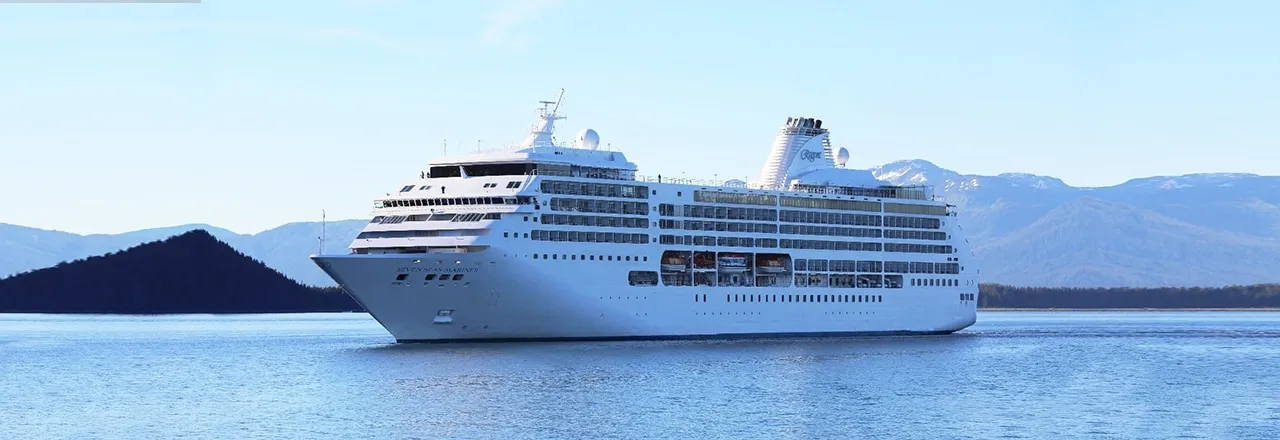
Located along the stern of Seven Seas Mariner, this suite offers a panoramic vista and expansive balcony that is large enough for two cushioned chaises, two chairs and a table. Inside, the bed alcove is separated from a beautifully appointed sitting area by curtains, allowing you to control how much sunlight greets you each morning. You’ll also have a personal butler attending to your needs and a bevy of luxurious amenities.
SUITE SIZE
33.5
M2
BALCONY SIZE
25
M2
LAYOUT
1 Marble Bathroom
Private Balcony
Sitting Area
Maximum of 3 Guests


Spectacular panoramic views will seem to have been created just for you when you relax on your suite’s private balcony. Comfortably located mid-ship, this suite has a spacious separate bedroom with a European king-sized Elite Slumber bed and one-and-a-half baths. This suite features a spacious walk-in closet with drawers as well. To elevate your experience even more, a personal butler will be on call to help make your onboard wishes come true.
SUITE SIZE
60.5
M2
BALCONY SIZE
8.5
M2
LAYOUT
1 1/2 Marble Bathrooms
Private Balcony
Spacious Bedroom
Expansive Living Room
Maximum of 3 Guests


The luxurious suite has been carefully designed to maximize space and comfort. Relax on your private balcony and indulge in your lavish bath amenities as you recharge and ready yourself for new adventures in the next port of call. This suite also includes priority online reservations for shore excursions and dining, and you’re encouraged to call on the services of a personal butler for special requests.
SUITE SIZE
35
M2
BALCONY SIZE
7
M2
LAYOUT
1 Marble Bathroom
Private Balcony
Sitting Area
Maximum of 3 Guests

This suite welcomes you with soothing colors, pleasing artwork and comfortable furnishings. Relax in the sitting area after an exciting day ashore and enjoy the selection of fresh canapés delivered by your personal butler. Then retreat to your private balcony to watch the ever-changing vistas and ponder your next destination. Up to one-and-a-half baths feature fine marble accents and a tub or walk-in shower.
SUITE SIZE
52
M2
BALCONY SIZE
27
M2
LAYOUT
1 1/2 Marble Bathrooms
Private Balcony
Spacious Bedroom
Living Area
Maximum of 3 Guests


This suite welcomes you with soothing colors, pleasing artwork and comfortable furnishings. Relax in the sitting area after an exciting day ashore and enjoy the selection of fresh canapés delivered by your personal butler. Then retreat to your private balcony to watch the ever-changing vistas and ponder your next destination. Up to one-and-a-half baths feature fine marble accents and a tub or walk-in shower.
SUITE SIZE
47
M2
BALCONY SIZE
9
M2
LAYOUT
1 1/2 Marble Bathrooms
Private Balcony
Spacious Bedroom
Living Area
Maximum of 3 Guests


You'll find Park Avenue chic onboard Seven Seas Mariner in this spectacular suite. Elegant rosewood furniture, luxe fabrics and a crystal chandelier create sophisticated comfort, while a personal butler is available to fulfil whatever requests you may have. With two bedrooms, two-and-a-half baths, a large living room and two private balconies, this sublime suite is perfect for hosting new friends in luxury.
SUITE SIZE
112
M2
BALCONY SIZE
74
M2
LAYOUT
2 Private Balconies
2 1/2 Marble Bathrooms
2 Spacious Bedrooms
Expansive Living Room
Maximum of Five Guests
Our cruise specialists can help you find the perfect cabin and the best available pricing.
(+886) 02-2721-7300Contact Advisor