February 28, 2027
26 nights · 7 sea days
Buenos Aires
Argentina
Rio de Janeiro
Brazil


Scenic Ocean Cruises
2019-08-01
17,085 GT
551 m
17 knots
114 / 228 guests
176


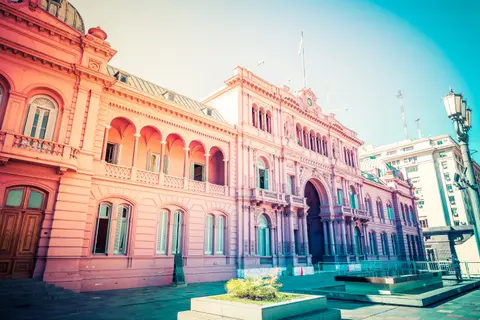
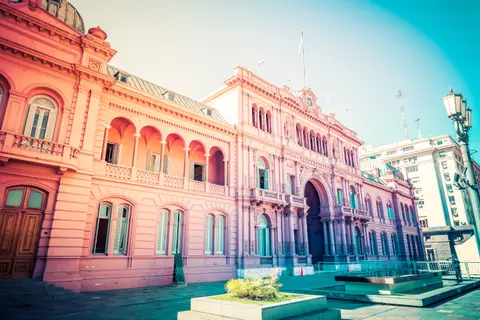
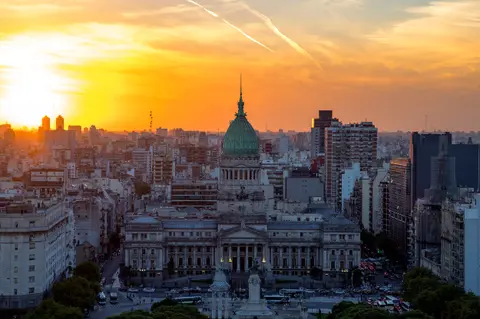
Passionate, and alive with an infectious crackling energy, the Argentine capital is a breathlessly romantic city, which blends old-world colonial architecture with a down-to-earth Latin American clamour. Famed for steamy tango interplays, and expertly seared steak slabs, a visit to Buenos Aires is a fiery fiesta for the senses. Parque Tres de Febrero is a 400-hectare oasis where 18,000 rose bushes bloom, and skyscrapers give way to still lakes and pretty paths of rollerblading locals. Mighty palm trees - that look like exploding fireworks - stand tall in Plaza de Mayo, the heart of this sprawling cosmopolitan capital of 48 barrios. The square has served as the stage for many fundamental events in this country’s history, and the location where the seeds of independence were sewn continues to serve as the city’s gathering point - and is a place for solidarity, rebellion and revolution. The presidential Casa Rosada’s salmon-hued Palatial Palace borders the plaza, while nearby Museum Nacional de Bellas Artes houses the largest collection of public art in Latin America. Teatro Colón, the opulent 1908 opera house, is one of the world’s finest venues - musical performance here take on an ethereal quality, with the exceptional acoustics transferring every quiver of bow, and tremor of vocal cord, to the audience in spine-tingling clarity. The gargantuan, precipitous terraces of Bombonera Stadium form another of Buenos Aires’s incredible venues, and a wall of noise emanates from it when Boca Juniors take to the field. Juicy steak and punchy Malbec flow in the city’s parrillas – steakhouses - while glitzy bars and thumping nightclubs welcome revellers late into the night. It’s not just the meat that sizzles here either - tango dancers fill milongas - dance halls - to strut passionately until the early hours. Sip steaming mate, the country’s national drink, shop in covered markets, and explore Cementerio de la Recoleta - a city of grand graves and intricate memorials honouring presidents, politicians and notable Argentine heroes from history.


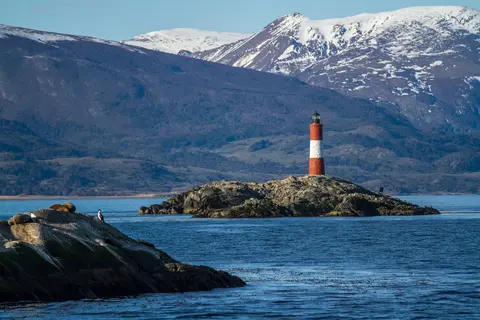
Ushuaia, capital of Tierra del Fuego and the province’s main tourist hub, is located at the southern end of Isla Grande. Boasting a spectacular location, sandwiched between the mountains – including Cerro Martial and Mount Olivia – and the sea, Ushuaia extends down the hill towards the arm of land that surrounds the Bay, where the ship will stop during your MSC WorldCruise. The city is protected from the icy Southwest winds and occasional storms that occur in the Beagle Channel. Interesting excursions include the small islands in the middle of the channel in front of the city, with their colonies of seabirds, and the nearby Parque Nacional Tierra del Fuego. Ushuaia is the most populous and popular city in Tierra del Fuego, and depends largely on the thriving tourism industry, which capitalises on the beauty of the area’s natural landscapes. Overlooking the sea is the Antigua Casa de Gobierno, a late-20th century building that was originally the Governor's mansion before being used by the local government and then as a police station. It has been restored so as to return it to its original use, so you can get an idea of how the rich lived in Ushuaia at the dawn of the city. The Fin del Mundo Museum houses exhibitions that focus on the region’s history and wildlife, as well as the polychrome figurehead of the Duchess of Albany, an English ship wrecked on the eastern end of the island in 1883. The Parque Nacional Tierra del Fuego, 12 km west of Ushuaia, is 630 sq. km of rugged mountains, sinuous lakes, southern beech forests, marshy bogs, sub-Antarctic tundra and lush coasts. It extends along the border with Chile, from the Beagle Channel to Sierra Inju-Goiyin, north of the huge Lake Fagnano, which you can also visit on an MSC Cruise day trip, combined with Lake Escondido. This is just one of the fantastic destinations of our cruise around the world: MSC World Cruise 2020!

It may be the most notorious ocean passage in the world, and for centuries it evoked dread in the hearts of sailors. But those who survived a trip around Cape Horn, where the Atlantic and Pacific slosh violently into each other, had bragging rights for life. Along this passage, the Tierra del Fuego, or "land of fire," where Chile and Argentina converge at the bottom of the world, got its name from early sailors who saw the fires of the people who lived here burning on shore. For some 8,000 years, until as recently as the end of the 19th century, this was the home of the Yaghan and other indigenous groups. Magellan and Drake left their mark and names here, as did Darwin, who sailed through here on the HMS Beagle. The great clipper ships of '49er lore later fought their way through fierce waves carrying gold between California and the East Coast in that era before the Panama Canal. Just as Richard Henry Dana, Jr., described in his masterful Two Years Before the Mast, published in 1840, a journey today around the Cape at the very bottom of the Tierra is shaped by capricious weather, as powerful winds and shallow waters can produce waves that reach as high as 30 meters (100 feet).

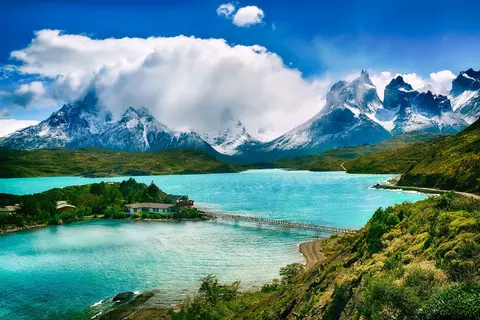
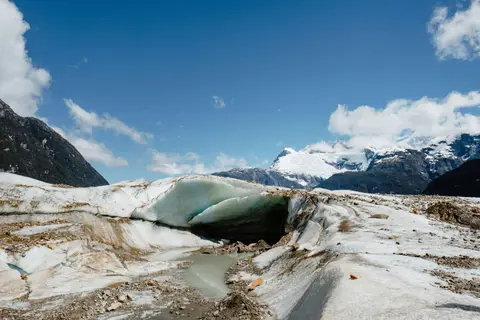
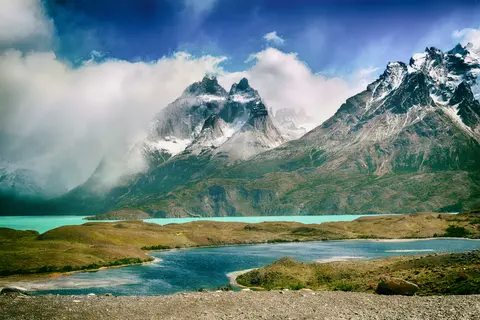
From Puerto Chacabuco, in the Aysén District in Northeast Chilean Patagonia, to Punta Arenas, in the Strait of Magellan, prepare to feel small as scene after scene of stunning natural beauty unfolds before your eyes Steep, rugged shores abound as you cruise through the Chilean Fjords’ vast network of free, open channels that wind their way to the end of the Earth. Watch in awe as glaciers reach down from the Darwin and Andes Mountains to break gracefully into the sea.

Magdalena Island is a small island in the Strait of Magellan, Chile. It is occupied year round by a small force of Park Rangers: 6 in summer, 3 in winter. "Newbie" or first-year rangers are not permitted to volunteer for harsh winter duty.


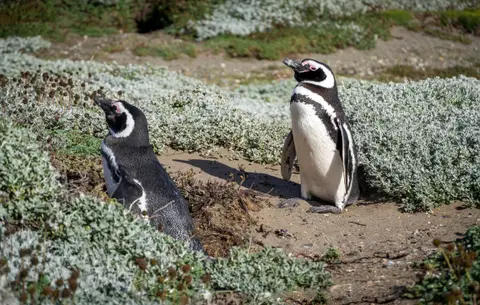
As we head back towards land, a statue of fellow explorer Ferdinand Magellan greets us. Located on the western side of the Strait of Magellan, Punta Arenas is the capital of Chile's Magallanes Region and the bustling centre base for South Atlantic fishing boats and Antarctic research vessels. This busy port town is a melding of cultures from the English sheep ranchers to Portuguese sailors, all of which are a symbol of Chile's rich history. Punta Arenas' city centre features impressive mansions dating from the late 19th and early 20th centuries. In 1982, Isla Magdalena was declared a Chilean Natural Monument. Residing in the Magellan Straits, it serves as a bird sanctuary specifically to the Magellanic penguins, who share their nesting area with cormorants amongst other seabirds and sea lions. We explore the island together with our ship staff, and learn more about these naturally curious and untamed creatures. However, simply watching 150,000 burrowing penguins share chores with their lifelong mates is quite amazing. Each morning and afternoon, the fishing penguins return to shore to switch places with their mate who has been taking care of the young. These same penguins return every year between October and March to lay eggs and raise their young.


Isla Pinguino (Penguin Island) is a tiny island less than a mile across located off the coastline of Santa Cruz province in Argentina. The island was previously known as an “island of the Kings” for ships traveling on their way to the Magellan Strait; from the 16th to the mid-19th century, sailors and travelers knew this location was a supply point of food. While several bird species live on this island, none are so numerous and distinctive as the southern rockhopper penguins, with their yellow-plumed eyes and squat stature. The island used to house an Argentinian naval station, and a lighthouse from this installment is still in service on the island, powered by solar energy.


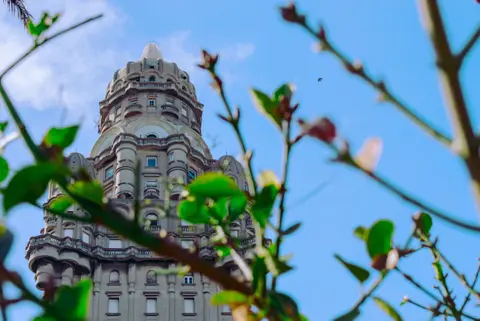
Uruguay’s capital city hugs the eastern bank of the Río de la Plata. A massive coastal promenade (malecón) that passes fine beaches, restaurants, and numerous parks recalls the sunny sophistications of the Mediterranean and is always dotted with Montevideans strolling, exercising, and lounging along the water. Montevideo has its share of glitzy shopping avenues and modern office buildings, balanced with its historic old city and sumptuous colonial architecture, as well as numerous leafy plazas and parks. It is hard not to draw comparisons to its sister city Buenos Aires across the river, and indeed Montevideo strikes many as a calmer, more manageable incarnation of Argentina's capital.When the weather's good, La Rambla, a 22-km (14-mile) waterfront avenue that links the Old City with the eastern suburbs and changes names about a dozen times, gets packed with fishermen, ice-cream vendors, and joggers. Around sunset, volleyball and soccer games wind down as couples begin to appear for evening strolls. Polls consistently rate Montevideo as having the highest quality of life of any city in Latin America. After one visit here, especially on a lovely summer evening, you probably will agree.


Passionate, and alive with an infectious crackling energy, the Argentine capital is a breathlessly romantic city, which blends old-world colonial architecture with a down-to-earth Latin American clamour. Famed for steamy tango interplays, and expertly seared steak slabs, a visit to Buenos Aires is a fiery fiesta for the senses. Parque Tres de Febrero is a 400-hectare oasis where 18,000 rose bushes bloom, and skyscrapers give way to still lakes and pretty paths of rollerblading locals. Mighty palm trees - that look like exploding fireworks - stand tall in Plaza de Mayo, the heart of this sprawling cosmopolitan capital of 48 barrios. The square has served as the stage for many fundamental events in this country’s history, and the location where the seeds of independence were sewn continues to serve as the city’s gathering point - and is a place for solidarity, rebellion and revolution. The presidential Casa Rosada’s salmon-hued Palatial Palace borders the plaza, while nearby Museum Nacional de Bellas Artes houses the largest collection of public art in Latin America. Teatro Colón, the opulent 1908 opera house, is one of the world’s finest venues - musical performance here take on an ethereal quality, with the exceptional acoustics transferring every quiver of bow, and tremor of vocal cord, to the audience in spine-tingling clarity. The gargantuan, precipitous terraces of Bombonera Stadium form another of Buenos Aires’s incredible venues, and a wall of noise emanates from it when Boca Juniors take to the field. Juicy steak and punchy Malbec flow in the city’s parrillas – steakhouses - while glitzy bars and thumping nightclubs welcome revellers late into the night. It’s not just the meat that sizzles here either - tango dancers fill milongas - dance halls - to strut passionately until the early hours. Sip steaming mate, the country’s national drink, shop in covered markets, and explore Cementerio de la Recoleta - a city of grand graves and intricate memorials honouring presidents, politicians and notable Argentine heroes from history.


Passionate, and alive with an infectious crackling energy, the Argentine capital is a breathlessly romantic city, which blends old-world colonial architecture with a down-to-earth Latin American clamour. Famed for steamy tango interplays, and expertly seared steak slabs, a visit to Buenos Aires is a fiery fiesta for the senses. Parque Tres de Febrero is a 400-hectare oasis where 18,000 rose bushes bloom, and skyscrapers give way to still lakes and pretty paths of rollerblading locals. Mighty palm trees - that look like exploding fireworks - stand tall in Plaza de Mayo, the heart of this sprawling cosmopolitan capital of 48 barrios. The square has served as the stage for many fundamental events in this country’s history, and the location where the seeds of independence were sewn continues to serve as the city’s gathering point - and is a place for solidarity, rebellion and revolution. The presidential Casa Rosada’s salmon-hued Palatial Palace borders the plaza, while nearby Museum Nacional de Bellas Artes houses the largest collection of public art in Latin America. Teatro Colón, the opulent 1908 opera house, is one of the world’s finest venues - musical performance here take on an ethereal quality, with the exceptional acoustics transferring every quiver of bow, and tremor of vocal cord, to the audience in spine-tingling clarity. The gargantuan, precipitous terraces of Bombonera Stadium form another of Buenos Aires’s incredible venues, and a wall of noise emanates from it when Boca Juniors take to the field. Juicy steak and punchy Malbec flow in the city’s parrillas – steakhouses - while glitzy bars and thumping nightclubs welcome revellers late into the night. It’s not just the meat that sizzles here either - tango dancers fill milongas - dance halls - to strut passionately until the early hours. Sip steaming mate, the country’s national drink, shop in covered markets, and explore Cementerio de la Recoleta - a city of grand graves and intricate memorials honouring presidents, politicians and notable Argentine heroes from history.


Passionate, and alive with an infectious crackling energy, the Argentine capital is a breathlessly romantic city, which blends old-world colonial architecture with a down-to-earth Latin American clamour. Famed for steamy tango interplays, and expertly seared steak slabs, a visit to Buenos Aires is a fiery fiesta for the senses. Parque Tres de Febrero is a 400-hectare oasis where 18,000 rose bushes bloom, and skyscrapers give way to still lakes and pretty paths of rollerblading locals. Mighty palm trees - that look like exploding fireworks - stand tall in Plaza de Mayo, the heart of this sprawling cosmopolitan capital of 48 barrios. The square has served as the stage for many fundamental events in this country’s history, and the location where the seeds of independence were sewn continues to serve as the city’s gathering point - and is a place for solidarity, rebellion and revolution. The presidential Casa Rosada’s salmon-hued Palatial Palace borders the plaza, while nearby Museum Nacional de Bellas Artes houses the largest collection of public art in Latin America. Teatro Colón, the opulent 1908 opera house, is one of the world’s finest venues - musical performance here take on an ethereal quality, with the exceptional acoustics transferring every quiver of bow, and tremor of vocal cord, to the audience in spine-tingling clarity. The gargantuan, precipitous terraces of Bombonera Stadium form another of Buenos Aires’s incredible venues, and a wall of noise emanates from it when Boca Juniors take to the field. Juicy steak and punchy Malbec flow in the city’s parrillas – steakhouses - while glitzy bars and thumping nightclubs welcome revellers late into the night. It’s not just the meat that sizzles here either - tango dancers fill milongas - dance halls - to strut passionately until the early hours. Sip steaming mate, the country’s national drink, shop in covered markets, and explore Cementerio de la Recoleta - a city of grand graves and intricate memorials honouring presidents, politicians and notable Argentine heroes from history.


Passionate, and alive with an infectious crackling energy, the Argentine capital is a breathlessly romantic city, which blends old-world colonial architecture with a down-to-earth Latin American clamour. Famed for steamy tango interplays, and expertly seared steak slabs, a visit to Buenos Aires is a fiery fiesta for the senses. Parque Tres de Febrero is a 400-hectare oasis where 18,000 rose bushes bloom, and skyscrapers give way to still lakes and pretty paths of rollerblading locals. Mighty palm trees - that look like exploding fireworks - stand tall in Plaza de Mayo, the heart of this sprawling cosmopolitan capital of 48 barrios. The square has served as the stage for many fundamental events in this country’s history, and the location where the seeds of independence were sewn continues to serve as the city’s gathering point - and is a place for solidarity, rebellion and revolution. The presidential Casa Rosada’s salmon-hued Palatial Palace borders the plaza, while nearby Museum Nacional de Bellas Artes houses the largest collection of public art in Latin America. Teatro Colón, the opulent 1908 opera house, is one of the world’s finest venues - musical performance here take on an ethereal quality, with the exceptional acoustics transferring every quiver of bow, and tremor of vocal cord, to the audience in spine-tingling clarity. The gargantuan, precipitous terraces of Bombonera Stadium form another of Buenos Aires’s incredible venues, and a wall of noise emanates from it when Boca Juniors take to the field. Juicy steak and punchy Malbec flow in the city’s parrillas – steakhouses - while glitzy bars and thumping nightclubs welcome revellers late into the night. It’s not just the meat that sizzles here either - tango dancers fill milongas - dance halls - to strut passionately until the early hours. Sip steaming mate, the country’s national drink, shop in covered markets, and explore Cementerio de la Recoleta - a city of grand graves and intricate memorials honouring presidents, politicians and notable Argentine heroes from history.


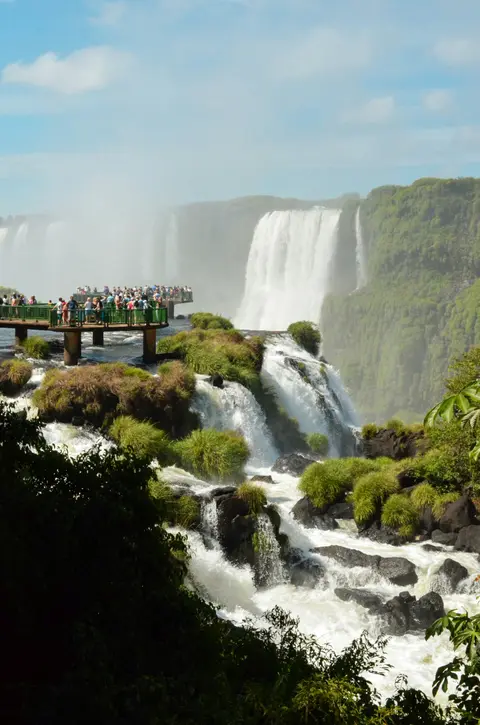
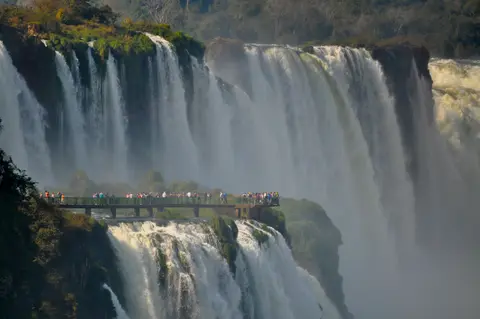
Iguazú Falls or Iguaçu Falls are waterfalls of the Iguazu River on the border of the Argentine province of Misiones and the Brazilian state of Paraná. Together, they make up the largest waterfall in the world. The falls divide the river into the upper and lower Iguazu.


Iguazú Falls or Iguaçu Falls are waterfalls of the Iguazu River on the border of the Argentine province of Misiones and the Brazilian state of Paraná. Together, they make up the largest waterfall in the world. The falls divide the river into the upper and lower Iguazu.


Iguazú Falls or Iguaçu Falls are waterfalls of the Iguazu River on the border of the Argentine province of Misiones and the Brazilian state of Paraná. Together, they make up the largest waterfall in the world. The falls divide the river into the upper and lower Iguazu.


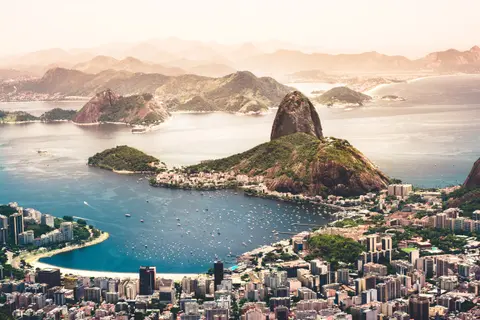
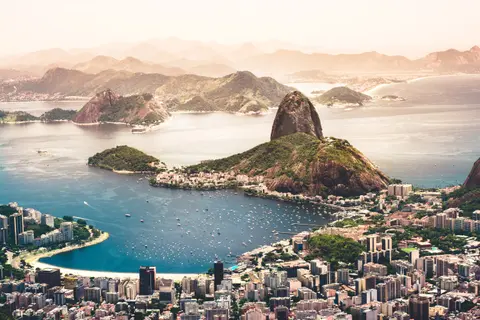
Some cities need no introduction, and even fewer cities live up to their reputation the way Rio de Janeiro does, in both the best sense—how visitors experience sheer exhilaration being there—and the harsh reality of its social and economic strains. Situated in arguably the world’s most dramatic urban setting, it has apartment complexes that hang on huge granite peaks which rise smack in the middle of the city, and adding to the drama, its stunning beaches seem to stretch forever. A quick course in Rio: Before arriving, listen to some bossa nova and samba music to get in the swing of things. Second lesson: Practice pronouncing Rio as Hio in order to sound like a native Carioca. After that, it’s all about stopping at corner juice bars to enjoy fresh tropical drinks named for fruit you’ve never even heard of, and indulging in people-watching along the legendary Copacabana and Ipanema boardwalks. For more insight into the city, you might take the plunge into Maracaña Stadium to watch a crazy match between crosstown rivals Flamengo and Fluminense (imagine the Yankees and the Red Sox living in the same city) or jump on a bike to discover some of Rio’s far-flung and vastly diverse districts.


Some cities need no introduction, and even fewer cities live up to their reputation the way Rio de Janeiro does, in both the best sense—how visitors experience sheer exhilaration being there—and the harsh reality of its social and economic strains. Situated in arguably the world’s most dramatic urban setting, it has apartment complexes that hang on huge granite peaks which rise smack in the middle of the city, and adding to the drama, its stunning beaches seem to stretch forever. A quick course in Rio: Before arriving, listen to some bossa nova and samba music to get in the swing of things. Second lesson: Practice pronouncing Rio as Hio in order to sound like a native Carioca. After that, it’s all about stopping at corner juice bars to enjoy fresh tropical drinks named for fruit you’ve never even heard of, and indulging in people-watching along the legendary Copacabana and Ipanema boardwalks. For more insight into the city, you might take the plunge into Maracaña Stadium to watch a crazy match between crosstown rivals Flamengo and Fluminense (imagine the Yankees and the Red Sox living in the same city) or jump on a bike to discover some of Rio’s far-flung and vastly diverse districts.


Some cities need no introduction, and even fewer cities live up to their reputation the way Rio de Janeiro does, in both the best sense—how visitors experience sheer exhilaration being there—and the harsh reality of its social and economic strains. Situated in arguably the world’s most dramatic urban setting, it has apartment complexes that hang on huge granite peaks which rise smack in the middle of the city, and adding to the drama, its stunning beaches seem to stretch forever. A quick course in Rio: Before arriving, listen to some bossa nova and samba music to get in the swing of things. Second lesson: Practice pronouncing Rio as Hio in order to sound like a native Carioca. After that, it’s all about stopping at corner juice bars to enjoy fresh tropical drinks named for fruit you’ve never even heard of, and indulging in people-watching along the legendary Copacabana and Ipanema boardwalks. For more insight into the city, you might take the plunge into Maracaña Stadium to watch a crazy match between crosstown rivals Flamengo and Fluminense (imagine the Yankees and the Red Sox living in the same city) or jump on a bike to discover some of Rio’s far-flung and vastly diverse districts.

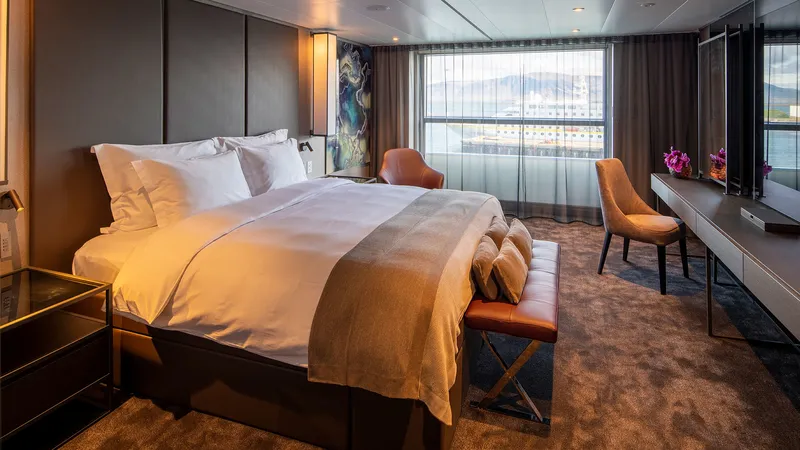
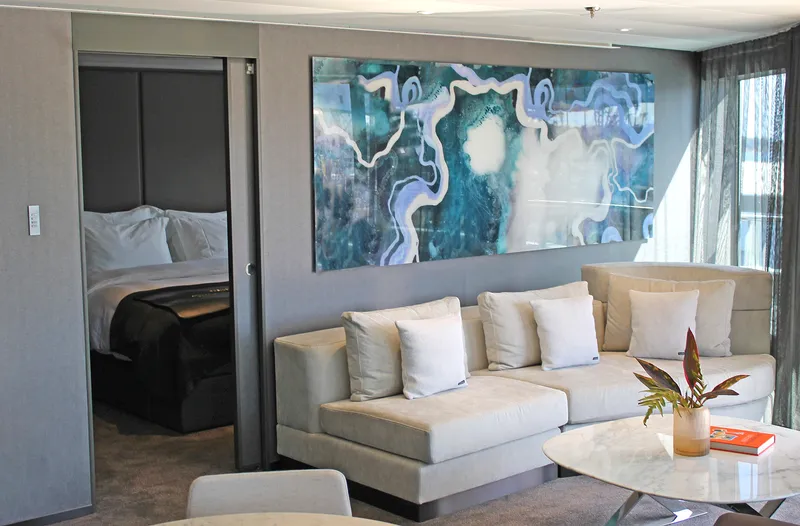
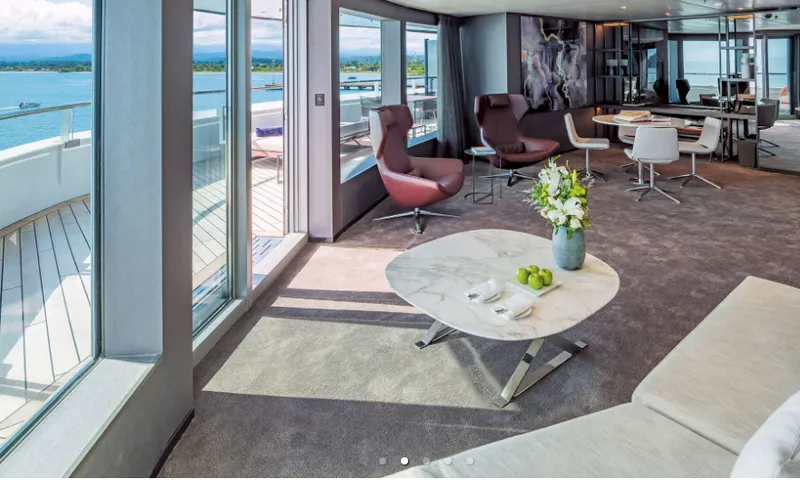
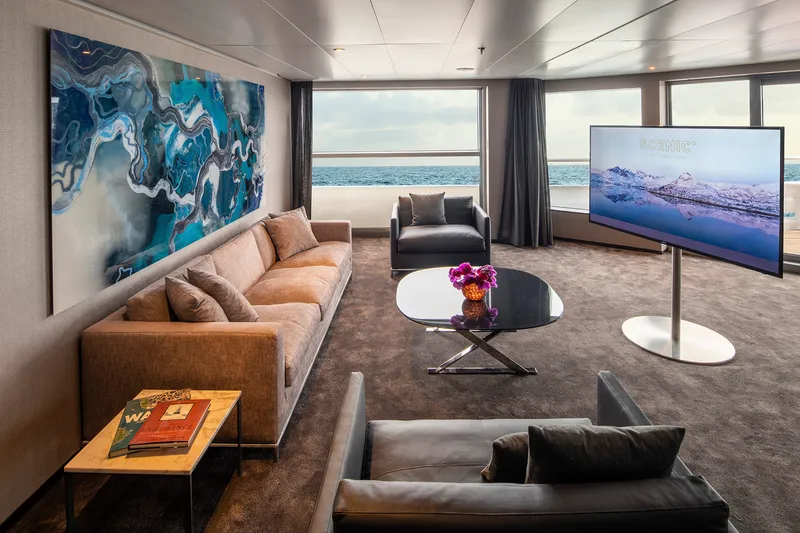
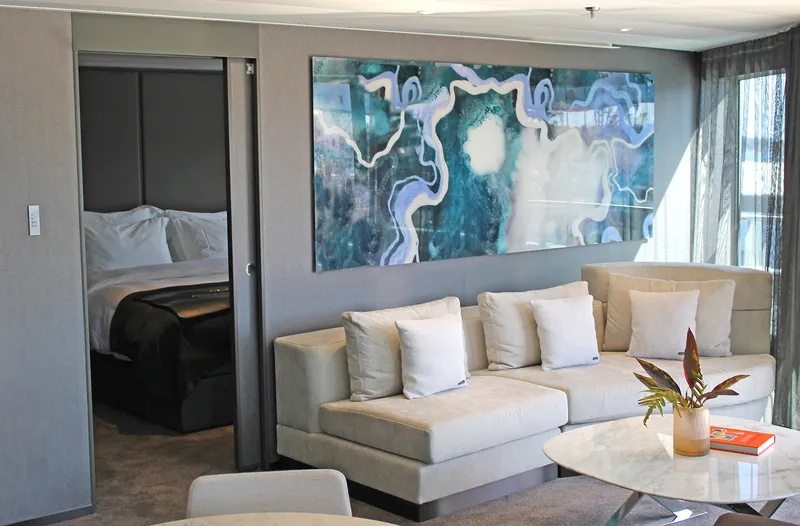
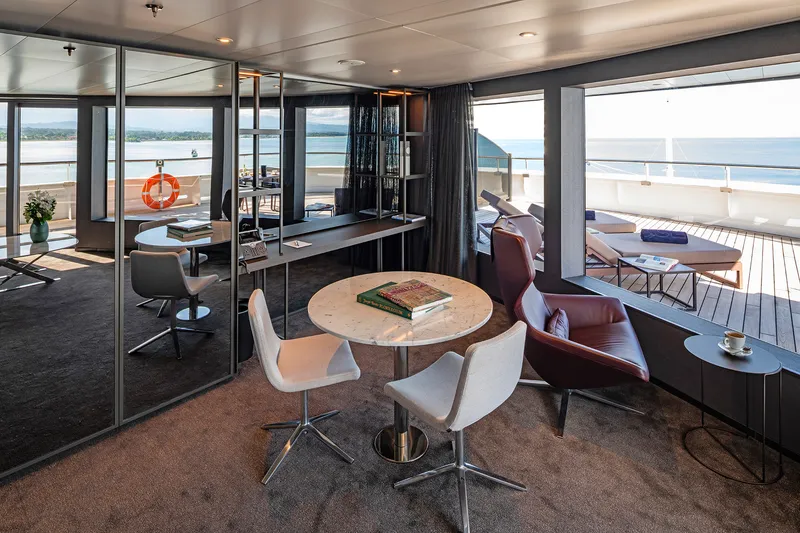
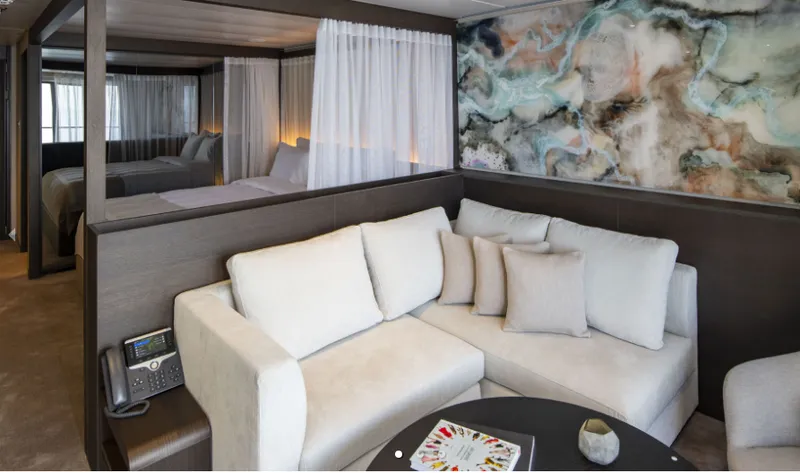
Our oversized Owner’s Penthouse Suites are the ultimate indulgence. Located on Deck 9 and elegantly appointed with spacious curved terraces featuring a private Jacuzzi and the best views on board, you will never want to leave. Combine our Owner’s Penthouse Suite with a Spa Suite to create a magnificent Two-bedroom Penthouse Suite.


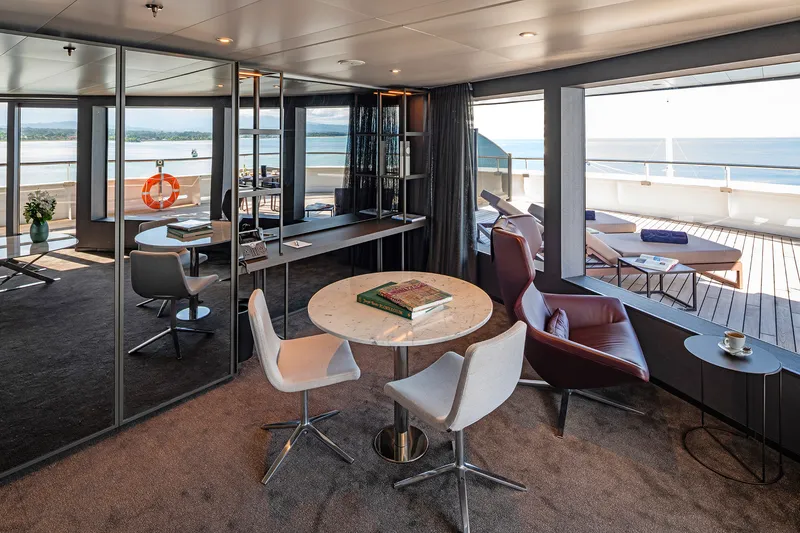
Located at the front of the yacht on Deck 6 these opulent suites feature curved terraces and spacious interiors with additional services and more.


Our oversized Owner’s Penthouse Suites are the ultimate indulgence. Located on Deck 9 and elegantly appointed with spacious curved terraces featuring a private Jacuzzi and the best views on board, you will never want to leave.


Located at the front of the yacht on Deck 8 these opulent suites feature spacious curved terraces, additional features, services, and much more.


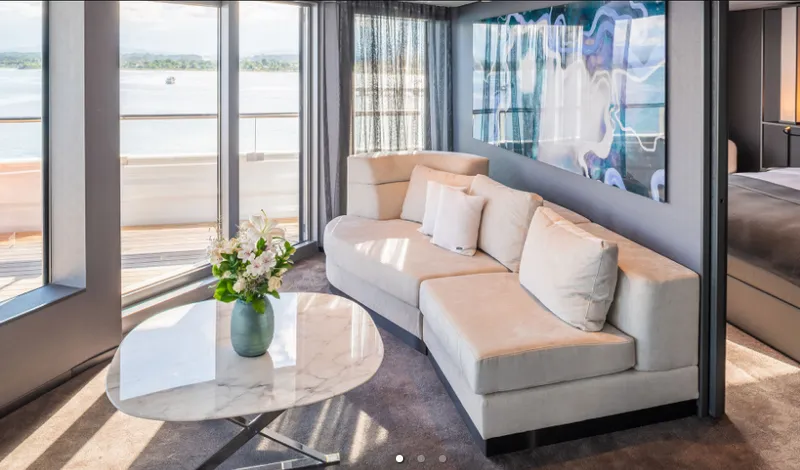
Located on the higher decks, our luxurious Spa Suites include additional features and services that will enhance the luxury of your time on board.


Private Verandah
Luxury king size Slumber Bed
Separate sleep zone
Separate lounge area
En-suite bathroom with shower and vanity
Luxury bathroom amenities
Hypoallergenic air purification system
Butler service
Shoeshine service
Early morning tea/coffee service
In-suite beverage service
In-suite dining service
Full mini bar re-stocked daily
Personalised butler bar featuring Illy coffee and specialty teas (replenished daily)
HDTV and Bose sound system


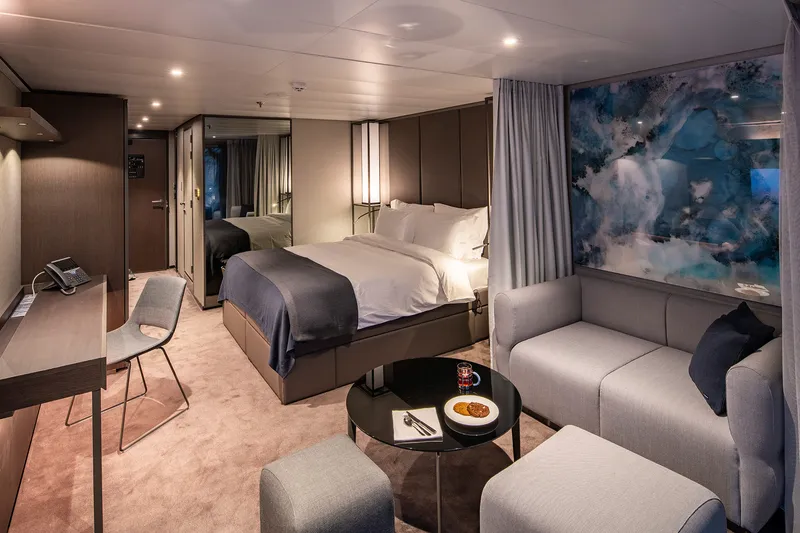
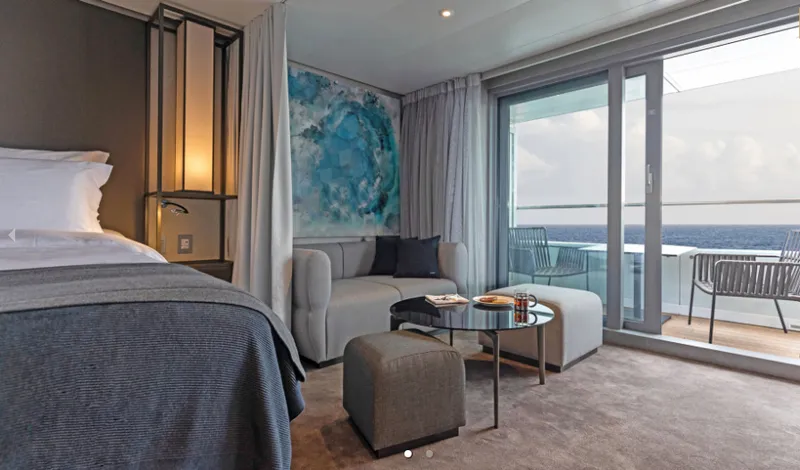
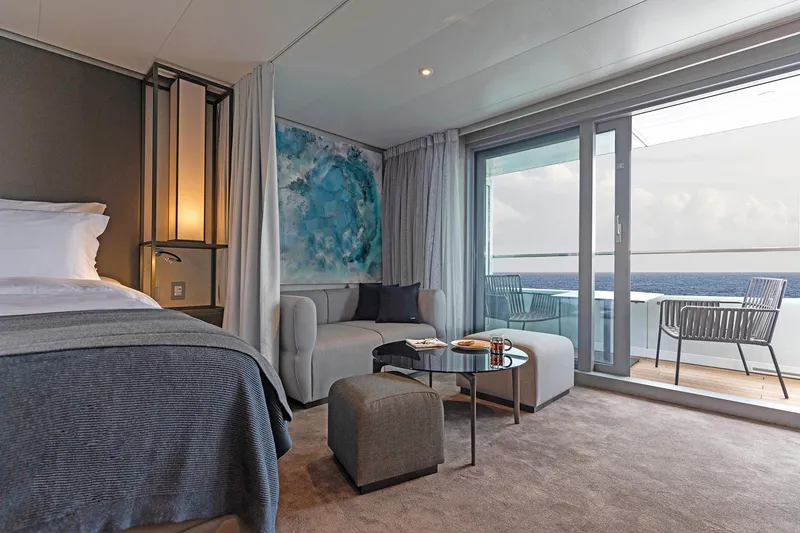
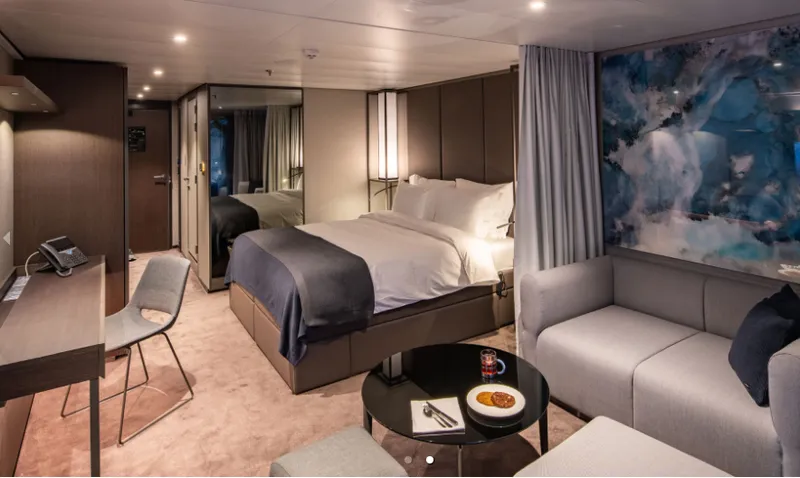
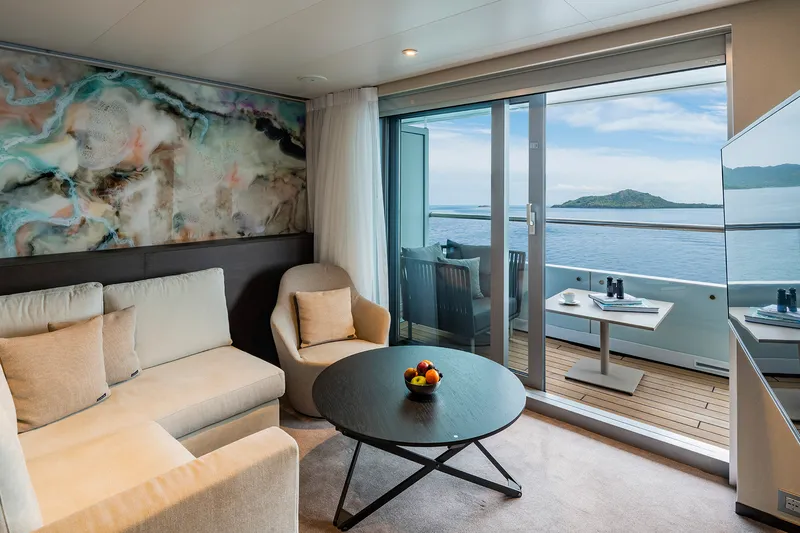
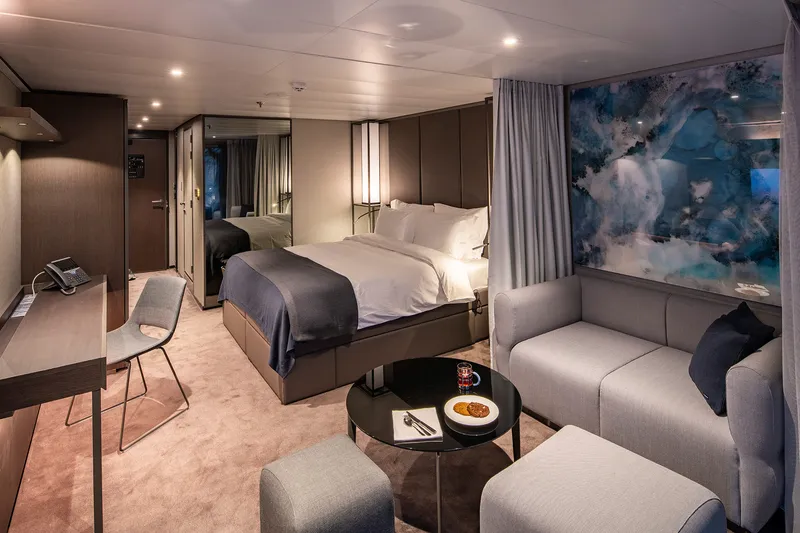
Choose from our Deluxe Verandah Suites to larger Grand Deluxe Verandah Suites, which provide even more room to relax.


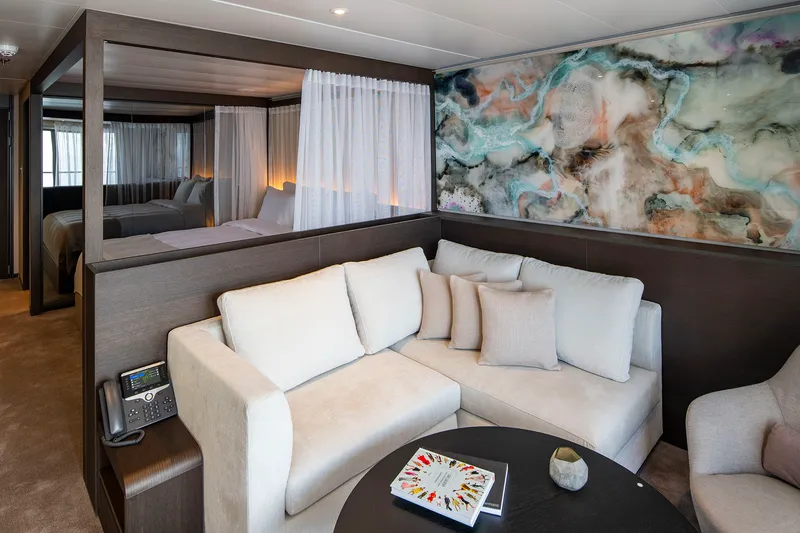
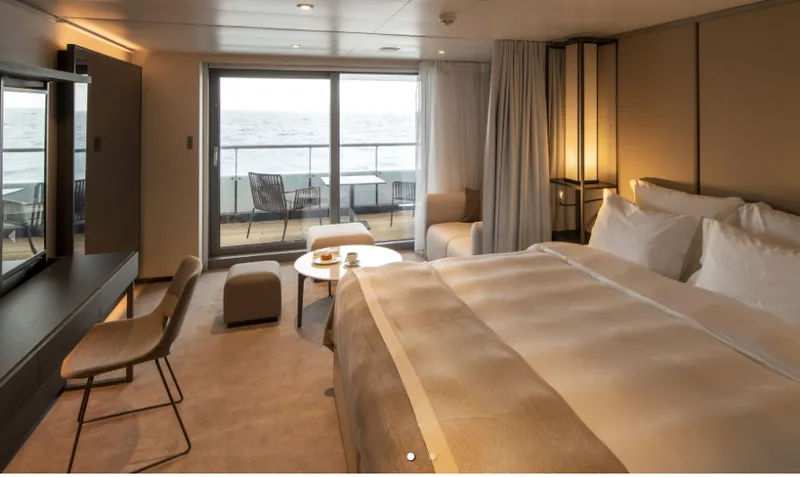
Our Verandah Suites provide a spacious and comfortable introduction to ocean cruising with the finest appointments and amenities.
Private Verandah
Luxury king size Slumber Bed
Separate sleep zone
Separate lounge area
En-suite bathroom with shower and vanity
Luxury bathroom amenities
Hypoallergenic air purification system
Butler service
Shoeshine service
Early morning tea/coffee service
In-suite beverage service
In-suite dining service
Full mini bar re-stocked daily
Personalised butler bar featuring Illy coffee and specialty teas (replenished daily)
HDTV and Bose sound system
Our cruise specialists can help you find the perfect cabin and the best available pricing.
US$21,428 /person
Contact Advisor