Quark-ekspeditionerWVO20290305
Antarktiske havpattedyr: Hvalernes og sælernes verden
Date
2029-03-05
Duration
10 nights
Departure Port
Arrival Port
Rating
—
Theme
—
Date
2029-03-05
Duration
10 nights
Departure Port
Arrival Port
Rating
—
Theme
—
Quark-ekspeditioner
2018
—
8,925 GT
168
—
125
126 m
19 m
16 knots
No
Upon arriving in this splendid city, known for its vibrant Argentinian culture, European architecture and cosmopolitan vibe, you will independently transfer to the designated group hotel, which is included in your Charter Flight & Hotel package.
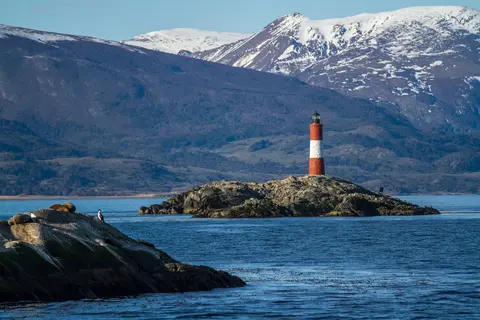
Ushuaia, verdens sydligste by, er en fængslende blanding af historie, levende kultur og naturlig skønhed, hvilket gør den til en unik havn i Argentina. Uundværlige oplevelser inkluderer at nyde lokale delikatesser som centolla og udforske de betagende landskaber i den nærliggende Los Glaciares Nationalpark. Den bedste tid at besøge er i sommermånederne fra december til marts, når vejret er mildt, og landskabet viser sig fra sin mest storslåede side.
Crossing the 800-km Drake is considered a rite of passage for many travelers. Traversing this legendary waterway means you’ll experience the Antarctic Convergence, where the cold, northward-flowing Antarctic waters meet the warmer, southward-flowing water of the sub-Antarctic. The mixing of cold and warm waters creates a nutrient-rich feeding ground, especially for whales and other marine mammals. Guests are encouraged to keep binoculars close at hand—and to be prepared for Expedition Team members to announce any whale sightings. The team of guest scientists will be introduced early in the voyage. Ari Friedlaender, who co-developed this itinerary, and members of his team from the Friedlaender Lab, are global authorities on the underwater behavior and ecology of marine mammals, particularly whales. Guests will also meet a research associate with the Happywhale platform, which enables citizens to upload their whale photos to help identify species and, possibly, individual whales.
The timing of this voyage maximizes opportunities to observe various whale species along the Antarctic Peninsula. After the ice recedes in October and November, the food chain begins to re-establish itself. Whales, seals and other marine mammals are drawn to these rich feeding grounds—especially for the krill. By February and March, these creatures, which have been intensely feeding, are satiated and relaxed, making them more easier to spot. In addition to the Zodiac and paddling excursions, we plan to spend a lot of time on the outer decks and other vantage points on the ship to spot—and photograph—wildlife. We’ll spend our days in key marine mammal habitats of the Gerlache Strait and remote inner glacial bays. Over the next three days, we aim to explore whale hotspots such as Charlotte Bay, Portal Point, Graham Passage, Errera Channel, Cuverville Island, Andvord Bay, Fournier Bay and Dallmann Bay. Past whale sightings in these areas have included minke, humpback, fin, orca and the elusive, deep-diving Arnoux’s beaked whale. Antarctic Marine Mammals: The World of Whales & Seals is our only itinerary during which we’ll deploy hydrophones—underwater microphones that detect and record sound below the surface. You will have opportunities—during Zodiac cruises and paddling programs—to accompany Friedlaender Lab scientists as they deploy hydrophones to monitor and study marine mammal behavior, such as the vocalizations of whales. Four scientists will accompany guests in Zodiacs, with one hydrophone shared between two groups. Speakers will enable participants to listen for and, hopefully, hear whale sounds beneath the ocean surface. Engaging with scientists who are actively collecting and collating data that can be shared in real time on the water, and, through digital visual aids, brings marine biology to life in a way that transcends the water line. This activity is also available to World Voyager guests who join the Stand-Up Paddle Boarding (SUP) program. In addition to the citizen science programming, this itinerary will also feature the wonders of Antarctica: penguins, seals, immense glaciers, snow-capped mountains, icebergs, shore landings, and the polar plunge.
Rounding out our marine mammal experiences, we hope to witness southern elephant seals in the rugged and fabled South Shetland Islands. We’ll also keep our fingers crossed for sightings of fin whales. We’ll explore this geological and historic archipelago while prioritizing shore landings, which offer further opportunities for wildlife sightings. Arriving in March allows us the rare opportunity to potentially explore key excursion sites such as Hannah Point, which is deemed a Restricted Area from early to mid-season. Massive populations of elephant seals and southern giant petrels make for awe-inspiring experiences. As with any expedition, shore landings along the coast are dependent on favorable weather.
Today is your last opportunity to visit Quark Expeditions’ new Science Hub and contribute to citizen science that will support marine mammal conservation efforts. In the words of Sir David Attenborough: “No one will protect what they don’t care about. And no one will care about what they have never experienced.”
Ushuaia, verdens sydligste by, er en fængslende blanding af historie, levende kultur og naturlig skønhed, hvilket gør den til en unik havn i Argentina. Uundværlige oplevelser inkluderer at nyde lokale delikatesser som centolla og udforske de betagende landskaber i den nærliggende Los Glaciares Nationalpark. Den bedste tid at besøge er i sommermånederne fra december til marts, når vejret er mildt, og landskabet viser sig fra sin mest storslåede side.
Day 1
Upon arriving in this splendid city, known for its vibrant Argentinian culture, European architecture and cosmopolitan vibe, you will independently transfer to the designated group hotel, which is included in your Charter Flight & Hotel package.
Day 2
Ushuaia, verdens sydligste by, er en fængslende blanding af historie, levende kultur og naturlig skønhed, hvilket gør den til en unik havn i Argentina. Uundværlige oplevelser inkluderer at nyde lokale delikatesser som centolla og udforske de betagende landskaber i den nærliggende Los Glaciares Nationalpark. Den bedste tid at besøge er i sommermånederne fra december til marts, når vejret er mildt, og landskabet viser sig fra sin mest storslåede side.
Day 3
Crossing the 800-km Drake is considered a rite of passage for many travelers. Traversing this legendary waterway means you’ll experience the Antarctic Convergence, where the cold, northward-flowing Antarctic waters meet the warmer, southward-flowing water of the sub-Antarctic. The mixing of cold and warm waters creates a nutrient-rich feeding ground, especially for whales and other marine mammals. Guests are encouraged to keep binoculars close at hand—and to be prepared for Expedition Team members to announce any whale sightings. The team of guest scientists will be introduced early in the voyage. Ari Friedlaender, who co-developed this itinerary, and members of his team from the Friedlaender Lab, are global authorities on the underwater behavior and ecology of marine mammals, particularly whales. Guests will also meet a research associate with the Happywhale platform, which enables citizens to upload their whale photos to help identify species and, possibly, individual whales.
Day 5
The timing of this voyage maximizes opportunities to observe various whale species along the Antarctic Peninsula. After the ice recedes in October and November, the food chain begins to re-establish itself. Whales, seals and other marine mammals are drawn to these rich feeding grounds—especially for the krill. By February and March, these creatures, which have been intensely feeding, are satiated and relaxed, making them more easier to spot. In addition to the Zodiac and paddling excursions, we plan to spend a lot of time on the outer decks and other vantage points on the ship to spot—and photograph—wildlife. We’ll spend our days in key marine mammal habitats of the Gerlache Strait and remote inner glacial bays. Over the next three days, we aim to explore whale hotspots such as Charlotte Bay, Portal Point, Graham Passage, Errera Channel, Cuverville Island, Andvord Bay, Fournier Bay and Dallmann Bay. Past whale sightings in these areas have included minke, humpback, fin, orca and the elusive, deep-diving Arnoux’s beaked whale. Antarctic Marine Mammals: The World of Whales & Seals is our only itinerary during which we’ll deploy hydrophones—underwater microphones that detect and record sound below the surface. You will have opportunities—during Zodiac cruises and paddling programs—to accompany Friedlaender Lab scientists as they deploy hydrophones to monitor and study marine mammal behavior, such as the vocalizations of whales. Four scientists will accompany guests in Zodiacs, with one hydrophone shared between two groups. Speakers will enable participants to listen for and, hopefully, hear whale sounds beneath the ocean surface. Engaging with scientists who are actively collecting and collating data that can be shared in real time on the water, and, through digital visual aids, brings marine biology to life in a way that transcends the water line. This activity is also available to World Voyager guests who join the Stand-Up Paddle Boarding (SUP) program. In addition to the citizen science programming, this itinerary will also feature the wonders of Antarctica: penguins, seals, immense glaciers, snow-capped mountains, icebergs, shore landings, and the polar plunge.
Day 8
Rounding out our marine mammal experiences, we hope to witness southern elephant seals in the rugged and fabled South Shetland Islands. We’ll also keep our fingers crossed for sightings of fin whales. We’ll explore this geological and historic archipelago while prioritizing shore landings, which offer further opportunities for wildlife sightings. Arriving in March allows us the rare opportunity to potentially explore key excursion sites such as Hannah Point, which is deemed a Restricted Area from early to mid-season. Massive populations of elephant seals and southern giant petrels make for awe-inspiring experiences. As with any expedition, shore landings along the coast are dependent on favorable weather.
Day 10
Today is your last opportunity to visit Quark Expeditions’ new Science Hub and contribute to citizen science that will support marine mammal conservation efforts. In the words of Sir David Attenborough: “No one will protect what they don’t care about. And no one will care about what they have never experienced.”
Day 11
Ushuaia, verdens sydligste by, er en fængslende blanding af historie, levende kultur og naturlig skønhed, hvilket gør den til en unik havn i Argentina. Uundværlige oplevelser inkluderer at nyde lokale delikatesser som centolla og udforske de betagende landskaber i den nærliggende Los Glaciares Nationalpark. Den bedste tid at besøge er i sommermånederne fra december til marts, når vejret er mildt, og landskabet viser sig fra sin mest storslåede side.
Located on Deck 5, and approximately 345 sq. ft. (32 sq. m) in size, these cabins have one double or two single beds, and a 100 sq. ft. (9.5 sq. m) walk-out balcony with access from sitting room and bedroom. A separate sitting area with sofa, double closets, refrigerator, TV, state of the art “infotainment” system, and private bathroom with shower is also featured in each cabin.
Located on Decks 5 and 6, and approximately 270 sq. ft. (25 sq. m) in size, these cabins have one double or two single beds, and a floor-to-ceiling glass Juliet balcony. A sitting area with sofa, refrigerator, TV, state of the art “infotainment” system, and private bathroom with shower is also featured in each cabin.
Located on Decks 5 and 6, and approximately 365 sq. ft. (34 sq. m) in size, these cabins have one double or two single beds, and a 100 sq. ft. (9.5 sq. m) walk-out balcony with access from sitting room and bedroom. A separate sitting area with sofa, refrigerator, TV, state of the art “infotainment” system, and private bathroom with shower, dual vanity, and bathtub is also featured in each cabin.
Located on Decks 5 and 6, and approximately 270 sq. ft. (25 sq. m) in size, these cabins have one double or two single beds, and a 100 sq. ft. (9.5 sq. m) walk-out balcony with access from sitting room and bedroom. A separate sitting area with sofa, walk-in closet, refrigerator, TV, state of the art “infotainment” system, and private bathroom with shower is also featured in each cabin.
Located on Decks 5 and 6, and approximately 215 sq. ft. (20 sq. m) in size, these cabins have one double or two single beds, and a 55 sq. ft. (5 sq. m) walk-out balcony. A sitting area with sofa, refrigerator, TV, state of the art “infotainment” system, and private bathroom with shower is also featured in each cabin.
Our cruise specialists can help you find the perfect cabin and the best available pricing.
(+886) 02-2721-7300Contact Advisor